01
Raw Broccoli Sprout & Avocado Sourdough
Explore Recipe GuideGenerous handful of raw crisp broccoli sprouts piled over creamy mashed avocado sourdough with cold-pressed olive oil and flaky sea salt.
 Mapple Health
 Broccoli sprouts are 3-to-5-day-old germinated broccoli plants that represent one of the most potent natural sources of sulforaphane on Earth. Discovered by researchers at Johns Hopkins University School of Medicine in 1997, broccoli sprouts contain dense reserves of glucoraphanin—a glucosinolate compound that converts into active sulforaphane when plant cells are crushed or chewed. Clinical trials published in Cancer Prevention Research, PNAS, and Annual Review of Pharmacology and Toxicology demonstrate that sulforaphane turns on the body’s Nrf2 pathway, upregulating Phase II detoxification enzymes to neutralize airborne pollutants and environmental toxins.
Broccoli sprouts work through a unique two-part enzymatic reaction that occurs during chewing or blending.
Note on Clinical Trial Form: The 12-week airborne pollutant trial (PMID 24913818) utilized a standardized broccoli sprout beverage providing 600µmol glucoraphanin daily. Culinary portions of raw sprouts supply comparable precursor levels, though individual myrosinase conversion rates vary based on chewing thoroughness.
The nutritional breakdown below represents official data from the USDA FoodData Central database for 100 grams of raw broccoli sprouts compared to 1 cup of fresh sprouts (84g).
| Nutrient | Amount (per 100g) | Amount (per 1 cup fresh raw broccoli sprouts (84g)) | % Daily Value (%DV) | Why Your Body Needs It |
|---|---|---|---|---|
| Calories | 42 kcal | 35 kcal | — | Nutrient-rich, low-calorie cellular energy |
| Water Content | 89.2g | 74.9g | — | High cellular hydration |
| Total Carbohydrates | 5.0g | 4.2g | — | Prebiotic fiber supporting gut microbiome |
| Dietary Fiber | 3.6g | 3.0g | 11% | Soluble & insoluble fiber for intestinal transit |
| Total Sugars | 0.95g | 0.80g | — | Virtually sugar-free |
| Protein | 3.6g | 3.0g | 6% | Concentrated amino acid precursor reserves |
| Glycemic Index (GI) | 15 (Low) | 15 (Low) | Low | Zero impact on blood sugar spikes |
| Glucoraphanin Precursor | 250mg - 500mg | 210mg - 420mg | — | 10x-100x denser precursor than mature broccoli |
| Vitamin C | 60.0mg | 50.4mg | 56% | Antioxidant protecting cells from free radicals |
| Vitamin A (Beta-Carotene) | 150µg RAE | 126µg RAE | 14% | Supports mucosal immunity and eye health |
| Calcium | 88mg | 74mg | 6% | Bioavailable plant calcium for cellular signaling |
| Iron | 1.3mg | 1.1mg | 6% | Non-heme plant iron for oxygen transport |
The reference matrix below outlines how fresh raw broccoli sprouts fit into everyday health management, based on clinical trials and dietary guidelines.
| Condition / Disease | Impact | General Guidance | Why (Mechanism + Verdict) |
|---|---|---|---|
| Air Pollution & Environmental Detox | Positive | Eat 1/2 cup raw daily | Strong clinical evidence. A 12-week human trial (PMID 24913818) proved sulforaphane accelerates liver Phase II excretion of airborne toxins like benzene. |
| Cellular Repair & Nrf2 Activation | Positive | Chew raw sprouts thoroughly | Strong clinical evidence. Sulforaphane activates the Nrf2 pathway, boosting intracellular glutathione and cytoprotective enzymes (PMID 16968214). |
| Gut Health & H. Pylori Control | Positive | Eat raw with meals | Promising evidence. Sulforaphane exhibits antibacterial activity against Helicobacter pylori, protecting stomach mucosal linings. |
| Diabetes & Insulin Sensitivity | Positive | Include in low-carb meals | Good supportive evidence. Low GI (15) and Nrf2-mediated reduction in hepatic gluconeogenesis support healthy blood sugar regulation. |
| Thyroid Sensitivity | Caution | Moderate raw intake | Contains mild goitrogens. Sprouts contain small amounts of oxazolidinethiones. Those with severe hypothyroidism should monitor raw intake. |
| Food Safety & Bacterial Risk | Caution | Wash thoroughly; refrigerate | Perishable crop. Raw sprouts grow in humid conditions. Always buy fresh certified organic sprouts, wash thoroughly, and keep refrigerated at 4°C. |
| Pregnancy | Caution | Lightly cook or avoid raw | Food safety caution. Due to potential bacterial contamination risks in raw sprouted greens, pregnant women are advised to cook sprouts or choose mature broccoli. |
Explore visual varieties and characteristics.
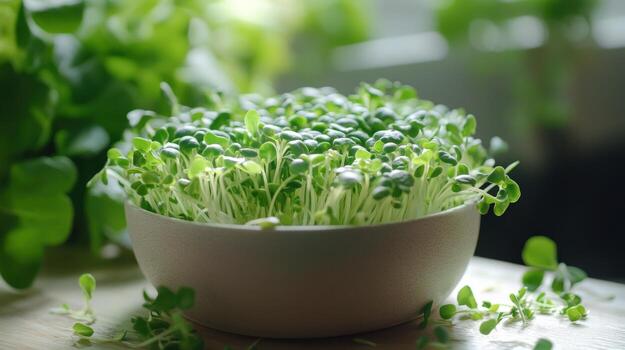
Sulforaphane is created when plant cell walls rupture to mix glucoraphanin with myrosinase enzymes. Chewing raw sprouts thoroughly maximizes this enzymatic conversion.
Cooking above 60°C (140°F) deactivates heat-sensitive myrosinase enzymes. Eat sprouts fresh and raw, or add to warm dishes right before eating.
If you lightly steam or warm cruciferous greens, adding a pinch of raw ground mustard seed powder introduces fresh myrosinase to boost sulforaphane creation.
Keep fresh sprouts in a breathable, paper towel-lined container at 4°C in the refrigerator and consume within 5 days for peak active glucoraphanin.
Traditional preparations and global recipes celebrating wholesome ingredients, balanced textures, and rich culinary heritage.
Generous handful of raw crisp broccoli sprouts piled over creamy mashed avocado sourdough with cold-pressed olive oil and flaky sea salt.
Blended raw broccoli sprouts, crisp Persian cucumbers, green apple, fresh ginger, and lemon juice to maximize sulforaphane yield.
Warm quinoa, roasted sweet potatoes, and steamed kale topped with fresh raw broccoli sprouts and toasted mustard seed dressing.
Flaked wild salmon served over mixed organic greens, raw broccoli sprouts, and ground yellow mustard seed vinaigrette.
According to Healthline and clinical studies, broccoli sprouts are the richest source of glucoraphanin precursor. Eating raw sprouts generates sulforaphane, supporting liver detoxification, Nrf2 cellular defense, and gut health.
3-day-old broccoli sprouts contain **10 to 100 times higher concentrations** of glucoraphanin than mature broccoli heads (PMID 9294217), allowing you to get high sulforaphane benefits from small culinary portions.
Cooking sprouts above 60°C deactivates the myrosinase enzyme needed to convert glucoraphanin into sulforaphane. Eating them raw or blending them cold keeps myrosinase fully active.
Yes! A 12-week randomized clinical trial (PMID 24913818) demonstrated that drinking a broccoli sprout beverage significantly accelerated the body's urinary excretion of airborne pollutants like benzene by 61%.
Raw sprouts require strict food safety because they grow in warm, humid conditions. Pregnant women, elderly individuals, and immunocompromised patients should cook sprouts or consult their healthcare provider before eating raw sprouts.
Have a moment? Share your feedback or suggestions via Google to help us produce even higher quality, evidence-based nutrition guides.
No saved articles yet.
Click the bookmark button inside any article to save it here for offline reading!
Hi! I am Mapple AI, your food science research companion. Ask me anything about biomolecules, organic diet patterns, or longevity recipes.