01
Raw Crushed Garlic & Herb Infused Olive Oil
Explore Recipe GuideMinced raw garlic allowed to rest 10 minutes for full allicin activation, whisked with cold-pressed olive oil, oregano, and sea salt.
 Mapple Health
 Garlic (Allium sativum) is one of the most revered culinary and medicinal vegetables in world history. Belonging to the Amaryllidaceae allium family, garlic is celebrated for its dense concentration of bioactive organosulfur compounds, including alliin, allicin, diallyl disulfide, and S-allylcysteine. Clinical trials published in Advances in Therapy, BMC Cardiovascular Disorders, and The Journal of Nutrition demonstrate that regular garlic intake stimulates natural killer (NK) immune cell activity, shortens cold duration, and promotes arterial vasodilation to support blood pressure regulation.
Garlic’s health benefits depend on the enzymatic activation of its sulfur compounds.
Note on Clinical Evidence: Clinical trials (such as PMID 18554422 and PMID 23590705) utilized standardized garlic powder or aged garlic extracts (600mg-1200mg daily). Raw crushed garlic delivers natural organosulfur precursors, though potency varies by preparation.
The nutritional breakdown below represents official data from the USDA FoodData Central database for 100 grams of raw garlic compared to 3 cloves of fresh raw garlic (9g).
| Nutrient | Amount (per 100g) | Amount (per 3 cloves fresh raw garlic (9g)) | % Daily Value (%DV) | Why Your Body Needs It |
|---|---|---|---|---|
| Calories | 149 kcal | 13 kcal | — | Nutrient-dense culinary flavoring |
| Water Content | 58.6g | 5.3g | — | Low moisture, high solid bioactive compound density |
| Total Carbohydrates | 33.1g | 3.0g | — | Prebiotic fructan carbohydrates supporting gut flora |
| Dietary Fiber | 2.1g | 0.2g | 1% | Prebiotic fiber feeding beneficial gut bifidobacteria |
| Total Sugars | 1.0g | 0.09g | — | Virtually sugar-free |
| Protein | 6.36g | 0.57g | 1% | Sulfur-containing amino acid precursors |
| Glycemic Index (GI) | 15 (Low) | 15 (Low) | Low | Zero impact on blood sugar spikes |
| Vitamin C | 31.2mg | 2.8mg | 3% | Synergistic antioxidant protecting cell membranes |
| Vitamin B6 | 1.24mg | 0.11mg | 6% | Essential for neurochemical synthesis & blood health |
| Manganese | 1.67mg | 0.15mg | 7% | Mineral co-factor for antioxidant enzymes |
| Selenium | 14.2µg | 1.3µg | 2% | Trace mineral supporting immune function |
The reference matrix below outlines how raw and cooked garlic fits into everyday health management, based on clinical trials and dietary guidelines.
| Condition / Disease | Impact | General Guidance | Why (Mechanism + Verdict) |
|---|---|---|---|
| Common Cold & Immunity | Positive | Eat 1-2 crushed cloves daily | Preliminary clinical evidence. A 146-person RCT (PMID 11697022) demonstrated crushed garlic reduced cold incidence by 63% and total sick-days by 70%, though broader meta-analyses note more trials are needed. |
| High Blood Pressure (Hypertension) | Positive | Include crushed garlic daily | Strong clinical evidence. Meta-analyses (PMID 18554422) show garlic organosulfurs lower systolic BP by ~8.4 mmHg in hypertensive adults. |
| High Cholesterol | Positive | Eat raw crushed garlic | Good supportive evidence. Meta-analyses of 39 trials (PMID 23590705) show garlic reduces total cholesterol by ~8% and LDL by ~9% in hypercholesterolemic adults. |
| Prebiotic Gut Health | Positive | Enjoy cooked or raw | Good supportive evidence. Fructan carbohydrates nourish beneficial gut bacteria like Bifidobacteria. |
| Pets (Dogs & Cats) | Toxic | Keep completely away from pets | Toxic to pets. Allium vegetables contain thiosulfates that cause oxidative damage to red blood cells in dogs and cats. |
Explore visual varieties and characteristics.
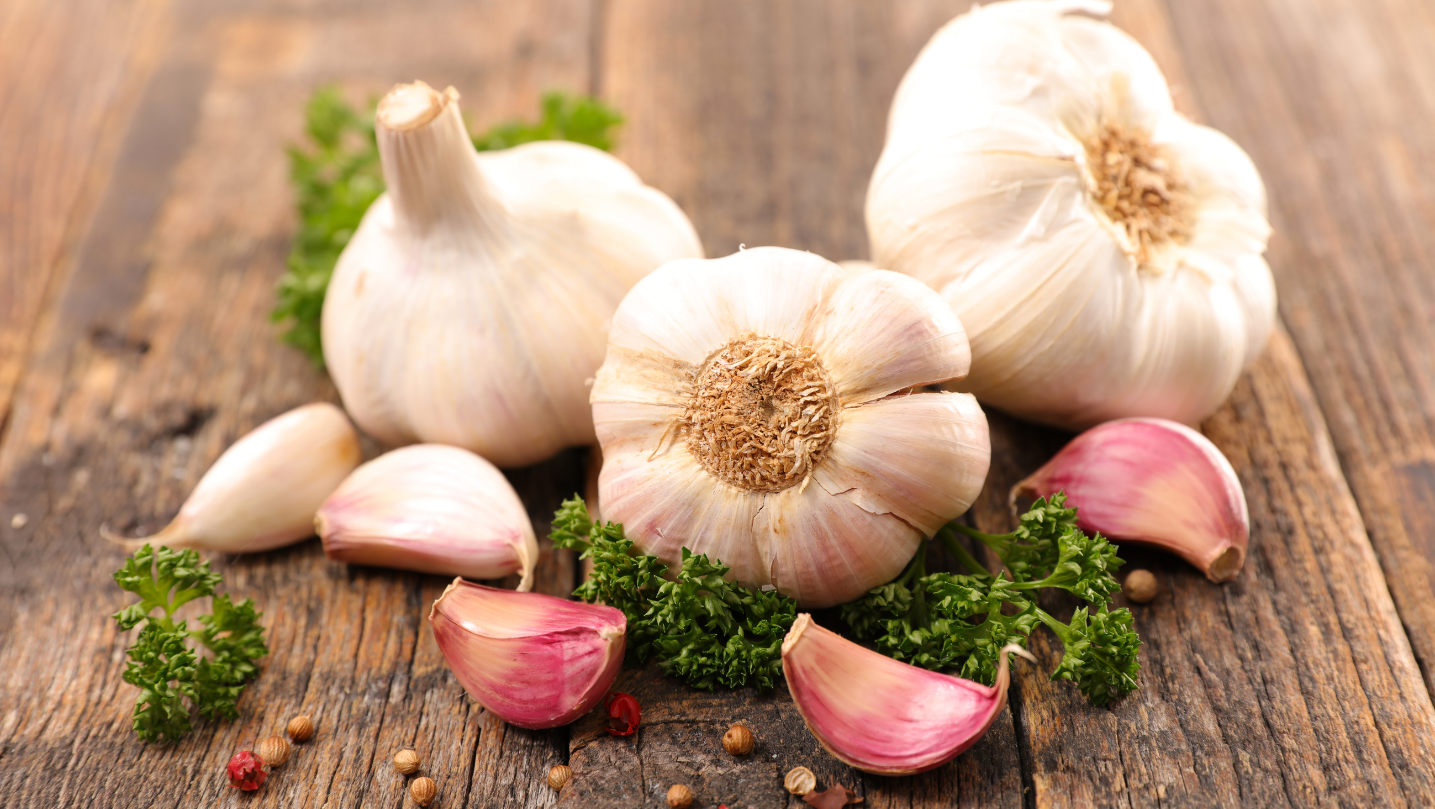
Always crush or chop raw garlic and wait 10 minutes before cooking; this crucial window allows alliinase to convert alliin into bioactive allicin before heat exposure.
Mixing crushed raw garlic with extra virgin olive oil or fresh lemon juice reduces stomach irritation while preserving active organosulfur compounds.
Sustained high heat breaks down organosulfurs. Add garlic during the final 2 minutes of sautéing or simmering to retain maximum medicinal potency.
Allium vegetables (garlic, onions, shallots, chives) are toxic to dogs and cats and must never be fed to pets.
Traditional preparations and global recipes celebrating wholesome ingredients, balanced textures, and rich culinary heritage.
Minced raw garlic allowed to rest 10 minutes for full allicin activation, whisked with cold-pressed olive oil, oregano, and sea salt.
Sizzling extra virgin olive oil infused with thinly sliced garlic cloves, red pepper flakes, fresh parsley, and wild shrimp.
Slow-roasted whole garlic heads baked until creamy, buttery, and delicately sweet, spread over warm whole-grain sourdough.
Simmered smashed garlic cloves, cannellini beans, kale, and fragrant fresh sage in a rich extra virgin olive oil broth.
According to Healthline and clinical studies, garlic is rich in organosulfur compounds, allicin, Vitamin C, and B6. Eating garlic supports immune cell defense, blood pressure regulation, and vascular health.
Intact garlic contains no allicin! Crushing ruptures plant cells, bringing **alliin** into contact with **alliinase**. Letting it rest for 10 minutes allows allicin to fully synthesize before heat deactivates the enzyme.
Yes! A 146-participant clinical trial (PMID 11697022) demonstrated that daily garlic supplementation reduced common cold occurrence by **63%** and reduced total sick-days across the study group by 70%.
Yes! Clinical meta-analyses (PMID 18554422) show that garlic preparations lower systolic blood pressure by an average of **8.4 mmHg** in hypertensive individuals.
Raw crushed garlic contains higher un-degraded allicin concentrations. However, if you let crushed garlic rest 10 minutes *before* cooking, many organosulfurs survive light heat.
Have a moment? Share your feedback or suggestions via Google to help us produce even higher quality, evidence-based nutrition guides.
No saved articles yet.
Click the bookmark button inside any article to save it here for offline reading!
Hi! I am Mapple AI, your food science research companion. Ask me anything about biomolecules, organic diet patterns, or longevity recipes.