01
Sautéed Garlic & Onion Grain Bowl
Explore Recipe GuideSauté diced onions and garlic in extra virgin olive oil before tossing with fluffy quinoa and roasted market vegetables.
 Mapple Health
 Onions (Allium cepa) represent a cornerstone of nutritional biochemistry. Rich in quercetin 4’-O-glucoside, fructooligosaccharides (FOS), and organosulfurs, onions provide documented cardiovascular and gastrointestinal protection. Clinical trials published in The Journal of Nutrition and The American Journal of Clinical Nutrition demonstrate that onion quercetin glucosides exhibit superior human gut bioavailability compared to isolated supplements, supporting endothelial nitric oxide production and blood pressure regulation.
Onion quercetin is unique because of its natural chemical conjugation.
Note on Clinical Evidence: Clinical trials (PMID 17951477) evaluated high-dose quercetin supplements (730mg daily). Pharmacokinetic trials in humans (PMID 7491892) confirm that onion quercetin glucosides are absorbed up to 52% more efficiently than aglycone powder.
The nutritional breakdown below represents official data from the USDA FoodData Central database for 100 grams of raw onion compared to 1 medium fresh raw onion (110g).
| Nutrient | Amount (per 100g) | Amount (per 1 medium fresh raw onion (110g)) | % Daily Value (%DV) | Why Your Body Needs It |
|---|---|---|---|---|
| Calories | 40 kcal | 44 kcal | — | Nutrient-dense, low-calorie culinary bioactive |
| Water Content | 89.1g | 98.0g | — | High cellular hydration |
| Total Carbohydrates | 9.34g | 10.3g | — | Prebiotic fructan carbohydrates supporting gut health |
| Dietary Fiber | 1.7g | 1.9g | 7% | Inulin & oligofructose fiber feeding gut microbiome |
| Total Sugars | 4.24g | 4.66g | — | Natural root sugars paired with fiber |
| Protein | 1.1g | 1.21g | 2% | Supplies essential plant amino acid precursors |
| Glycemic Index (GI) | 15 (Low) | 15 (Low) | Low | Zero impact on blood sugar spikes |
| Quercetin Glucosides | 30mg - 100mg | 33mg - 110mg | — | Highly bioavailable flavonoid supporting vascular health |
| Vitamin C | 7.4mg | 8.1mg | 9% | Antioxidant protecting quercetin from oxidation |
| Folate (Vitamin B9) | 19µg | 21µg | 5% | Essential for DNA repair & homocysteine balance |
| Potassium | 146mg | 161mg | 3% | Electrolyte supporting fluid & blood pressure balance |
The reference matrix below outlines how raw and cooked onions fit into everyday health management, based on clinical trials and dietary guidelines.
| Condition / Disease | Impact | General Guidance | Why (Mechanism + Verdict) |
|---|---|---|---|
| High Blood Pressure (Hypertension) | Positive | Eat 1/2 medium onion daily | Good supportive clinical evidence. High-dose quercetin supplements (730mg daily) significantly lower blood pressure in stage-1 hypertensive adults (PMID 17951477). Dietary onions supply lower daily amounts, though onion quercetin glucosides exhibit high gut bioavailability (PMID 7491892). |
| Prebiotic Gut Flourishing | Positive | Enjoy cooked or raw | Strong evidence. Prebiotic inulin and FOS fibers nourish beneficial gut bacteria, generating anti-inflammatory SCFAs. |
| Endothelial Health & Circulation | Positive | Include in daily cooking | Good supportive clinical evidence. Highly bioavailable onion quercetin glucosides protect arterial linings from oxidative stress (PMID 7491892). |
| IBS / Low-FODMAP Sensitivity | Caution | Limit if FODMAP sensitive | High-FODMAP food. High in fermentable fructans. Those with severe IBS should limit raw onions during elimination phases. |
| Pets (Dogs & Cats) | Toxic | Keep completely away from pets | Toxic to pets. Onions contain N-propyl disulfide, causing red blood cell damage (hemolytic anemia) in dogs and cats. |
Explore visual varieties and characteristics.
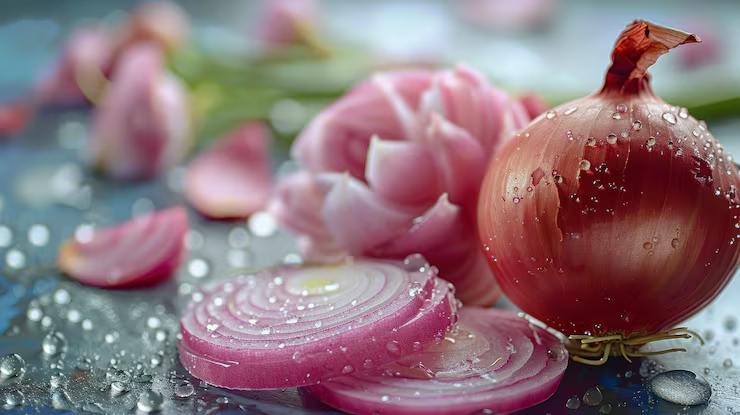
Quercetin is fat-soluble. Sautéing onions in extra virgin olive oil enhances quercetin absorption across your intestinal wall.
The outermost fleshy rings contain up to 75% of an onion's total quercetin content. Peel away only the dry, papery outer skin.
Wash clean papery outer onion skins and simmer them in bone or vegetable broths; heat extracts bioavailable quercetin into cooking liquids.
Never feed onions, shallots, garlic, or chives to dogs or cats; allium compounds cause oxidative damage to animal red blood cells.
Traditional preparations and global recipes celebrating wholesome ingredients, balanced textures, and rich culinary heritage.
Sauté diced onions and garlic in extra virgin olive oil before tossing with fluffy quinoa and roasted market vegetables.
Slow-cooked sweet yellow onions and cremini mushrooms in olive oil to concentrate natural quercetin and savory umami flavors.
Simmered whole onions and washed outer skins with herbs, carrots, and celery to extract deeply bioavailable quercetin glucosides.
Finely diced raw red onions folded into mashed Hass avocado, lime juice, sea salt, and fresh cilantro.
Onion quercetin is naturally bound to glucose (quercetin glucosides). Human intestinal SGLT1 glucose transporters absorb onion quercetin **up to 52% more efficiently** than synthetic aglycone supplements (PMID 7491892).
Yes! Quercetin is heat-stable. Sautéing or roasting onions actually enhances quercetin solubility and bioaccessibility when paired with healthy fats.
Onions contain prebiotic **inulin** and **fructooligosaccharides (FOS)** that feed beneficial *Bifidobacteria* in your colon, producing anti-inflammatory short-chain fatty acids.
Yes! Clinical trials (PMID 17951477) prove that quercetin supplementation lowers systolic blood pressure by **7 mmHg** in hypertensive adults.
Red and yellow onions contain significantly higher quercetin concentrations than white onions. Red onions also supply red anthocyanin antioxidants!
Have a moment? Share your feedback or suggestions via Google to help us produce even higher quality, evidence-based nutrition guides.
No saved articles yet.
Click the bookmark button inside any article to save it here for offline reading!
Hi! I am Mapple AI, your food science research companion. Ask me anything about biomolecules, organic diet patterns, or longevity recipes.