01
Anti-Inflammatory Golden Milk
Explore Recipe GuideWarm almond or whole milk with ground turmeric, black pepper, grated ginger, and a touch of honey for enhanced curcumin absorption.
 Mapple Health
 Turmeric (Curcuma longa) is a golden-yellow subterranean rhizome celebrated in Indian Ayurvedic and traditional Chinese medicine for over 4,000 years. Belonging to the Zingiberaceae ginger family, turmeric owes its vibrant color and therapeutic power to curcuminoids—primarily curcumin, demethoxycurcumin, and bisdemethoxycurcumin. Clinical trials and meta-analyses published in Planta Medica and Journal of Medicinal Food demonstrate that curcumin inhibits the NF-kB inflammatory master switch, suppressing pro-inflammatory COX-2 and LOX enzymes to relieve joint pain and support vascular endothelial wellness.
Curcumin’s anti-inflammatory power requires proper formulation for gut absorption.
Note on Clinical Form: Clinical trials (PMID 27533649) evaluated standardized 95% curcuminoid extracts (1,000mg daily) paired with piperine. While piperine dramatically boosts high-dose curcumin absorption (PMID 9619120), culinary turmeric powder contains ~3% curcuminoids by weight (90-150mg per tsp).
The nutritional breakdown below represents official data from the USDA FoodData Central database for 100 grams of ground turmeric powder compared to 1 teaspoon of ground turmeric (3g).
| Nutrient | Amount (per 100g) | Amount (per 1 teaspoon ground turmeric powder (3g)) | % Daily Value (%DV) | Why Your Body Needs It |
|---|---|---|---|---|
| Calories | 312 kcal | 9 kcal | — | Concentrated polyphenol root energy |
| Total Carbohydrates | 67.1g | 2.0g | — | Root carbohydrates rich in prebiotic fiber |
| Dietary Fiber | 22.7g | 0.7g | 2% | Supports intestinal transit & gut microbiome |
| Total Sugars | 3.2g | 0.1g | — | Virtually sugar-free |
| Total Fat | 3.25g | 0.1g | <1% | Contains natural essential turmeric oils (turmerones) |
| Protein | 9.68g | 0.29g | <1% | Plant amino acid precursors |
| Glycemic Index (GI) | 15 (Low) | 15 (Low) | Low | Zero impact on blood glucose spikes |
| Curcuminoid Polyphenols | 3,000mg - 5,000mg | 90mg - 150mg | — | Master NF-kB inhibitor & cellular antioxidant |
| Iron | 55.0mg | 1.65mg | 9% | Exceptionally dense plant iron for hemoglobin synthesis |
| Manganese | 19.8mg | 0.59mg | 26% | Mineral co-factor for superoxide dismutase (SOD) |
| Potassium | 2,080mg | 62mg | 1% | Electrolyte supporting fluid balance & blood pressure |
The reference matrix below outlines how fresh root, ground powder, and piperine-paired turmeric fit into everyday health management, based on clinical trials and dietary guidelines.
| Condition / Disease | Impact | General Guidance | Why (Mechanism + Verdict) |
|---|---|---|---|
| Osteoarthritis & Joint Pain | Positive | Take with black pepper & fat | Strong clinical evidence. Meta-analyses of RCTs (PMID 27533649) show standardized curcumin extract paired with piperine significantly reduces joint pain and stiffness. |
| Systemic Anti-Inflammation | Positive | Drink Golden Milk daily | Strong clinical evidence. Curcumin blocks the NF-kB master switch, downregulating pro-inflammatory COX-2 and IL-6 cytokines. |
| Vascular Endothelial Health | Positive | Include in weekly diet | Good supportive evidence. Curcumin antioxidants improve endothelial nitric oxide synthesis and protect LDL from oxidation. |
| Gallbladder Issues / Biliary Obstruction | Caution | Avoid high dose extracts | Stimulates bile contraction. Curcumin causes gallbladder contraction. Those with active gallstones or bile duct obstruction should avoid high-dose extracts. |
Explore visual varieties and characteristics.
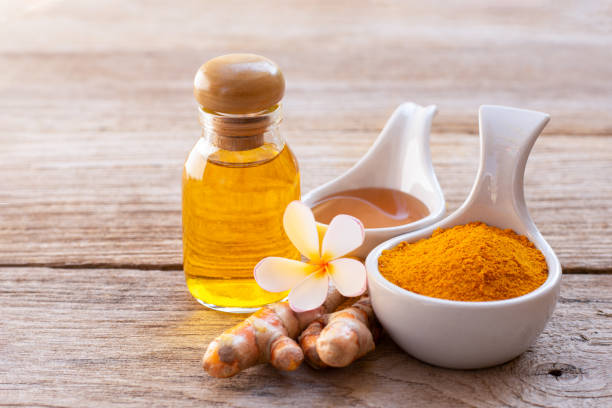
Never consume turmeric alone! Adding a pinch of black pepper supplies piperine, which boosts curcumin bioavailability by 2,000% (PMID 9619120).
Curcumin is fat-soluble. Always cook turmeric in extra virgin olive oil, grass-fed ghee, coconut oil, or pair with avocado.
Warm turmeric gently in oil or milk to dissolve lipophilic curcuminoids without charring delicate volatile aromatic turmerone oils.
Curcumin degrades under direct UV sunlight. Store ground turmeric powder in an amber glass jar in a cool, dark pantry.
Traditional preparations and global recipes celebrating wholesome ingredients, balanced textures, and rich culinary heritage.
Warm almond or whole milk with ground turmeric, black pepper, grated ginger, and a touch of honey for enhanced curcumin absorption.
Crispy roasted cauliflower florets tossed in extra virgin olive oil, vibrant turmeric powder, black pepper, and minced garlic.
Fragrant basmati rice infused with turmeric, crushed black pepper, cloves, and whole cardamom pods.
Whisked fresh grated turmeric and ginger rhizomes, cold-pressed olive oil, lemon juice, and freshly cracked black pepper.
According to Healthline and clinical studies, turmeric is rich in curcumin, manganese, iron, and essential oils. Eating turmeric supports joint pain relief, NF-kB anti-inflammation, and vascular health.
Raw curcumin is rapidly metabolized by the liver. **Piperine** in black pepper blocks liver glucuronidation, increasing human curcumin absorption by an amazing **2,000%** (PMID 9619120).
Clinical meta-analyses (PMID 27533649) show that curcumin inhibits **NF-kB**, the nuclear master switch that triggers pro-inflammatory COX-2 enzymes and joint cytokines, significantly reducing joint stiffness.
Both are beneficial! Fresh root contains natural essential oils (turmerones) that aid curcumin absorption. Dried powder offers concentrated curcumin per gram.
Yes! Curcumin is a intense natural yellow pigment. Use rubbing alcohol or baking soda paste to easily remove yellow turmeric stains from counters.
While culinary turmeric in food is 100% safe, taking ultra-high-dose turmeric or curcumin supplements can cause side effects in certain people. The 10 main documented side effects include: **1) Stomach upset & nausea**, **2) Acid reflux & GERD**, **3) Increased bleeding risk** (due to blood-thinning properties), **4) Gallbladder pain** (stimulates gallbladder contractions, dangerous for gallstones), **5) Increased kidney stone risk** (high in oxalates), **6) Sudden blood sugar drops** (if combined with diabetes medication), **7) Excessively low blood pressure**, **8) Reduced iron absorption**, **9) Allergic skin rash**, and **10) Rare liver strain** from mega-dose supplements. Enjoying 1 to 2 teaspoons of real turmeric spice in daily cooking is completely safe and beneficial for almost everyone!
Have a moment? Share your feedback or suggestions via Google to help us produce even higher quality, evidence-based nutrition guides.
No saved articles yet.
Click the bookmark button inside any article to save it here for offline reading!
Hi! I am Mapple AI, your food science research companion. Ask me anything about biomolecules, organic diet patterns, or longevity recipes.