01
Traditional Amazonian Acai Bowl
In northern Brazil, fresh unsweetened acai pulp is served in a clay bowl with crispy tapioca pearls and fried river fish as a traditional savory meal.
 Mapple Health
 Acai berries are small, deep purple fruits that grow on tall palm trees in the Amazon rainforest. Unlike most fruits that are packed with water and sugar, acai berries are uniquely rich in healthy monounsaturated fats and powerful plant antioxidants called anthocyanins. Preliminary clinical studies published in the NCBI PubMed database suggest that consuming unsweetened acai pulp may help support healthy cholesterol levels and fight oxidative stress in your body.
The deep purple color of acai berries comes from a dense concentration of anthocyanins, particularly cyanidin-3-glucoside. In laboratory tests, acai berries demonstrate high antioxidant capacity. (Note: While early lab tests used the ORAC scale to rate acai’s antioxidant capacity, the USDA retired the ORAC database in 2012 because test-tube scores do not directly translate to biological health effects inside the human body).
The nutritional values below represent standard analyses for 100 grams of unsweetened frozen acai pulp compared to a typical 150-gram acai bowl serving.
| Nutrient | Amount (per 100g) | Amount (per 100g unsweetened acai pulp) | % Daily Value (%DV) | Why Your Body Needs It |
|---|---|---|---|---|
| Calories | 70 kcal (70–90 range) | 105 kcal | — | Gentle, natural energy from healthy fats |
| Water Content | 85.0g | 127.5g | — | Keeps you hydrated and refreshed |
| Total Carbohydrates | 4.0g | 6.0g | — | Slow-release carbs paired with natural fiber |
| Dietary Fiber | 3.0g | 4.5g | — | Supports healthy digestion and bowel movement |
| Total Sugars (Unsweetened) | 1.5g (0.5–2g range) | 2.25g | — | Virtually sugar-free when unflavored |
| Healthy Total Fats | 5.0g | 7.5g | — | Heart-healthy fats that aid antioxidant absorption |
| Oleic Acid (Omega-9) | 2.8g | 4.2g | — | Monounsaturated fat also found in olive oil |
| Linoleic Acid (Omega-6) | 0.6g | 0.9g | — | Essential fatty acid for cell membrane health |
| Protein | 1.5g | 2.25g | — | Small natural protein contribution |
| Glycemic Index (GI) | — | 20 (Low) | Low | Does not trigger sharp blood sugar spikes |
| Calcium | 35mg | 52.5mg | — | Supports bone and muscle function |
| Iron | 1.2mg | 1.8mg | — | Helps carry oxygen throughout your blood |
| Potassium | 120mg | 180mg | — | Supports healthy blood pressure and heart rhythm |
| Vitamin A | 750 IU | 1125 IU | — | Supports eye health and immune defense |
Commercial pre-sweetened acai packs often add 12g or more of refined sugar per 100g, so checking ingredient labels is essential.
The reference matrix below summarizes how pure unsweetened acai fits into everyday health management, based on preliminary research and nutritional guidelines.
| Condition / Disease | Impact | General Guidance | Why (Mechanism + Verdict) |
|---|---|---|---|
| Diabetes & Blood Sugar | Positive | Use unsweetened pulp only | May help support blood sugar. Pure acai contains low sugar (1.5g/100g) and a low GI (20), making it a safe fruit base when prepared without added syrups. |
| High Cholesterol | Positive | Consume 100g daily in meals | Promising preliminary findings. Monounsaturated fats and plant sterols may help support healthy lipid levels alongside a balanced diet. |
| Heart & Vascular Health | Positive | Enjoy as part of a varied diet | Early research indicates benefits. Antioxidants protect blood lipids from oxidative stress, though clinical studies show no direct effect on blood pressure. |
| Weight Management | Positive | Combine with protein & nuts | Helpful snack option. Healthy fats and dietary fiber expand in your stomach to promote satiety, helping curb unnecessary sugar cravings. |
| Gut Microbiome Health | Positive | Blend into probiotic yogurt | Good digestive support. Natural polyphenols and dietary fiber act as prebiotics, nourishing beneficial gut bacteria in your colon. |
| Pregnancy | Positive | Eat pure paste; wash well | Safe and nourishing. Provides natural iron, calcium, Vitamin A, and healthy fats as part of a balanced prenatal diet. |
| Kidney Disease (CKD) | Caution | Monitor daily portions | Requires tracking. Contains 120mg potassium per 100g, which must be tracked carefully in late-stage renal diets. |
| Infants & Children | Positive | Pureed smoothie blends | Safe and healthy. Provides natural antioxidants and healthy fats for growing children when prepared without added sugars. |
| Pets (Dogs) | Caution | Plain unsweetened pulp only | Plain pulp is safe in small amounts. However, commercial acai bowls containing chocolate, xylitol sweetener, or raisins are highly toxic to dogs. |
| IBS (Low FODMAP Diets) | Positive | Enjoy freely when pure | Low FODMAP friendly. Pure unsweetened acai is naturally low in fermentable sugars, making it gentle on sensitive stomachs. |
| Medication Interactions | Caution | Separate by 2–4 hours | High antioxidant load. Separate concentrated antioxidant doses from specific blood-thinning medications as advised by your physician. |
Explore visual varieties and characteristics.
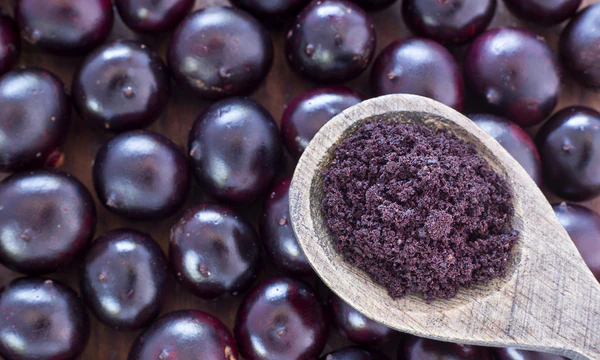
Commercial acai bowls often add sugar, artificial syrups, and sweet fruit juices. Look for 100% pure acai fruit pulp with no added sugar.
Combine acai pulp with almond butter, chia seeds, or raw walnuts. Healthy fats help your gut absorb acai's fat-soluble antioxidants much more effectively.
Avoid boiling or cooking acai pulp. High heat breaks down delicate anthocyanin antioxidants. Always enjoy acai raw, chilled, or frozen.
Pair your acai smoothie with Greek yogurt, hemp seeds, or clean protein powder to create a complete, balanced breakfast that keeps blood sugar steady all morning.
Traditional preparations and global recipes celebrating wholesome ingredients, balanced textures, and rich culinary heritage.
In northern Brazil, fresh unsweetened acai pulp is served in a clay bowl with crispy tapioca pearls and fried river fish as a traditional savory meal.
A thick blend of frozen unsweetened acai pulp, almond milk, chia seeds, and half a banana, topped with raw walnuts and pumpkin seeds.
A refreshing drink combining pure acai pulp, plant protein powder, coconut water, and a tablespoon of almond butter for muscle recovery.
A 100% fruit sorbet made by whipping frozen acai pulp with a splash of fresh lime juice for a cold, low-sugar summer treat.
According to Healthline and preliminary clinical studies, acai berries are rich in monounsaturated fats and anthocyanin antioxidants that help fight free radicals, support healthy cholesterol levels, and nourish gut microbiome health.
Yes! Pure unsweetened acai pulp contains only about 1.5 grams of natural sugar per 100 grams. However, commercial acai bowls often contain added sugar, so it is best to check labels or prepare your bowls at home with unsweetened frozen pulp.
Acai is rich in oleic acid (omega-9 monounsaturated fat). These healthy fats form natural droplets in your gut that carry acai's anthocyanin antioxidants across your intestinal wall into your bloodstream much more effectively.
Yes. Pure unsweetened acai has a low Glycemic Index (GI 20) and very low natural sugar. When prepared with unsweetened plant milk, nuts, and seeds instead of sugary syrups, it is a great choice for blood sugar management.
No. While acai antioxidants support general vascular health, human clinical trials (such as PMID 21569436) observed no significant effect on blood pressure. Acai should be enjoyed as part of a healthy diet, not as a blood pressure treatment.
Yes. Frozen acai pulp preserves the natural lipid-antioxidant matrix of the fresh fruit. High-heat drying used in some commercial powders can degrade delicate healthy fats and volatile antioxidants.
Have a moment? Share your feedback or suggestions via Google to help us produce even higher quality, evidence-based nutrition guides.
No saved articles yet.
Click the bookmark button inside any article to save it here for offline reading!
Hi! I am Mapple AI, your food science research companion. Ask me anything about biomolecules, organic diet patterns, or longevity recipes.