01
Garlic & Lemon Steamed Tuscan Kale
Explore Recipe GuideTender steamed Lacinato kale drizzled with cold-pressed olive oil, minced garlic, and fresh lemon juice to enhance bile acid binding.
 Mapple Health
 Kale is widely celebrated as a nutritional powerhouse among cruciferous green vegetables. Belonging to the Brassicaceae cabbage family, kale provides exceptional concentrations of Vitamin K1 (phylloquinone), Vitamin C, Vitamin A (beta-carotene), bioavailable plant calcium, and potent sulfur compounds called glucosinolates. Clinical trials published in PLoS Medicine, Nutrition Research, and Biomedical and Environmental Sciences show that dietary kale activates osteocalcin proteins to guide calcium into bones, supports healthy cholesterol clearance through bile-acid binding, and shields cellular DNA from oxidative stress.
Kale offers unique physiological benefits depending on whether it is consumed raw or lightly steamed.
The nutritional breakdown below represents official data from the USDA FoodData Central database for 100 grams of raw chopped kale compared to 1 cup of fresh raw kale (67g).
| Nutrient | Amount (per 100g) | Amount (per 1 cup chopped fresh raw kale (67g)) | % Daily Value (%DV) | Why Your Body Needs It |
|---|---|---|---|---|
| Calories | 35 kcal | 23 kcal | — | Exceptionally light, nutrient-dense green energy |
| Water Content | 89.6g | 60.0g | — | Hydrates body tissues and intestinal tract |
| Total Carbohydrates | 4.4g | 3.0g | — | Low-carb vegetable rich in prebiotic plant fiber |
| Dietary Fiber | 4.1g | 2.8g | 10% | Soluble & insoluble fiber for digestive regularity |
| Total Sugars | 0.99g | 0.66g | — | Virtually sugar-free |
| Total Fat | 1.49g | 1.0g | 1% | Contains healthy plant alpha-linolenic acid (ALA) |
| Protein | 2.92g | 1.96g | 4% | High natural protein ratio for a green leaf |
| Glycemic Index (GI) | 15 (Low) | 15 (Low) | Low | Zero impact on blood glucose spikes |
| Vitamin K1 | 390µg | 261µg | 218% | Carboxylates osteocalcin to build bone matrix |
| Vitamin C | 93.4mg | 62.6mg | 70% | Potent antioxidant for collagen & immune defense |
| Vitamin A (Beta-Carotene) | 241µg RAE | 161µg RAE | 18% | Supports vision, eye tissues, and mucosal barrier |
| Calcium | 254mg | 170mg | 13% | Low-oxalate plant calcium with high absorption |
| Potassium | 348mg | 233mg | 5% | Supports healthy blood pressure & fluid balance |
The reference matrix below outlines how fresh and cooked kale fits into everyday health management, based on clinical trials and dietary guidelines.
| Condition / Disease | Impact | General Guidance | Why (Mechanism + Verdict) |
|---|---|---|---|
| Bone Density & Osteoporosis | Positive | Eat 1 cup steamed daily | Promising evidence. 1 cup raw supplies 218% DV Vitamin K1 (activating osteocalcin biomarkers, PMID 18922041) and 170mg low-oxalate calcium to support bone matrix health. |
| High Cholesterol | Positive | Eat steamed kale 3x/week | Promising laboratory evidence. In vitro studies (PMID 19083431) show steamed kale binds digestive bile acids, while human trial data (PMID 18548846) observed improved lipid ratios. |
| Hypothyroidism (Goitrogens) | Caution | Cook kale thoroughly | Heat reduces goitrogens. Raw kale contains glucosinolates (goitrogens) that can compete with iodine. Cooking significantly reduces goitrogenic activity by deactivating myrosinase. |
| Diabetes & Blood Sugar | Positive | Enjoy raw or cooked freely | Excellent choice. Low GI (15) and 2.8g fiber per cup prevent blood sugar spikes and promote long-term insulin sensitivity. |
| Blood Thinners (Warfarin) | Caution | Keep portion intake consistent | Requires consistent Vitamin K intake. High Vitamin K1 (261µg/cup) interacts with Warfarin. Patients must maintain stable day-to-day intake. |
| Kidney Disease (CKD) | Caution | Track potassium portions | Portion sensitive. Contains 348mg potassium per 100g. Patients on strict renal potassium limits should measure portions. |
| Pregnancy | Positive | Wash raw; eat cooked | Nourishing option. Supplies natural Folate, calcium, Vitamin C, and non-heme iron essential for maternal blood volume and tissue growth. |
| Pets (Dogs) | Caution | Small steamed treat only | Feed in small amounts. Small bites of plain cooked kale are safe. Avoid large raw portions due to calcium oxalates and isothiocyanates. |
Explore visual varieties and characteristics.
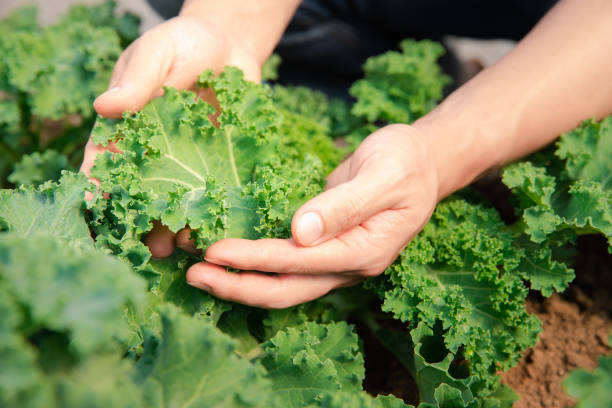
Laboratory studies show steam-cooking kale alters its plant fiber matrix, significantly boosting its ability to bind bile acids in your gut (PMID 19083431).
When making raw kale salads, rub leaves with extra virgin olive oil and lemon juice for 2 minutes to break down tough cellulose fibers and ease digestion.
Heat deactivates myrosinase enzymes, significantly reducing raw glucosinolates from competing with iodine uptake in thyroid tissues.
Vitamin K1 is fat-soluble. Always pair raw or cooked kale with extra virgin olive oil, avocado, or nuts to transport Vitamin K across your intestinal wall.
Traditional preparations and global recipes celebrating wholesome ingredients, balanced textures, and rich culinary heritage.
Tender steamed Lacinato kale drizzled with cold-pressed olive oil, minced garlic, and fresh lemon juice to enhance bile acid binding.
Tossed curly kale leaves baked in olive oil and sea salt until shatteringly crisp for a nutrient-dense mineral snack.
Raw kale massaged in lemon-olive oil dressing, tossed with shaved parmesan, toasted almonds, and sweet dried cranberries.
Hearty slow-simmered kale, creamy white cannellini beans, ripe tomatoes, and aromatic rosemary in a savory vegetable broth.
According to Healthline and clinical studies, kale is rich in Vitamin K1, Vitamin C, bioavailable calcium, and antioxidants. Eating kale supports bone health, cholesterol balance, and vascular wellness.
Vitamin K1 acts as a mandatory cofactor to **carboxylate osteocalcin**, a key bone protein biomarker (PMID 18922041).
Both have distinct advantages! Steaming kale improves its bile-acid-binding capacity in laboratory studies (PMID 19083431) and significantly reduces goitrogenic activity. Raw kale preserves maximum heat-sensitive Vitamin C.
Yes. Kale is exceptionally high in Vitamin K1 (261µg / 218% DV per cup). Patients taking Warfarin or blood thinners should maintain a consistent, stable day-to-day intake of kale rather than making sudden drastic changes.
Per calorie, yes! 100 grams of raw kale supplies 254mg of calcium with high bioavailability because kale is lower in oxalates than spinach, allowing your body to absorb plant calcium efficiently.
Have a moment? Share your feedback or suggestions via Google to help us produce even higher quality, evidence-based nutrition guides.
No saved articles yet.
Click the bookmark button inside any article to save it here for offline reading!
Hi! I am Mapple AI, your food science research companion. Ask me anything about biomolecules, organic diet patterns, or longevity recipes.