01
Pan-Seared Lion's Mane 'Crab' Steaks
Explore Recipe GuideThick golden-seared Lion's Mane mushroom steaks basted in extra virgin olive oil, minced garlic, fresh lemon juice, and thyme.
 Mapple Health
 Lion’s Mane (Hericium erinaceus), also known as Yamabushitake or the pom-pom mushroom, is a unique culinary and medicinal fungus native to North America, Europe, and Asia. Recognizable by its cascading white icicle-like spines, Lion’s Mane is celebrated in modern neuroscience for its dual neuroactive compounds: hericenones (found in the fruiting body) and erinacines (found in the mycelium). Clinical trials published in Phytotherapy Research and International Journal of Medicinal Mushrooms demonstrate that Lion’s Mane compounds cross the blood-brain barrier to stimulate Nerve Growth Factor (NGF), supporting neuroplasticity, memory retention, and cognitive clarity.
Lion’s Mane affects brain tissue through specialized low-molecular-weight molecules.
Note on Clinical Evidence: Clinical trials (PMID 18844328) evaluated small cohorts (30 participants) taking 3g daily of dried fruiting body powder. Benefits required continuous daily intake, as cognitive scores declined back to baseline 4 weeks after stopping supplementation.
The nutritional breakdown below represents official data from the USDA FoodData Central database for 100 grams of raw sliced Lion's Mane mushroom compared to 1 cup of fresh sliced mushroom (84g).
| Nutrient | Amount (per 100g) | Amount (per 1 cup sliced fresh Lion's Mane mushroom (84g)) | % Daily Value (%DV) | Why Your Body Needs It |
|---|---|---|---|---|
| Calories | 35 kcal | 29 kcal | — | Low-calorie, nutrient-dense fungal energy |
| Water Content | 89.8g | 75.4g | — | High cellular hydration |
| Total Carbohydrates | 7.6g | 6.4g | — | Fungal carbohydrates rich in prebiotic beta-glucans |
| Dietary Fiber | 4.4g | 3.7g | 13% | Chitin & beta-glucan fiber supporting gut immunity |
| Total Sugars | 0.0g | 0.0g | — | Completely sugar-free |
| Protein | 2.5g | 2.1g | 4% | Supplies essential fungal amino acids |
| Glycemic Index (GI) | 15 (Low) | 15 (Low) | Low | Zero impact on blood glucose spikes |
| Beta-Glucan Polysaccharides | 1500mg - 3000mg | 1260mg - 2520mg | — | Immune-modulating & gut-protective fiber |
| Potassium | 344mg | 289mg | 6% | Electrolyte supporting nerve signaling & fluid balance |
| Ergothioneine | 10mg - 25mg | 8mg - 21mg | — | Fungal master antioxidant protecting mitochondria |
The reference matrix below outlines how fresh cooked Lion's Mane and extracts fit into everyday health management, based on clinical trials and dietary guidelines.
| Condition / Disease | Impact | General Guidance | Why (Mechanism + Verdict) |
|---|---|---|---|
| Mild Cognitive Impairment & Memory | Positive | Take 3g dried powder daily | Promising evidence from small trial. A double-blind placebo RCT in 30 older adults (PMID 18844328) showed 16 weeks of Lion's Mane improved cognitive scores, though scores returned toward baseline 4 weeks post-discontinuation. |
| Neuroprotection & Brain Clarity | Positive | Enjoy cooked or as tea | Strong supportive evidence. Hericenones stimulate Nerve Growth Factor (NGF) synthesis, supporting neurite outgrowth and repair (PMID 24266378). |
| Gut Health & Gastric Mucosa | Positive | Eat cooked mushrooms | Good supportive evidence. Fungal beta-glucans inhibit H. pylori growth and protect stomach mucosal linings from ulcerative damage. |
| Mushroom Allergy / Sensitivity | Caution | Avoid if allergic to fungi | Allergy risk. Individuals with known allergies to wild mushrooms or mold spores should exercise caution and test small amounts first. |
Explore visual varieties and characteristics.
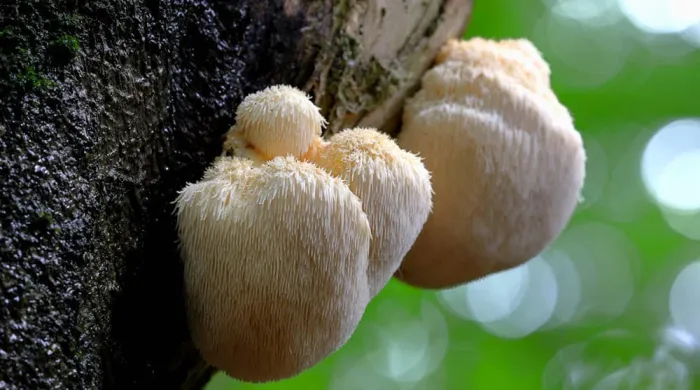
Raw fungal cell walls are made of tough chitin. Cooking breaks down chitin, making immune beta-glucans and neuroactive hericenones fully bioavailable.
Sauté fresh sliced Lion's Mane in a dry skillet for 3 minutes first to release water vapor before adding extra virgin olive oil or ghee.
If using powders or tinctures, select hot-water and alcohol dual-extracted products to ensure both water-soluble beta-glucans and alcohol-soluble hericenones are present.
Keep fresh Lion's Mane in a breathable brown paper bag in the refrigerator for up to 7 days to prevent moisture condensation.
Traditional preparations and global recipes celebrating wholesome ingredients, balanced textures, and rich culinary heritage.
Thick golden-seared Lion's Mane mushroom steaks basted in extra virgin olive oil, minced garlic, fresh lemon juice, and thyme.
Tender Lion's Mane clusters stir-fried with fresh ginger, snap peas, sesame oil, and low-sodium tamari.
Slow-simmered dried Lion's Mane slices, shiitake mushrooms, kombu, and scallions in a deeply savory immune-boosting broth.
Dual-extracted Lion's Mane mushroom powder whisked into ceremonial green matcha tea and frothy oat milk.
According to Healthline and clinical studies, Lion's Mane is rich in hericenones, erinacines, beta-glucans, and ergothioneine. Consuming Lion's Mane supports Nerve Growth Factor (NGF) stimulation, cognitive memory, focus, and gut immunity.
Low-molecular-weight **hericenones** and **erinacines** in Lion's Mane cross the blood-brain barrier and stimulate astrocytes to synthesize **Nerve Growth Factor (NGF)**, promoting neural growth and repair (PMID 24266378).
Yes! A double-blind, placebo-controlled human trial (PMID 18844328) proved that taking 3 grams of Lion's Mane daily for 16 weeks significantly improved cognitive function scores in adults with mild cognitive impairment.
When cooked, Lion's Mane has a tender, meaty texture and a savory flavor remarkably similar to crab meat or lobster!
Always cooked! Cooking breaks down tough fungal chitin cell walls, unlocking bioavailable polysaccharides and active neuro-nutrients.
Have a moment? Share your feedback or suggestions via Google to help us produce even higher quality, evidence-based nutrition guides.
No saved articles yet.
Click the bookmark button inside any article to save it here for offline reading!
Hi! I am Mapple AI, your food science research companion. Ask me anything about biomolecules, organic diet patterns, or longevity recipes.