01
Classic Banana Nut Oatmeal
Oatmeal Recipe GuideWarm rolled oats simmered with almond milk and ground cinnamon, topped with fresh banana coins, toasted walnuts, and a light drizzle of honey.
 Mapple Health
 Bananas are among the most popular and widely consumed fruits in the world. Encased in their own natural protective peel, bananas provide an accessible source of carbohydrates, dietary fiber, potassium, and vitamin B6. A standard medium banana (about 118 grams) delivers roughly 105 calories, 3.1 grams of dietary fiber, and 422 mg of potassium, with virtually zero fat or sodium.
Beyond simple calories, bananas are biologically fascinating because their nutritional makeup transforms dramatically as they ripen. Firm green bananas are rich in resistant starch—a carbohydrate fraction that resists enzymatic breakdown in the small intestine and reaches the large intestine intact. As the fruit ripens, natural enzymes convert these starches into easily digested sugars, altering both flavor and measured glycemic response.
This guide provides a comprehensive, evidence-based exploration of banana nutrition. We examine what randomized human trials, systematic reviews, and dietary guidelines actually tell us about blood pressure, gut physiology, exercise nutrition, diabetes management, and pregnancy—distinguishing genuine clinical facts from common wellness myths.
| Botanical Property | Scientific Detail |
|---|---|
| Scientific Name | Musa spp. (principally hybrids involving M. acuminata and M. balbisiana) |
| Plant Family | Musaceae (Banana Family) |
| Plant Type | Large arborescent perennial herb (not a true woody tree) |
| Fruit Morphology | Botanically classified as a berry, despite its very different appearance from familiar berries such as blueberries or strawberries |
| Geographic Origin | Tropical Asian-Pacific region (domestication began over 7,000 years ago) |
| Primary Commercial Group | Cavendish subgroup (AAA genome group) |
To understand the real health impact of bananas, it is essential to separate mechanistic laboratory findings from proven human clinical outcomes. The table below summarizes the strength and boundaries of existing research:
| Health Area | Scientific Evidence Base | What We Can Honestly Say |
|---|---|---|
| Potassium & Blood Pressure | Strong clinical evidence for potassium intake overall | Higher dietary potassium intake helps lower blood pressure, especially in adults with hypertension. Bananas are a convenient potassium source, but they are not an independent medical treatment for high blood pressure. |
| Resistant Starch & Colonic Fermentation | Robust mechanistic and clinical nutrition data | Green banana resistant starch resists small-intestine digestion and is fermented into short-chain fatty acids (SCFAs) in the colon. This contributes to normal colonic fermentation and bowel physiology without acting as a medical cure for bowel disease. |
| Diabetes & Blood Sugar | Supported by clinical consensus guidelines | Whole fruits such as bananas can be incorporated into diabetes meal planning, with carbohydrate amount and portion size considered as part of the overall eating pattern. |
| Workout Fuel & Glycogen | Strong human exercise physiology evidence | Bananas are a convenient carbohydrate-containing whole food for exercise nutrition. However, there is no clinical evidence that bananas prevent exercise-induced muscle cramps. |
| Reflux & Heartburn (GERD) | Insufficient clinical evidence | While bananas are non-acidic and well tolerated by many, claims that they coat the stomach or act as a medical antacid lack clinical backing. |
| Mood & Mental Wellbeing | Biochemical role only | Vitamin B6 participates as a cofactor in neurotransmitter synthesis, but eating bananas has not been proven to treat mood disorders or insomnia. |
A medium raw banana weighing about 118 grams provides approximately 105 calories. Because individual fruits vary naturally in size, weight is a far more accurate way to compare portions than fruit count alone:
Over 74% of a banana’s fresh weight consists of water. Virtually all of its caloric energy is derived from carbohydrates (roughly 27 grams in a medium fruit), accompanied by small amounts of plant protein (1.3 grams) and negligible fat (0.4 grams).
A banana does not simply become “healthier” or “unhealthier” as it turns from green to yellow. Rather, the fruit undergoes an orchestrated biochemical shift: its energy density does not change in the same way as its starch-to-sugar profile; much of the visible change during ripening reflects carbohydrate conversion, water movement, and tissue softening:
| Ripening Stage | Carbohydrate & Nutrient Profile | Flavor & Culinary Use |
|---|---|---|
| 1. Firm Green (Unripe) | High in starch, including a substantial resistant-starch fraction; sugar content is relatively low compared with ripe fruit. | Starchy, firm texture. Best boiled, cooked in savory dishes, or blended into green smoothies. |
| 2. Green-Yellow (Barely Ripe) | Starch conversion is actively underway. Moderate resistant starch paired with emerging natural sugars. | Mild sweetness with a firmer bite. Popular for slicing over oatmeal or eating with nut butters. |
| 3. Solid Yellow (Fully Ripe) | Most starches have converted into simple sugars (sucrose, glucose, fructose); little resistant starch remains. | Sweet, creamy, and tender. The classic snacking banana; easily digested before or after physical activity. |
| 4. Yellow with Brown Spots (Overripe) | High proportion of readily available sugars; cell walls soften substantially, releasing aromatic esters. | Very sweet and fragrant. Ideal for natural baking, pancakes, or freezing for dairy-free nice cream. |
Neither green nor ripe bananas are universally “healthier”; ripeness changes their carbohydrate structure, sweetness, texture and culinary use.
The defining nutritional distinction between green and yellow bananas lies in the structure of their carbohydrates. In unripe green bananas, a substantial fraction of the carbohydrate content consists of type-2 resistant starch (RS2).
Resistant starch earned its name because its tightly packed crystalline granules resist enzymatic hydrolysis by amylase in the human stomach and small intestine. Rather than being rapidly converted to glucose and absorbed into the bloodstream, resistant starch travels intact to the large intestine.
As the fruit ripens, plant enzymes (including alpha-amylase, beta-amylase, and starch phosphorylase) break these long starch polymers down into simple, readily absorbable mono- and disaccharides. Consequently, the higher resistant-starch content of green bananas can reduce the proportion of rapidly digestible carbohydrate, although actual post-meal glucose responses vary with ripeness, cultivar, preparation, portion size and the individual. Ripe yellow bananas, by contrast, contain a greater proportion of readily digestible carbohydrate.
When resistant starch reaches the colon, it serves as a primary substrate for microbial fermentation. Gut microorganisms ferment resistant starch in the colon and produce short-chain fatty acids (SCFAs) such as acetate, propionate, and butyrate:
The amount and profile of these metabolites depend on the type and amount of resistant starch consumed and the individual’s unique gut microbiome. A comprehensive 2022 systematic review published in The American Journal of Clinical Nutrition (PMID 34871343) confirmed that dietary resistant-starch supplementation consistently increases fecal short-chain fatty acid concentrations in humans. Similarly, a 2019 systematic review in Nutrients (PMID 31146437) evaluated health markers associated with green banana consumption.
However, while green banana resistant starch contributes to normal colonic fermentation and bowel physiology, eating an ordinary green banana should not be equated with a medical cure for bowel disease.
Bananas are widely recognized for their potassium content, supplying roughly 422 mg per medium fruit (approximately 9% of the Daily Value). Potassium is the principal intracellular mineral in the human body, playing an essential role in fluid balance, nerve transmission, and vascular physiology.
Potassium intake and sodium intake are both relevant to blood-pressure regulation. From a physiological standpoint, adequate potassium promotes urinary sodium excretion through the kidneys and supports normal vasodilation in vascular smooth muscle cells.
A landmark meta-analysis published in the British Medical Journal (BMJ) (PMID 23558164) analyzed 22 randomized controlled trials and 11 cohort studies, establishing that increased potassium intake significantly reduces systolic blood pressure (by an average of 3.49 mmHg) and diastolic blood pressure (by 1.96 mmHg) in adults, with the most pronounced benefits observed in individuals with hypertension.
The Clinical Caveat: This evidence supports adequate dietary potassium intake overall—not bananas exclusively. Eating a banana contributes to your daily potassium intake as part of a varied, nutrient-dense diet, but bananas themselves have not been established as an independent treatment for hypertension.
Official dietary guidelines from the American Diabetes Association (ADA 2026 Standards of Care) emphasize that whole fruits should not be avoided by people with diabetes. Whole fruits supply dietary fiber, micronutrients, and water, which behave very differently in the body compared to refined sugars or sweetened drinks.
Key evidence-based facts regarding bananas and glucose regulation:
Bananas hold an interesting place in digestive discussions: some consider them a binding food during loose stools, while others wonder if they cause constipation. The scientific reality depends largely on ripeness and individual tolerance:
A medium banana provides about 105 kcal, approximately 3.1 g of fiber, and about 75% water by weight, making it a practical whole-food snack. Whether it helps with weight management depends on overall energy intake and dietary pattern:
Yes. For most healthy people, bananas can easily be part of an everyday diet. There is no scientifically established universal maximum number of bananas per day. The appropriate amount depends on total calorie and carbohydrate needs, overall dietary variety, digestive tolerance, and individual medical conditions:
Bananas are widely used as a convenient carbohydrate-containing whole food in sports nutrition:
The Muscle Cramp Reality: A common athletic belief is that eating a banana prevents exercise-associated muscle cramps. However, a sports medicine study published in the Journal of Athletic Training (PMID 23182013) evaluated plasma potassium changes after banana ingestion in exercised men and demonstrated that acute post-exercise cramping is rarely caused by systemic potassium depletion alone. Muscle cramping is multifactorial, involving neuromuscular fatigue, hydration status, and sodium deficits. Bananas provide practical carbohydrate fuel, but they are not a guaranteed cure for muscle cramps.
How you prepare bananas influences their physical structure and eating experience:
During pregnancy, nutrient requirements increase to support fetal growth and maternal health. Bananas offer several practical dietary advantages:
While both belong to the botanical genus Musa, dessert bananas and plantains (cooking bananas) fulfill distinctly different culinary roles across global food systems:
| Feature | Dessert Banana (e.g., Cavendish) | Plantain (Cooking Banana) |
|---|---|---|
| Typical Use | Eaten fresh and raw when ripe; used in smoothies, cereals, and desserts. | Almost always cooked before eating (boiled, baked, roasted, or fried). |
| Starch & Sugar Profile | High sugar and low starch when fully ripe; soft and sweet. | Generally starchier than dessert bananas, particularly when green; carbohydrate composition changes substantially during ripening. |
| Peel Thickness | Thinner peel that strips away easily by hand. | Much thicker, tougher leathery peel requiring a knife to score and remove. |
| Culinary Context | Fresh snacking, breakfast bowls, baking. | Staple carbohydrate source in Latin American, Caribbean, and African cuisines (e.g., tostones, mofongo, alloco). |
Hundreds of named banana cultivars and local types are grown worldwide across tropical and subtropical regions:
Contrary to common perception, a banana plant is not a woody tree—it is a giant perennial herb. The visible “trunk” is actually a pseudostem, constructed from tightly packed, overlapping leaf sheaths spiraling upward from an underground rhizome or corm.
Many widely cultivated dessert bananas are seedless, parthenocarpic, and propagated vegetatively rather than from seed. Modern cultivated Musa includes diploid, triploid, and other genomic groups, including hybrids involving M. acuminata and M. balbisiana. Farmers commonly maintain desirable cultivars through suckers or tissue culture, which preserves the characteristics of the parent plant.
Bananas are climacteric fruits, meaning they can continue ripening after being harvested from the mother plant. This process is governed by the plant hormone ethylene:
Banana allergy is uncommon relative to major food allergens, but genuine allergic reactions do occur:
The relationship between bananas and chronic kidney disease (CKD) requires careful medical context:
Official nutrient composition from the USDA FoodData Central database comparing 100g of raw banana with 1 standard medium banana (118g).
| Nutrient | Amount (per 100g) | Amount (per 1 medium raw banana (118g)) | % Daily Value (%DV) | Why Your Body Needs It |
|---|---|---|---|---|
| Calories | 89 kcal | 105 kcal | — | Readily accessible whole-food carbohydrate energy |
| Water Content | 74.9g | 88.4g | — | Contributes to total dietary daily fluid intake |
| Total Carbohydrates | 22.8g | 26.9g | 10% | Provides carbohydrate along with dietary fiber and starches |
| Dietary Fiber | 2.6g | 3.1g | 11% | Soluble and insoluble fiber supporting bowel motility |
| Total Sugars | 12.2g | 14.4g | — | Naturally occurring fructose, glucose, and sucrose |
| Protein | 1.09g | 1.29g | 3% | Modest whole-food plant amino acid contribution |
| Total Fat | 0.33g | 0.39g | 0% | Virtually fat-free fruit profile |
| Potassium | 358mg | 422mg | 9% | Essential intracellular mineral supporting normal vascular physiology |
| Vitamin B6 (Pyridoxine) | 0.37mg | 0.43mg | 25% | Enzyme cofactor for protein metabolism and cellular function |
| Vitamin C | 8.7mg | 10.3mg | 11% | Antioxidant nutrient required for normal collagen production |
| Magnesium | 27mg | 31.9mg | 8% | Cofactor for numerous enzymatic reactions and normal neuromuscular function |
*Daily Value percentages (%DV) are based on the standard US FDA 2,000-calorie daily reference diet. Vitamin C reference DV is 90mg; Potassium reference DV is 4,700mg; Vitamin B6 reference DV is 1.7mg.
The matrix below evaluates how bananas fit into everyday health management based on clinical trials, cardiovascular reviews, and consensus dietary guidelines:
| Condition / Focus Area | Impact | General Guidance | Why (Mechanism + Verdict) |
|---|---|---|---|
| High Blood Pressure | Nutritionally Supportive | Include potassium-rich foods as part of an overall healthy diet | Evidence supports potassium, not banana therapy. A medium banana supplies ~422mg of potassium. High potassium intake is well documented in meta-analyses to help lower blood pressure in adults, especially those with hypertension. However, bananas themselves are not an independent medical treatment for high blood pressure. |
| Blood Sugar & Diabetes | Portion & Ripeness Matter | Count carbohydrate within an individualized meal plan | Compatible for many people. ADA 2026 guidelines include whole fruit in diabetes meal patterns. Whole fruits such as bananas can be incorporated into diabetes meal planning, with carbohydrate amount and portion size considered as part of the overall eating pattern. Firmer, slightly green bananas contain more resistant starch, but portion size and whole-meal pairing remain essential. |
| Gut Health & Bowel Regularity | Nutritionally Supportive | Choose ripeness according to personal digestive tolerance | Fiber and resistant starch contribute to normal colonic fermentation and bowel physiology. Firm green bananas are rich in resistant starch that ferments into short-chain fatty acids (SCFAs like butyrate). Ripe bananas provide soluble fiber, though neither replaces medical therapy for bowel disorders. |
| Athletic Performance & Exercise | Nutritionally Supportive | Use as a convenient pre- or post-workout carbohydrate snack | Convenient whole-food fuel source. Bananas provide easily digested carbohydrates and potassium. However, claims that eating a banana prevents exercise-associated muscle cramps are not supported by robust evidence; muscle cramping is complex and multifactorial. |
| Acid Reflux & Heartburn | Individual Tolerance | Observe personal trigger foods and symptoms | No proven antacid effect. While bananas are naturally low in acid and gentle for many people, there is no clinical evidence that bananas coat the stomach lining or cure GERD. Persistent heartburn warrants medical evaluation. |
| Chronic Kidney Disease (CKD) | Potassium Restriction Awareness | Monitor intake if prescribed a potassium restriction | Requires individualized renal guidance. Because one medium banana contains 422mg of potassium, people with advanced CKD on strict dietary potassium limits may need to moderate intake. It is not an absolute ban for everyone with early-stage kidney disease. |
| Pregnancy & Morning Sickness | Nutritionally Supportive | Enjoy as an easy-to-digest whole-food snack | Nutritious, gentle whole food. Bananas supply dietary vitamin B6 (0.43mg), potassium, and fluid. While clinical trials use concentrated pyridoxine supplements (25mg+) for morning sickness, bananas provide gentle everyday nourishment rather than pharmaceutical anti-nausea therapy. |
| Banana Allergy & Latex Cross-Reactivity | Potential Allergen | Seek individualized allergy evaluation if symptoms occur | Recognized fruit allergen. Banana allergy can trigger oral itching, swelling, or systemic reactions. Banana is also recognized in latex-fruit syndrome due to cross-reacting plant proteins. People with latex allergy who experience symptoms after eating banana should seek individualized allergy evaluation. |
| Pets (Dogs) | Occasional Treat | Offer small peeled pieces occasionally | Safe in moderation. Plain peeled banana flesh is safe for most dogs as an occasional treat. Do not feed the tough peel (which can cause intestinal blockage) or large quantities due to sugar content. |
A practical growing profile for this fruit. Conditions vary by variety, climate and location.
| Growing Factor | What to Know |
|---|---|
| Climate | Warm tropical to frost-free subtropical climates; highly sensitive to freezing temperatures and strong winds |
| Sunlight | Full sun to bright light; bananas perform best with abundant sunlight and suitable warmth. |
| Soil | Deep, fertile, well-draining alluvial or volcanic loam rich in organic matter |
| Ideal soil pH | Slightly acidic to neutral soils are generally preferred; good drainage is essential. |
| Water needs | High and consistent; needs regular moisture without standing water or waterlogged roots |
| Planting | Spring or early rainy season in warm frost-free periods |
| Pollination | Most cultivated edible dessert bananas and plantains develop fruit parthenocarpically without pollination |
| Pruning | Desuckering to leave 1 main fruiting pseudostem and 1 strong follower sucker per mat |
| Thinning | In some production systems, the male terminal bud or 'bell' is removed after fruit formation as part of bunch management and disease/pest control practices. |
| Main risks | Fusarium wilt (Panama disease Tropical Race 4), Black sigatoka fungal leaf spot, Wind damage and pseudostem lodging, Chilling injury from prolonged exposure to low temperatures, with frost/freezing damage occurring at substantially lower temperatures, Banana weevil and root-knot nematodes |
Explore visual varieties and characteristics.
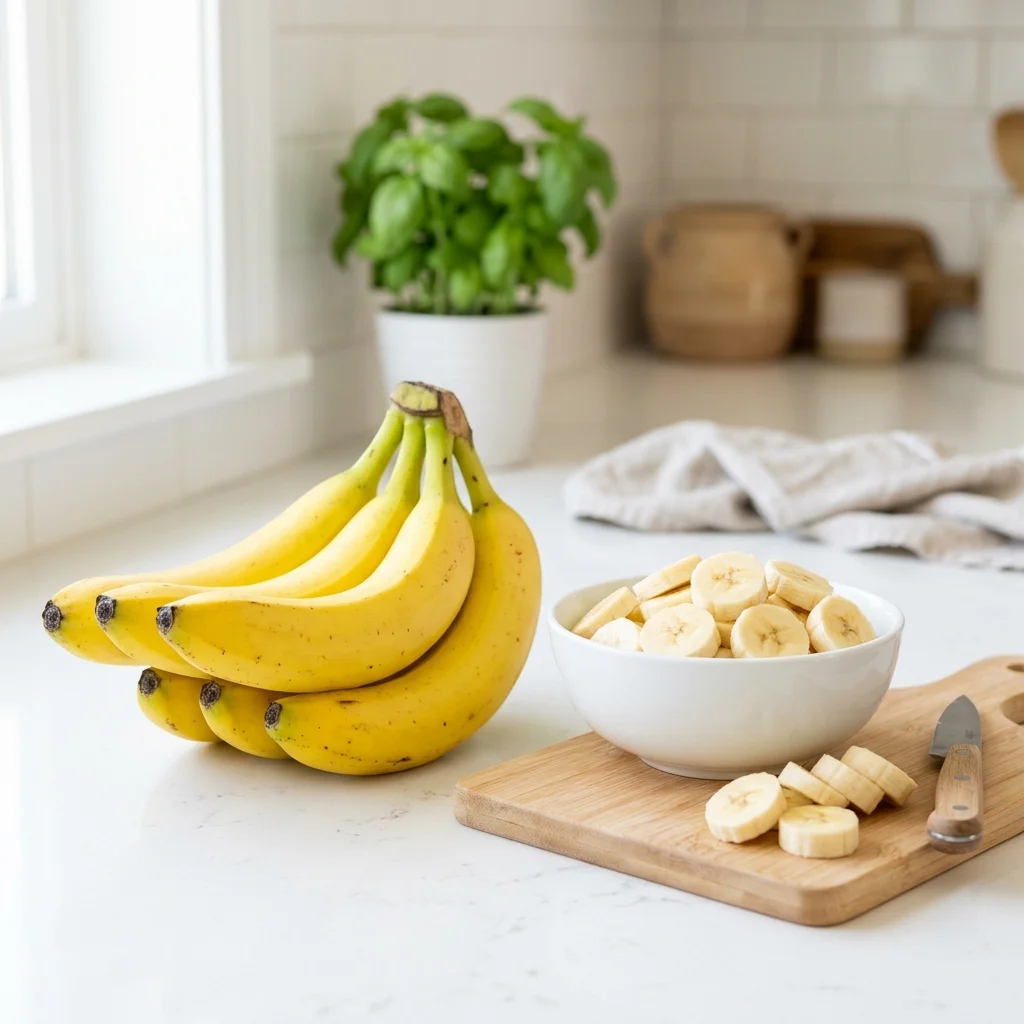
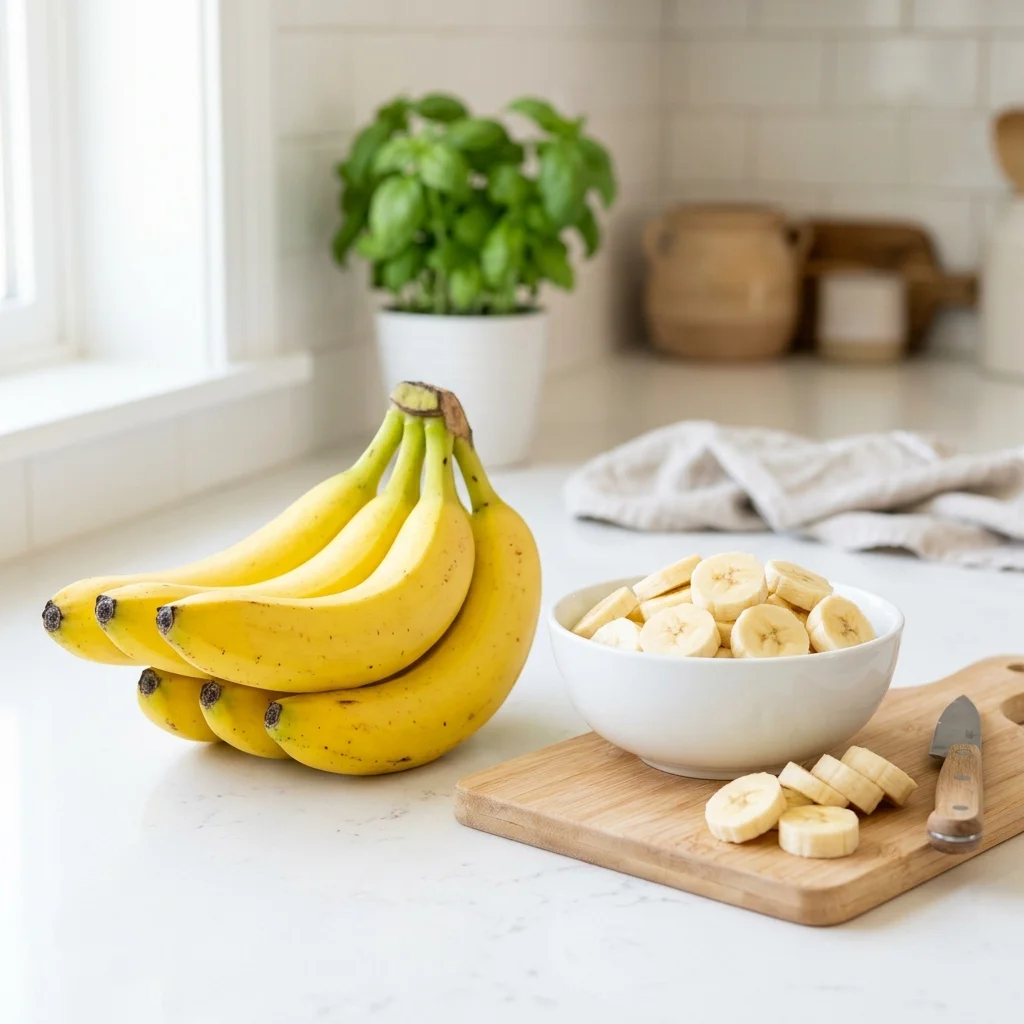
Use firmer, green-tipped bananas when you want their starchier texture and higher resistant-starch content. They can be sliced into oatmeal, blended into smoothies, or cooked in savory dishes.
As bananas ripen, natural enzymes convert starches into simple sugars. Spotty yellow bananas are softer, sweeter, and easily digested before or after physical activity.
Combine sliced bananas with Greek yogurt, cottage cheese, natural peanut butter, or walnuts. Pairing carbohydrates with protein and healthy fats creates a balanced, filling snack.
When bananas develop extensive brown spots, peel, slice, and freeze them in airtight containers. Frozen bananas blend into velvety dairy-free 'nice cream' or sweeten homemade baked goods.
Traditional preparations and global recipes celebrating wholesome ingredients, balanced textures, and rich culinary heritage.
Warm rolled oats simmered with almond milk and ground cinnamon, topped with fresh banana coins, toasted walnuts, and a light drizzle of honey.
Frozen ripe banana slices whipped in a high-powered food processor until thick, silky, and creamy like soft-serve ice cream, with zero added sugar.
Savory green cooking plantains sliced thick, twice-fried or baked until crispy golden, flattened, and lightly seasoned with sea salt and garlic.
A beloved home-baked loaf made by mashing overripe bananas with whole-wheat flour, eggs, olive oil, and warm baking spices.
Bananas are a convenient whole-food source of carbohydrates, dietary fiber, potassium, vitamin B6, and vitamin C. Including them in a balanced diet provides natural energy, contributes to daily potassium intake (supporting healthy blood pressure physiology), and supplies fiber for digestive health.
A standard medium raw banana weighing about 118 grams provides approximately 105 calories. Over 74% of a banana's weight is water, and virtually all of its energy comes from natural carbohydrates (starches and sugars).
A medium banana supplies approximately 422mg of potassium (about 9% of the daily reference value), making it one of the most accessible and popular fruit sources of potassium. However, several other foods—such as dried apricots, avocados, and baked potatoes with skin—contain equal or higher concentrations of potassium per serving.
Yes. The American Diabetes Association includes whole fruits, including bananas, in recommended diabetes meal patterns. Because a medium banana contains about 27 grams of total carbohydrate, people with diabetes should account for portion sizes and total carbohydrate intake. Choosing a smaller portion and considering the banana's ripeness and the composition of the overall meal can help with carbohydrate management.
Firm green bananas contain substantially higher concentrations of resistant starch. Resistant starch resists digestion in the small intestine and reaches the colon, where gut microbes can ferment it into beneficial short-chain fatty acids like butyrate. Ripe yellow bananas are sweeter and softer, with a greater proportion of readily digestible carbohydrate.
As bananas ripen, plant enzymes triggered by ethylene gas break down complex starches into simple sugars (fructose, glucose, and sucrose). This transition makes the fruit softer and sweeter and increases the proportion of readily digestible carbohydrate.
Bananas provide both soluble and insoluble dietary fiber (3.1g per medium fruit), which supports normal bowel motility when consumed with adequate fluid. Greener bananas contain higher levels of resistant starch, which may slow gut transit in some sensitive individuals, whereas ripe yellow bananas contain less resistant starch than green bananas and provide dietary fiber; individual digestive tolerance varies.
A medium banana provides about 105 kcal, approximately 3.1 g of fiber, and about 75% water by weight, making it a practical whole-food snack. Whether it supports weight management depends on overall energy intake and dietary pattern.
Yes. Most people can eat a banana on an empty stomach without a problem. People who experience bloating, reflux or other digestive symptoms can adjust portion size, ripeness or meal timing according to their individual tolerance.
Yes. There is no general nutritional reason that a healthy person must avoid bananas at night. A banana can be an ordinary evening snack when it fits the person's dietary and digestive needs.
Banana peel is technically edible, but it is tough and fibrous and is not commonly eaten raw. If used as food, it should be washed thoroughly and prepared appropriately. Eating the peel is not necessary to obtain the main nutritional benefits of the fruit.
Dessert bananas (like the common Cavendish) are sweet when ripe and typically eaten raw. Plantains (cooking bananas) are larger, thicker-skinned, and generally starchier, especially when green; they are usually cooked, boiled, baked, or fried across different stages of ripeness in tropical cuisines.
Store unripe bananas at room temperature in a well-ventilated area away from direct heat. Once bananas reach your desired level of ripeness, you can place them in the refrigerator crisper drawer. The cold temperature will cause the peel to turn brown, but the inner fruit remains firm and fresh for several extra days.
Yes. Plain, peeled banana slices can be given to dogs as an occasional treat in small amounts. Always remove the tough outer peel, which can cause gastrointestinal upset or choking, and keep portions modest because bananas are relatively high in natural sugars.
Have a moment? Share your feedback or suggestions via Google to help us produce even higher quality, evidence-based nutrition guides.
No saved articles yet.
Click the bookmark button inside any article to save it here for offline reading!
Hi! I am Mapple AI, your food science research companion. Ask me anything about biomolecules, organic diet patterns, or longevity recipes.