01
Soaked Anjeer with Almonds
Dried figs rehydrated in clean water and served with almonds; a traditional way to soften figs, not a medically established constipation cure.
 Mapple Health
 The common fig (Ficus carica) is known as anjeer in Urdu and Hindi and is enjoyed fresh during its short season or dried year-round. Fresh figs are soft, juicy and delicate; dried anjeer is chewy, sweeter by weight and more concentrated in fiber and minerals. Both can fit a varied diet, but their nutrition and portions are not interchangeable.
Figs have an unusual botanical structure and a long place in Mediterranean, West Asian and South Asian food cultures. They also attract many health claims, especially around soaked anjeer for constipation, bone strength and blood sugar. Some of these claims are supported by basic nutrition; others depend on small clinical trials using fig paste, or experiments performed in laboratories rather than in people eating whole figs.
This guide separates those differences and answers the practical questions: How many calories are in anjeer? Is fresh or dried fig better? Can people with diabetes or kidney disease eat figs? Does soaking really help? How do you select, store and grow them?
A fig is not a conventional berry with flowers on the outside. It is a syconium: a fleshy structure that surrounds numerous tiny internal flowers. The crunchy texture includes many tiny structures associated with the internal flowers and, in pollinated figs, seeds.
Neither is automatically healthier. Their differences mostly come from water content and serving size. Drying removes water, so a fixed weight contains more concentrated sugars, energy, fiber and minerals. Eating one fresh fig and one dried fig is not an equal-weight comparison.
| Nutrient | Fresh figs, 100g | Dried figs, 100g |
|---|---|---|
| Calories | 74 kcal | 249 kcal |
| Carbohydrate | 19.2g | 63.9g |
| Naturally occurring sugars | 16.3g | 47.9g |
| Dietary fiber | 2.9g | 9.8g |
| Calcium | 35mg | 162mg |
| Potassium | 232mg | 680mg |
| Water | 79.1g | 30.1g |
Source: USDA FoodData Central reference entries for raw figs and dried uncooked figs. Values vary by cultivar, size and processing.
A more realistic dried-fig portion is 30g: about 75 kcal, 19.2g carbohydrate, 14.4g sugars, 2.9g fiber, 49mg calcium and 204mg potassium. A 30g portion might be two or three pieces, but dried-fig sizes differ considerably. Weighing the portion is more accurate than assuming a fixed number of pieces.
Choose fresh figs when you want more water and a larger volume for fewer calories. Choose dried anjeer for convenience, longer storage and concentrated nutrients—but pay more attention to portion size.
The health story is more interesting when studies are ranked by what they actually tested.
| Focus | Evidence | What it does not establish |
|---|---|---|
| Functional constipation | An 80-person randomized, double-blind study found that fig paste improved colonic transit time, stool consistency and abdominal discomfort over 8 weeks compared with placebo (Baek et al., 2016; PMID 27440682). | No proof that 2–3 overnight-soaked figs, fig water, or an empty-stomach ritual have the same effect. Stool frequency was not significantly improved in the main trial. |
| IBS with constipation | A separate randomized trial (PMID 30318190) enrolled 150 participants with constipation-predominant IBS over four months and reported improvements in several symptoms, including bowel-movement frequency and hard stools, compared with the control group. | Not every outcome improved, and a single trial does not establish figs as a standard treatment for all IBS patients. |
| Carbohydrate-digesting enzymes | A 2025 laboratory study (PMID 39541694) tested fig fruit and leaves for inhibition of α-amylase and α-glucosidase. | It did not show that ordinary portions of fresh or dried figs prevent blood-glucose rises in humans. |
| Bone health | Figs supply calcium and magnesium relevant to normal bone function. | No robust fig-consumption trial has demonstrated osteoporosis prevention or greater bone mineral density. |
| Cholesterol and heart health | Figs contribute fiber, potassium and plant compounds. | Human evidence that figs themselves meaningfully lower LDL or treat hypertension is not established. |
Key evidence rule: When a study tests fig paste, fig leaf preparations, purified extracts or cells in the lab, its results should not be described as proven benefits from an everyday serving of fresh or dried figs.
Figs contain dietary fiber, and higher-fiber eating patterns can support normal bowel function when paired with adequate fluids. Anjeer is especially attractive to people looking for a familiar food-based way to increase fiber.
In the 2016 trial, 40 participants took fig paste and 40 received placebo for eight weeks. The fig-paste group improved on the primary measure of colonic transit time, and on stool consistency and abdominal discomfort. An updated systematic review reported that several other outcomes, including stool frequency, were not significantly improved. The trial’s results should not be flattened into a claim that figs cure chronic constipation.
You can, but it is optional. Soaking makes chewy dried figs softer and rehydrates them. The fiber remains mainly in the fig itself. There is no strong clinical evidence that drinking fig-soaking water removes constipation or that figs must be eaten first thing in the morning or on an empty stomach.
For a simple preparation, place a small portion of dried figs in clean potable water, refrigerate if soaking for many hours, then eat the softened fruit. Include other fiber sources and adequate fluids in your day. If constipation persists, is severe, or occurs with blood in stool, vomiting, significant pain or unintentional weight loss, seek medical advice rather than relying on soaked fruit.
People with diabetes do not automatically need to avoid figs, but portions matter. This is especially important for dried figs because the sugar and carbohydrate are concentrated.
A published international GI table reported GI 61 for a named commercial dried, tenderized fig product. That is not a universal GI for all figs and must not be assigned to fresh figs. The glucose response also depends on portion size, cultivar, processing, meal composition and individual physiology.
The 2025 fig-enzyme study explored inhibition of carbohydrate-digesting enzymes in vitro. It cannot be used as evidence that eating dried anjeer prevents glucose spikes or treats diabetes. Soaking dried figs also does not make their natural sugars disappear.
Practical takeaway: count fig carbohydrate within an individual meal plan. Eating fruit alongside yogurt, cheese or nuts can change the composition of a snack, but does not guarantee stable blood glucose.
Dried anjeer provides minerals involved in normal bone function. Per 100g, USDA reference values include approximately 162mg calcium and 68mg magnesium. Those figures sound impressive, but 100g dried figs is a large, calorie-dense snack. A 30g portion provides about 49mg calcium and 20mg magnesium.
It is accurate to say figs contribute to dietary mineral intake. It is not accurate to say clinical trials have shown that eating anjeer prevents osteoporosis, reverses osteopenia or substantially increases bone mineral density. Bone health depends on many factors, including adequate total calcium, vitamin D status, physical activity and medical history.
Figs contain fiber and potassium, nutrients that can fit into heart-healthy dietary patterns. However, the original article’s very specific claim that anjeer pectin forces the liver to clear LDL from the bloodstream is not established as an effect of eating figs.
The better message is modest: figs can be one of many nutritious fruits in a varied diet, not a substitute for treatments for elevated LDL cholesterol or blood pressure.
No food burns fat on its own. Fresh figs provide 74 calories per 100g, whereas dried figs provide 249 calories per 100g, mostly because drying removes water. Either can fit an overall calorie-aware eating pattern.
Fresh figs offer more water and volume; dried figs are handy in a smaller portion. Portion control matters more than claims about figs switching off cravings or melting belly fat.
Fresh and dried figs are generally everyday foods that may fit a varied pregnancy diet if tolerated. They can contribute dietary fiber and minerals. However, figs are not a replacement for prenatal folic-acid recommendations, prescribed iron supplements or medical care for pregnancy-related constipation.
Rinse fresh figs gently under running water, remove damaged or moldy fruit, and refrigerate promptly. Dried fruit is concentrated in sugars, so consider portion size if managing gestational diabetes. The FDA recommends careful washing and safe handling of produce during pregnancy.
The amount of potassium in the portion actually eaten is the crucial distinction.
| Portion | Approximate potassium |
|---|---|
| 100g fresh figs | 232mg |
| 100g dried figs | 680mg |
| 30g dried figs | 204mg |
The National Kidney Foundation lists dried figs among higher-potassium foods and emphasizes that potassium targets depend on blood levels and an individualized renal diet. Some patients require restrictions and others do not. Do not label figs universally “safe” or “forbidden” in all kidney disease.
Figs contain naturally occurring sugars, and excess fructose can trigger symptoms in some people with IBS. Dried fruits often concentrate FODMAPs, but the relevant threshold depends on the exact food and serving. Monash University recommends checking its current serving-specific food guide rather than making universal claims based only on the fruit name.
People who are sensitive to large amounts of fiber may also notice bloating or loose stools when they suddenly increase dried-fig intake. Start with an amount you tolerate.
Fig allergy is uncommon but documented. Reports include mouth itching, swelling and occasionally more severe reactions. Some cases involve allergens associated with the fig’s peel or skin, pollen sensitization, or cross-reactivity with the ornamental weeping fig (Ficus benjamina). This is not synonymous with natural-rubber latex allergy; research has documented fig reactions without rubber-latex sensitization.
Fig trees also produce a milky sap that can irritate skin. If you have a known fig allergy, avoid self-testing by peeling a fig and assuming the flesh must be safe; seek individual medical advice.
There is no evidence-based universal rule requiring exactly two, three or five figs daily. For someone wanting a modest dried-fruit snack, 30–40g dried figs is one practical example. A 30g portion contains about 75 calories, 14.4g sugars and 2.9g fiber.
Individual portions should account for the person’s diet, diabetes management, digestive tolerance and kidney-related potassium needs. Fresh figs are less calorie-dense by weight, so a person may enjoy a larger weight of fresh fruit for similar energy.
Fresh figs should generally be harvested close to full ripeness because their eating quality depends on maturity. Look for figs that yield gently to pressure, smell pleasantly fruity and have intact skins. Skin color alone is not a universal indicator: varieties can be purple, brown, green or yellow when ripe.
To eat fresh figs: rinse carefully, remove the stem if desired, then eat the soft flesh and skin if tolerated. You can also cut them in half, add them to yogurt or salads, or lightly roast them.
To store: refrigerate fresh ripe figs promptly and consume soon. They bruise easily and can develop souring or molds. Discard figs with leaking liquid, visible mold or a fermented odor. UC Davis notes the sensitivity of figs to damage and the importance of cold postharvest handling.
Dried figs: check for mold, unusual odors and package damage. Store as directed on the label in a cool, dry environment in sealed packaging. Soaking is optional for texture, not needed to “activate” their nutrition.
The frequently repeated claim that every fig contains a dead wasp is false. The answer depends on the fig’s horticultural type.
| Fig type | Is specialized pollination required? | Examples / relevance |
|---|---|---|
| Common figs | No; fruit can develop parthenocarpically | Many home-garden cultivars such as Brown Turkey, Celeste and Black Mission |
| Smyrna types | Yes, for the crop to mature | Calimyrna and related cultivars |
| San Pedro types | Early breba crop can form without pollination; the main crop may require it | Depends on variety and setting |
| Caprifigs | Provide pollen and support the specialized wasp’s life cycle | Not ordinarily grown for sweet edible fruit |
This distinction is established by university extension horticultural guides. It means people can enjoy many common figs without any fig-wasp pollination occurring. It is also a fascinating example of the diversity of fig biology—not something that needs sensational claims.
Black Mission: dark-skinned, sweet figs widely used fresh and dried.
Brown Turkey: commonly grown in home gardens, with brownish-purple skin in many selections.
Kadota: generally green-to-yellow-skinned, commonly used for fresh eating and processing.
Calimyrna: a Smyrna-type fig with pollination requirements and distinctive nutty flavor, important for drying.
Across the Mediterranean, figs appear with cheeses, nuts and savory dishes. In South Asia, dried anjeer is commonly soaked, added to warm milk, blended into sweets, or eaten with almonds. Turkish and Middle Eastern traditions use dried figs in baking and preserved foods. These cultural uses are valuable food knowledge; they should be celebrated without turning them into medically proven remedies.
Fig trees prefer full sun and freely draining soil. Most common home-garden figs do not require a second tree or a wasp pollinator to produce fruit. Some trees form an earlier breba crop on older wood and a later main crop on new growth.
Planting and pruning should fit your local climate and the cultivar’s bearing habit. Figs tolerate summer heat, but prolonged winter cold can damage stems, especially in young trees. Water new trees during establishment; established trees are more resilient, but adequate water during fruit swelling supports yield and quality. In humid areas, watch for fig rust, fruit souring and spoilage.
For practical region-specific instructions, follow local horticultural extension guidance; the full GrowingProfile above covers the key requirements.
Yes. Fresh and dried figs are nutritious foods, with meaningful differences in water, calories, sugars, fiber and minerals. The strongest direct human evidence relates to fig paste and selected constipation outcomes, not to the idea that drinking soaked-fig water cures constipation. Figs have not been clinically established as treatments for diabetes, osteoporosis, high cholesterol or other diseases.
Remember four essentials: compare fresh and dried figs by both weight and portion; count dried-fig carbohydrate when relevant; use individualized advice for CKD, IBS or allergies; and enjoy figs for their real food value, distinctive botany and rich culinary history.
USDA reference values comparing 100g raw fresh figs with 100g dried uncooked figs. Daily Value percentages refer to the dried 100g column; real-life dried-fruit portions are often much smaller.
| Nutrient | Amount (per 100g) | Amount (per 100g fresh figs (approximately 2 medium fruits)) | % Daily Value (%DV) | Why Your Body Needs It |
|---|---|---|---|---|
| Calories | 74 kcal | 249 kcal | — | Drying concentrates calories by removing water |
| Water Content | 79.1g | 30.1g | — | Fresh figs contain substantially more water |
| Total Carbohydrates | 19.2g | 63.9g | 23% | Count dried-fig portions if managing carbohydrates |
| Total Sugars | 16.3g | 47.9g | — | Naturally occurring sugars, concentrated in dried fruit |
| Dietary Fiber | 2.9g | 9.8g | 35% | Fiber contributes to normal bowel function |
| Protein | 0.75g | 3.30g | 7% | Modest protein contribution |
| Total Fat | 0.30g | 0.93g | 1% | Naturally low in fat |
| Calcium | 35mg | 162mg | 12% | Contributes to dietary calcium intake |
| Magnesium | 17mg | 68mg | 16% | Mineral involved in muscle and enzyme function |
| Potassium | 232mg | 680mg | 14% | Electrolyte; relevant to individualized kidney diets |
| Iron | 0.37mg | 2.03mg | 11% | Provides a small amount of non-heme iron |
| Vitamin K | 4.7µg | 15.6µg | 13% | Involved in normal blood clotting and bone-related proteins |
The first numeric column represents 100g fresh figs; the second represents 100g dried figs, NOT one everyday dried-fig serving. Daily Value percentages refer to 100g dried figs using FDA adult reference values (fiber 28g, calcium 1300mg, magnesium 420mg, potassium 4700mg, iron 18mg, vitamin K 120µg). Actual values vary by cultivar and processing.
Evidence-based guidance for whole figs and dried anjeer; results from fig paste or laboratory extracts are distinguished from everyday fruit consumption.
| Health Focus Area | Status | Practical Guidance | Scientific Evidence & Nuance |
|---|---|---|---|
| Constipation & Gut Health | Promising | Whole figs provide fiber; maintain fluid intake | Small human trial, specific preparation. An 80-person randomized study found that fig paste for 8 weeks improved colonic transit, stool form and discomfort. It did not establish a guaranteed effect from 2–3 soaked dried figs or infused water. |
| Bone Health | Nutritionally Relevant | Include as part of a varied calcium-rich diet | Mineral contribution, not osteoporosis therapy. Dried figs provide calcium and magnesium, but no persuasive human trial demonstrates that eating figs increases bone density or prevents fractures. |
| Diabetes / Blood Sugar | Portion Aware | Count carbohydrate, especially in dried figs | Significant sugar density. Dried figs contain about 63.9g carbohydrate per 100g. A fig-extract laboratory enzyme study does not show that whole figs prevent glucose spikes. |
| Weight Management | Compatible | Use realistic fresh or dried portions | No special weight-loss effect. Fresh figs contain about 74 kcal/100g; dried figs 249 kcal/100g. Either can fit an overall calorie-aware pattern. |
| Heart Health & Cholesterol | Nutritionally Relevant | Include with other fiber-rich whole foods | General dietary support. Figs contribute fiber and potassium. Direct clinical evidence that eating figs lowers LDL cholesterol or treats hypertension is insufficient. |
| Pregnancy | Generally Safe | Wash fresh figs; choose appropriate portions | Normal whole-fruit option. Provides fiber and minerals but cannot replace prenatal folic-acid or prescribed iron supplementation. Follow standard produce-safety practices. |
| Kidney Disease (CKD) | Individualized | Check potassium targets with a renal dietitian | Potassium depends on serving. Dried figs contain about 680mg potassium/100g (about 204mg per 30g). Suitability depends on laboratory results and the prescribed kidney diet. |
| IBS / Low-FODMAP Diet | Portion Dependent | Differentiate fresh vs dried; check serving guidance | Possible excess fructose sensitivity. Figs and dried fruit may be problematic for some people with IBS. Monash advises portion-specific guidance instead of treating every amount as identical. |
| Fig Allergy / Ficus Cross-Reactivity | Caution | Avoid triggers and seek allergy advice if symptomatic | Documented but uncommon. Fig allergy can involve skin, pulp and cross-reactivity with Ficus benjamina. Not everyone with fig allergy is allergic to natural rubber latex. |
| Children & Toddlers | Age Appropriate | Serve ripe soft fruit or finely prepared dried fig | Texture matters. Wash fresh figs, and prepare sticky or chewy dried fruit in a form that minimizes choking risk according to the child's age and feeding skills. |
| Pets (Dogs) | Ask a Veterinarian | Prevent access to fig leaves, stems and sap | Plant material can irritate. Fig sap and plant parts can cause problems in animals. Do not assume fruit, leaves and sap have identical safety profiles; discuss feeding with a veterinarian. |
A practical growing profile for this fruit. Conditions vary by variety, climate and location.
| Growing Factor | What to Know |
|---|---|
| Climate | Mediterranean-type summers are favorable; established trees tolerate heat and some drought, while cold tolerance varies considerably by cultivar |
| Sunlight | Full sun is preferred, generally at least 6 hours of direct sunlight for dependable growth and fruit quality |
| Soil | Well-drained loamy or sandy loam soil is ideal; figs tolerate a range of soils but poorly drained sites encourage root problems |
| Ideal soil pH | Slightly acidic to near-neutral soil is generally suitable; drainage and local soil adaptation matter more than a single universal pH target |
| Water needs | Water young trees regularly during establishment and maintain adequate moisture during fruit development; avoid persistent waterlogging |
| Planting | Late winter to early spring in many temperate gardens; adjust for local frost risk and whether plants are dormant or container-grown |
| Pollination | Many common edible fig cultivars set fruit parthenocarpically without pollination; Smyrna/Calimyrna types need specialized fig-wasp pollination |
| Pruning | Prune mainly to shape the canopy and remove dead or damaged wood; avoid excessive pruning of varieties where breba fruit forms on previous-year shoots |
| Thinning | Routine fruit thinning is usually unnecessary for common home-garden figs; improve airflow and remove damaged or diseased fruit |
| Main risks | Fig rust and leaf spot in warm, humid areas, Fruit souring, splitting or spoilage during wet weather, Bird and wildlife damage to ripe fruit, Root-knot nematodes and root problems in susceptible soils, Winter dieback of aboveground wood in cold climates |
Explore visual varieties and characteristics.
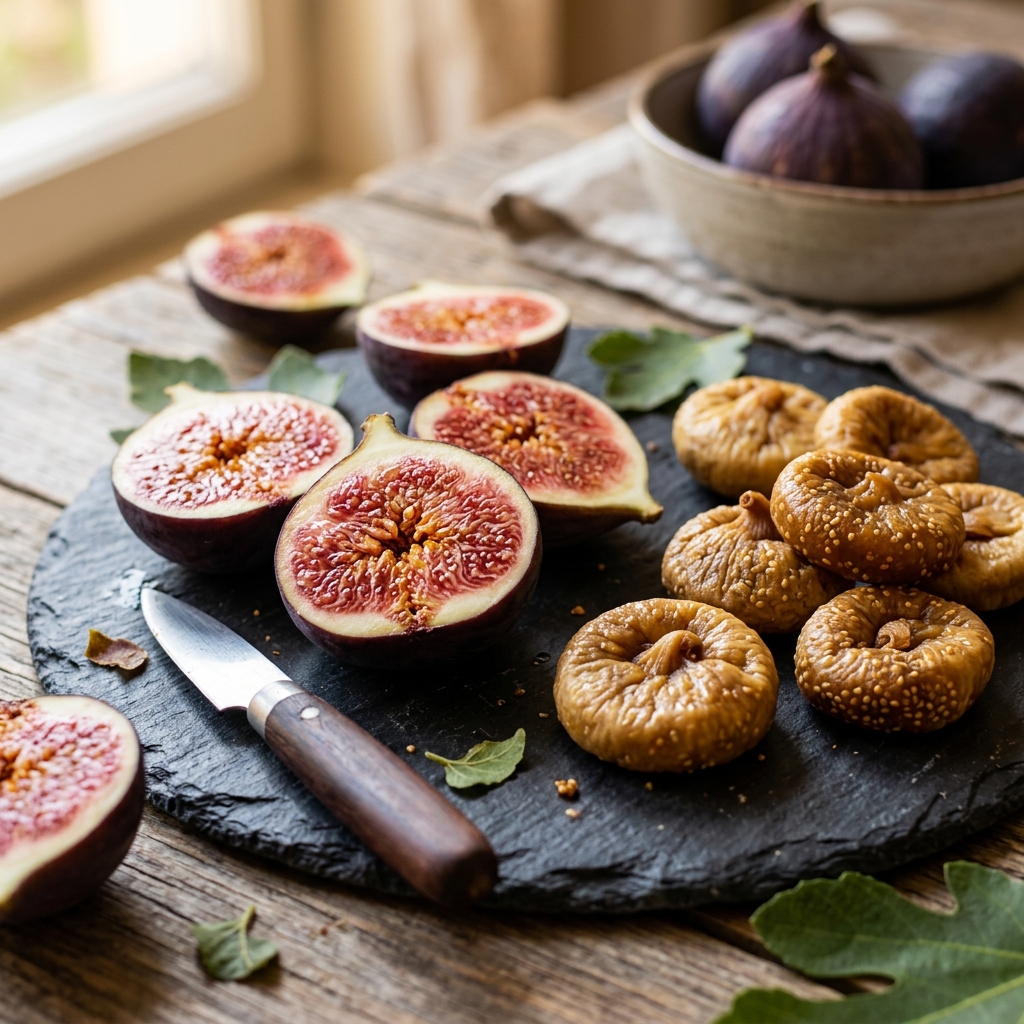
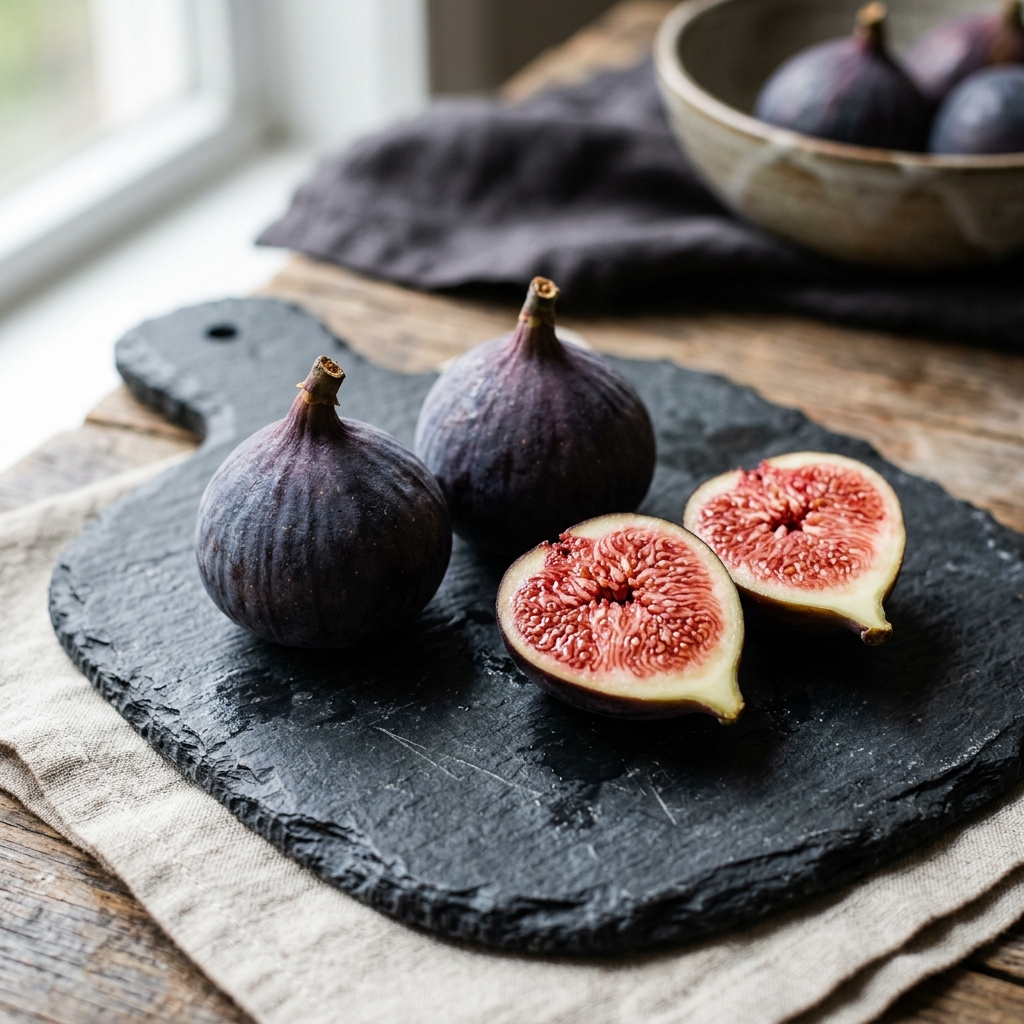
Rinse figs under running water and eat the soft flesh and edible skin if tolerated. Select undamaged figs with a gentle give and pleasant sweet aroma.
Soak dried figs in potable water if you prefer them softer; keep them refrigerated if soaking for an extended time. Eat the rehydrated figs for their fiber—fig-soaking water has no proven special therapeutic effect.
Dried figs have less water and more calories and sugars per 100g than fresh figs. A 30g portion has roughly 75 calories and 14g naturally occurring sugars.
Try fresh figs with plain yogurt or a little cheese, or dried figs with nuts. These pairings make a balanced snack, but do not guarantee prevention of blood-sugar rises.
Traditional preparations and global recipes celebrating wholesome ingredients, balanced textures, and rich culinary heritage.
Dried figs rehydrated in clean water and served with almonds; a traditional way to soften figs, not a medically established constipation cure.
Fresh quartered figs, leafy greens, goat cheese, walnuts and a light balsamic dressing.
Chopped dried figs simmered in milk with cardamom and pistachios; the figs contribute sweetness, so added sugar is optional.
Dried fig paste mixed with chopped walnuts and seeds into small, nutrient-dense bites; portion size matters.
Figs supply dietary fiber, potassium and plant polyphenols. Dried figs provide more fiber and minerals per 100g because water has been removed. Small clinical trials using fig paste suggest possible improvements in constipation-related symptoms, but eating figs has not been proven to prevent osteoporosis, treat diabetes or lower cholesterol.
Soaking dried figs in clean water softens their texture and can make them easier to chew. The fiber remains in the fruit. There is no good human evidence that soaking activates special nutrients, that drinking the water has a laxative effect, or that consuming figs on an empty stomach is necessary.
Figs provide fiber. In a randomized trial involving 80 adults with functional constipation, a fig-paste intervention for 8 weeks improved colonic transit time, stool consistency and abdominal discomfort compared with placebo. The study did not establish that a few soaked dried figs reproduce those results, nor did it demonstrate a significant improvement in every constipation measure.
There is no universally established medical limit. A moderate example is about 30–40g dried figs, with actual piece counts depending on size. At 30g, USDA reference data provide roughly 75 calories, 14.4g sugars and 2.9g fiber. Fit the portion into your overall energy and carbohydrate needs.
According to USDA reference values, fresh figs contain about 74 kcal per 100g, while dried figs contain about 249 kcal per 100g. The difference mainly reflects water removal: compare equal weights or realistic portions, not just one fruit against one dried piece.
Dried figs can fit some individualized diabetes meal plans, but they are carbohydrate-dense: 100g contains about 63.9g carbohydrate and 47.9g sugar. Portions should be counted. A laboratory study of fig extracts does not prove that eating figs prevents glucose spikes; soaking does not remove their carbohydrate.
No single GI number applies to all figs. A published international GI table reported GI 61 for one specific commercial dried-fig product. That value should not be applied automatically to fresh figs or to all varieties, and portion size and total carbohydrate remain relevant.
Dried figs contribute calcium, magnesium and potassium. For example, 100g dried figs contain about 162mg calcium and 68mg magnesium. These nutrients play roles in normal bone health, but there is no strong clinical evidence that eating anjeer prevents osteoporosis or increases bone density.
Fresh and dried figs can be part of a varied pregnancy diet if tolerated. Wash fresh figs carefully, store them safely, and account for the concentrated sugars in dried figs. Figs do not replace prenatal folic-acid or iron supplementation when prescribed.
Suitability depends on the person's blood potassium level and renal dietary plan. Dried figs contain about 680mg potassium per 100g, but a 30g portion contains about 204mg. People prescribed a low-potassium diet should discuss portions with their renal dietitian rather than assuming figs are always safe or always forbidden.
Figs can contain excess fructose, and dried fruit concentrates sugars and potential FODMAPs. The tolerated amount depends on fresh versus dried preparation and portion size. People using a low-FODMAP approach should consult current serving-specific Monash guidance rather than treating every amount of fig as automatically forbidden.
Yes, although reported fig allergy is uncommon. Some patients react to fig fruit, skin or sap; pollen-related and ornamental Ficus benjamina cross-reactivity have also been reported. Reactions are not limited to people with natural-rubber latex allergy. Seek medical assessment for suspected reactions, especially swelling or breathing symptoms.
Not necessarily. Many common edible fig cultivars, including typical home-garden varieties, form figs without pollination and do not require wasps. Certain Smyrna-type figs require pollination by specialized fig wasps. The answer depends on the fig type, so the claim that every fig contains a wasp is false.
For pet safety, do not allow dogs to chew fig plant leaves, stems or milky sap, which can irritate them. Figs are also sugary and fibrous, so avoid feeding large amounts. Ask a veterinarian before offering fig fruit to a dog, particularly if it has digestive problems.
Select figs that are ripe but intact, refrigerate them promptly, and use them soon because fresh figs bruise and spoil easily. Discard figs with mold, leaking juice or a strongly fermented odor. Dried figs should be stored in a cool, dry place in sealed packaging according to the manufacturer's instructions.
Have a moment? Share your feedback or suggestions via Google to help us produce even higher quality, evidence-based nutrition guides.
No saved articles yet.
Click the bookmark button inside any article to save it here for offline reading!
Hi! I am Mapple AI, your food science research companion. Ask me anything about biomolecules, organic diet patterns, or longevity recipes.