01
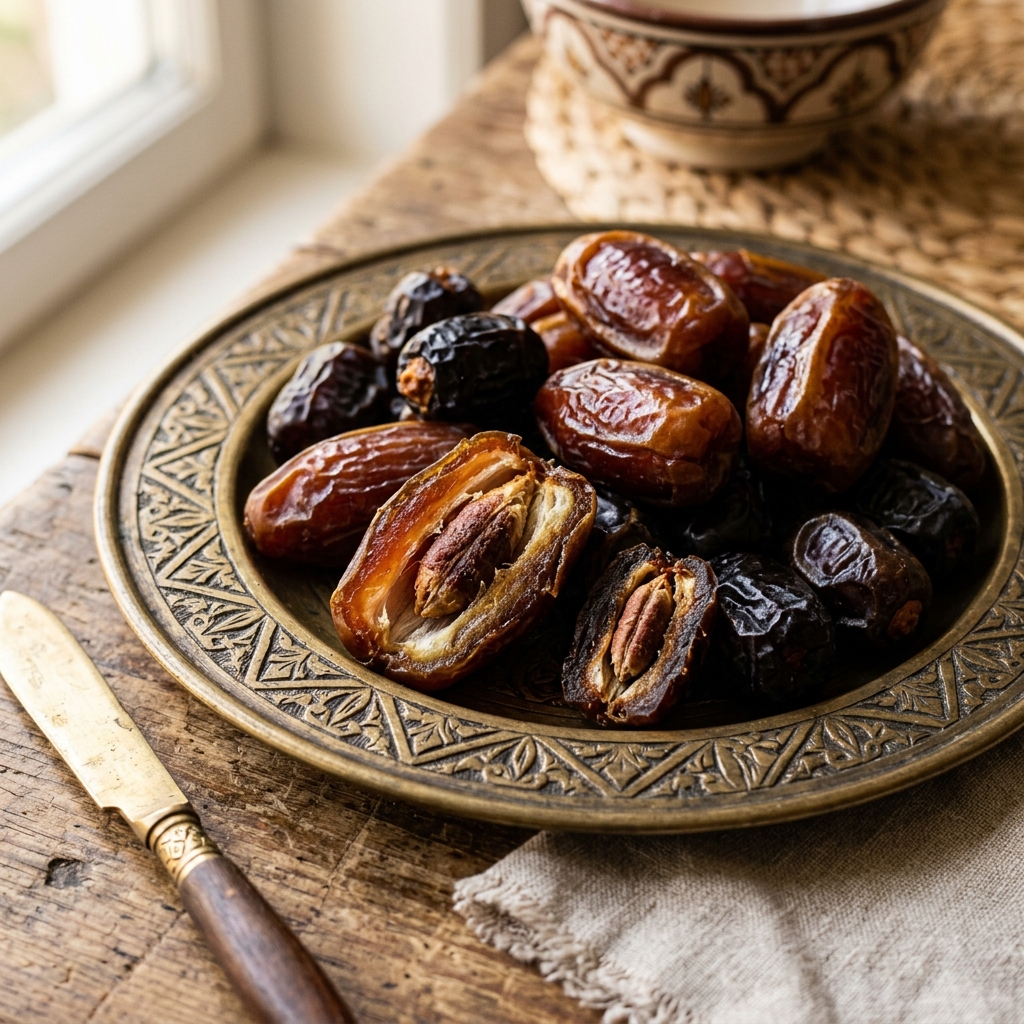
Almond & Tahini Stuffed Medjool Dates
Plump Medjool dates pitted and filled with whole roasted almonds or walnut halves, drizzled with nutty sesame tahini, and finished with a pinch of flaky sea salt.
 Mapple Health
 Dates are the sweet, sun-ripened fruit of the date palm tree (Phoenix dactylifera). Cultivated for thousands of years in the desert oasis valleys of the Middle East and North Africa, dates have sustained communities, travelers, and global populations for generations. Often described as nature’s original caramel fruit, dates are prized for their rich sweetness, chewy texture, and natural density of dietary fiber, potassium, magnesium, and antioxidant polyphenols.
From plump, moist Medjool dates and prized Saudi Ajwa dates to amber Deglet Noor dates, date palm fruits occupy an exceptional crossroads where agriculture, deep cultural heritage, everyday home cooking, and modern nutritional science meet. Exploring the genuine research behind date fruit reveals how this ancient staple can fit comfortably into a health-conscious lifestyle—without leaning on marketing exaggerations or unverified claims.
Yes, dates can be a nutritious food when eaten in appropriate portions. They provide natural carbohydrate, dietary fiber, potassium, magnesium, copper and other micronutrients, along with polyphenolic compounds. Their main nutritional trade-off is that they are calorie- and sugar-dense, especially in dried or fully ripened forms.
The strongest evidence supports their nutritional value and compatibility with moderate intake, while evidence for specific therapeutic effects remains much less certain.
Much of the popular content online treats dates as a cure-all, frequently confusing laboratory test-tube studies with proven human medical treatments. To provide total clarity, the table below outlines what clinical science actually confirms versus what remains experimental:
| Health Focus Area | Scientific Evidence Level | What the Evidence Confirms |
|---|---|---|
| Nutritional Density | Well Established | Dates supply concentrated carbohydrates, generous dietary fiber (6.7g/100g), potassium, magnesium, and copper. |
| Glycemic Response | Good Human Evidence (Variable) | Tested varieties show low-to-moderate GIs (42.8–74.6); cultivar, ripeness, and portion size substantially influence response. |
| Type 2 Diabetes Safety | Moderate Clinical Evidence | Randomized trials indicate moderate intake (2–3 dates daily) did not worsen glycemic control over study periods, but carbs must still be counted. |
| Blood Lipids & Cholesterol | Limited / Mixed Evidence | Some clinical trials report improvements in total cholesterol, but between-group LDL differences were not statistically significant. |
| Late Pregnancy & Labor | Promising but Uncertain | Meta-analyses report some favorable labor outcomes (cervical dilation, Bishop score), but overall study quality is limited with high risk of bias. |
| Digestive Regularity | Nutritionally Established | Soluble and insoluble fibers contribute to normal bowel function in healthy adults; direct clinical treatment evidence is limited. |
| Antioxidant Capacity | Strong Preclinical Evidence | Date polyphenols demonstrate notable antioxidant activity in laboratory assays; direct human disease prevention is unproven. |
| Ajwa Cultivar Research | Limited / Mixed Evidence | Interesting cultivar-specific research, much of it preclinical; clinical trials on Ajwa pit powder cannot be equated to eating whole fruit. |
| Cancer & Antiviral Effects | Strictly Preclinical (In Vitro / Animal) | Laboratory cell-culture extracts inhibit microbes or cell lines in petri dishes; dates have zero established clinical role in treating infections or cancer. |
What laboratory research does NOT prove: Date extracts have shown antioxidant, antimicrobial and anticancer activity in laboratory models, but these findings do not mean eating dates treats infections or prevents cancer.
A 100-gram serving of pitted Medjool dates delivers about 66.5 grams of total sugars. These sugars consist almost entirely of naturally occurring glucose (about 33.7 grams) and fructose (about 32.0 grams), with only negligible amounts of sucrose in soft cultivars.
Dates contain substantial glucose and fructose, but the sugars are consumed within a whole-fruit structure that also contains dietary fiber and other plant components. This can produce a slower glucose response than an equivalent amount of rapidly consumed refined sugar, although the effect varies among varieties, ripeness stages and portions.
Importantly, a low or moderate GI does not mean dates are low in carbohydrate. A 100 g serving of Medjool dates contains about 75 g of carbohydrate and 66.5 g of total sugars.
Whole dates provide fiber and micronutrients that are absent or present in much smaller amounts in many refined sugary foods. They are still a concentrated source of carbohydrate and calories.
Dates are sweet and carbohydrate-rich, but research shows that their glycemic response can be lower than their taste might suggest. In studies of individual date varieties, many tested cultivars had low-to-moderate GI values. However, GI varies considerably: a study of 17 Saudi varieties reported values from 42.8 to 74.6, demonstrating that there is no single GI for all dates (Ali et al., 2016, PMID: 27920411).
Several intervention studies have also examined dates in people with type 2 diabetes:
The practical conclusion is not that dates “cure” or “lower” blood sugar. Rather, these trials suggest that moderate portions of dates can be compatible with glycemic management for some adults with type 2 diabetes, but dates remain a concentrated carbohydrate food and should be incorporated according to an individual’s overall meal plan.
There is no universal medical prescription for a daily number of dates. Because dates vary greatly in size, a more useful approach is to think in grams or individual portions. Clinical trials have tested amounts such as three dates per day or 60 g/day, but these were research protocols rather than universal recommendations.
Dates are carbohydrate-dense; the exact carbohydrate contribution of one date depends strongly on its size. For everyday snacking, 1 to 2 large Medjool dates or 2 to 3 smaller dates make a sensible, nutrient-rich portion.
A 100-gram serving of dates provides 6.7 grams of dietary fiber—delivering nearly a quarter of daily fiber recommendations. This fiber consists of insoluble cellulose and hemicellulose along with soluble pectin:
For individuals seeking to increase their intake of dietary fiber, whole dates eaten with adequate water provide an easy whole-food option contributing to normal bowel function.
Dates provide dietary fiber, which contributes to normal bowel function. However, compared with foods that have been specifically studied as constipation interventions (such as prunes or kiwi), direct clinical evidence for whole dates as a constipation treatment is limited. Adequate fluid intake and overall dietary fiber remain important.
Dates can fit into a weight-management diet, but they are not a weight-loss food by themselves. Because dried or fully ripe dates are concentrated in calories and carbohydrate, portions matter. Their dietary fiber can contribute to a more filling snack, but weight loss ultimately depends on overall energy intake, dietary quality and individual needs.
The modern clinical interest in dates and childbirth began with a prospective study published in 2011 (Al-Kuran et al., PMID: 21280989) involving 69 women consuming six dates daily for four weeks before their estimated due date and 45 non-consumers. The authors observed higher cervical dilation upon hospital admission and lower rates of medical induction, concluding that the findings warranted a randomized controlled trial.
Subsequent systematic reviews and meta-analyses have pooled available trials:
Therefore, dates are better described as a promising dietary habit studied in late pregnancy, not as a proven natural method for inducing labor. Expectant mothers should discuss their dietary habits with their healthcare provider.
Dates occupy an important place at the intersection of food, agriculture, religion and culture across many Muslim and Arab communities. The date palm has been closely associated with communities across the Arab region for centuries, and UNESCO inscribed knowledge, skills, traditions and practices associated with the date palm on the Representative List of the Intangible Cultural Heritage of Humanity in 2022 across 15 countries.
Dates are traditionally associated with breaking the Ramadan fast, a practice rooted in Islamic tradition. From a nutritional perspective, dates provide readily available carbohydrate along with some dietary fiber and minerals, making them a compact source of energy after a period without food. Their traditional role at Iftar is therefore culturally meaningful as well as nutritionally practical, but there is no medical requirement that dates must be used to break a fast.
Ajwa is a distinctive date associated with Medina and has a special place in Islamic tradition. Sahih al-Bukhari (5445) records a narration concerning seven Ajwa dates consumed in the morning. This religious tradition should be distinguished from modern biomedical claims: the hadith is an honored religious source, while scientific studies investigate nutritional composition and biological effects using experimental and clinical methods.
Ajwa has a distinctive phytochemical profile, and comparative studies have reported substantial phenolic and flavonoid content. Composition varies with cultivar, ripening stage, origin and analytical method.
Importantly, Ajwa fruit ≠ Ajwa pit powder. A 2023 randomized clinical trial evaluated Ajwa date pit powder (2.7 g/day) in 40 patients with hyperlipidemia receiving statin therapy (PMID: 37333476). A study of Ajwa pit powder is not a study of eating Ajwa dates. This small trial on pit powder cannot be directly interpreted as evidence that eating sweet, whole Ajwa dates lowers cholesterol.
| Feature | Medjool | Ajwa |
|---|---|---|
| Typical Size | Large, plump | Usually smaller, rounded |
| Texture | Very soft and moist | Soft to chewy |
| Flavor | Rich, caramel-like sweetness | Deeper, less dessert-like |
| Geographic Association | Historically associated with Morocco’s Tafilalet region; now commercially cultivated worldwide | Medina, Saudi Arabia |
| Cultural Significance | High international commercial prominence | Particularly strong in Islamic tradition |
| Scientific Literature | General date nutritional research | More cultivar-specific chemical and pit studies |
| Proven “Healthier”? | No established winner | No established winner |
There is no scientifically established single “healthiest” date variety. Medjool, Ajwa, Deglet Noor, Sukkari, and other cultivars differ in size, moisture, sugar concentration, texture, and phytochemical composition. A better choice depends on the individual’s nutritional goal, portion size, and how the dates are being used.
| Variety | Typical Character | Where Especially Associated | Best Culinary Use |
|---|---|---|---|
| Medjool | Large, soft, caramel-like, moist | Historically associated with Morocco; grown globally | Table fruit, stuffed with nuts, whole baking |
| Ajwa | Small to medium, dark brown to black, chewy | Medina, Saudi Arabia | Snacking, cultural and morning consumption |
| Deglet Noor | Amber, semi-dry, firm, delicate honey flavor | North Africa (Tunisia, Algeria) | Chopping into granola, bread, baking, date paste |
| Sukkari (Sukari) | Sweet, golden-brown, soft or crisp depending on stage | Saudi Arabia (Al-Qassim) | Paired with traditional Arabic coffee |
| Safawi | Dark, soft, rich flavor | Saudi Arabia | Daily snacking, energy bites |
| Mabroom | Elongated, bronze, dense and chewy | Saudi Arabia | Portable travel snack |
| Barhi (Barhee) | Round, eaten crisp at Khalal or syrupy when ripe | Middle East | Eaten fresh on branch or softened |
| Dried Fruit | Key Nutritional Characteristics | Practical Role in Diet |
|---|---|---|
| Dates | High in carbohydrates, potassium (696mg), and dietary fiber | Compact energy source, whole-food sweetener |
| Raisins | Concentrated dried grapes, high in tartaric acid | Baking staple, convenient portable carbohydrate |
| Prunes | Concentrated plums with fiber and natural sorbitol | Commonly used to support bowel regularity |
| Figs (Anjeer) | High in dietary fiber, calcium, and polyphenols | Chewy, seeded texture for digestive and bone support |
Note: While dates provide dietary fiber, they should not be claimed to be superior to prunes for bowel regularity.
The Food and Agriculture Organization (FAO) recognizes four major Arabic development stages during date maturation:
Kimri ➔ Khalal ➔ Rutab ➔ Tamr| Stage | Visual & Textural Characteristics | Compositional Changes |
|---|---|---|
| Kimri | Green, hard, immature | Rapid fruit growth, highest moisture (up to 85%), high astringent tannins; generally not marketed as a mature eating stage. |
| Khalal | Full-sized, firm, bright yellow or red | Crisp texture, increasing sugars; may be eaten fresh in suitable cultivars such as Barhee. |
| Rutab | Soft, translucent brown, partially ripe | Water content falls, starches invert to simple sugars, tannins decline; juicy and perishable. |
| Tamr | Fully ripe, wrinkled, deep caramel color | Lowest moisture (around 24% or less), shelf-stable, concentrated sugars; the fully ripe form commonly marketed as a dry or semi-dry date. |
| Comparison Feature | Fresh / Semi-Ripe Dates (Khalal & Rutab) | Tamr Dates (Fully Ripe / Marketed as Dried) |
|---|---|---|
| Moisture Content | High (roughly 40% to 70% water) | Low (typically around 24% moisture or less) |
| Sugar Concentration | Lower per 100 grams due to dilution | Concentrated per 100 grams |
| Texture | Crisp (Khalal) or soft-melting (Rutab) | Chewy, dense, wrinkly skin |
| Shelf Life | Perishable; requires cold chain | Long-lasting; shelf-stable in cool storage |
| Processing | Eaten fresh during harvest season | Some naturally dry on the palm; others cured or conditioned |
| Form | Fiber Content | Food Matrix Structure | Practical Consideration |
|---|---|---|---|
| Whole Dates | Highest retention (6.7g/100g) | Intact whole-fruit structure | Retains the fruit’s original fiber and other components |
| Date Paste | Retains much original fiber | Pureed whole fruit | Convenient whole-fruit sweetener for oats and baking |
| Date Syrup | Substantially less fiber | Concentrated liquid | Treat nutritionally as a concentrated sweetener |
Date paste retains much of the fruit’s original material because it is made by puréeing whole pitted dates, although texture, dilution and preparation method affect its final nutrient concentration and texture. In contrast, date syrup is a concentrated sweetener with much less of the original fruit’s fiber than whole dates. It should therefore be treated nutritionally as a sweetener rather than as an equivalent substitute for whole fruit.
Refrigeration can preserve soft dates for months, while freezing allows much longer storage with good texture retention. Exact shelf life depends on moisture, packaging, temperature and the starting condition of the fruit. Firm, semi-dry dates such as Deglet Noor generally tolerate cool, dry storage better than very soft, high-moisture varieties.
White crystalline patches are not automatically mold. In dates, sugar can migrate to the surface and crystallize during storage. Mold is more likely to appear fuzzy, patchy or filamentous and may be accompanied by an off odor. Discard dates with visible fuzzy mold, persistent fermented/sour odor or obvious insect infestation.
Date palms are dioecious, meaning male and female flowers develop on separate palms:
Dates are a concentrated whole fruit with an unusually rich combination of nutrition, agricultural history, cultural significance and emerging clinical research. They provide dietary fiber, potassium, magnesium, copper and naturally occurring sugars, but their high carbohydrate and calorie density makes portion size important.
Human research suggests that moderate date consumption can be compatible with glycemic control, while evidence around late-pregnancy labor outcomes is promising but remains limited by study quality. Ajwa-specific findings also require careful distinction between whole fruit, pit preparations and extracts.
The best way to understand dates is therefore not as a miracle food, but as an ancient and culturally important whole food whose nutritional benefits are well established while many of its proposed therapeutic effects are still being investigated.
Official USDA FoodData Central values (FDC ID: 168191) for 100 grams of pitted Medjool dates (approximately 3 to 4 fruits depending on size). Nutritional values vary naturally across cultivars, ripening stages, and processing methods:
| Nutrient | Amount (per 100g) | Amount (per 100 g pitted Medjool dates; individual fruit size varies) | % Daily Value (%DV) | Why Your Body Needs It |
|---|---|---|---|---|
| Calories | 277 kcal | 277 kcal | — | Dense, sustained energy from natural whole-fruit carbohydrates |
| Water Content | 21.3 g | 21.3 g | — | Natural moisture preserved within the whole-fruit matrix |
| Total Carbohydrates | 75.0 g | 75.0 g | 27% | Wholesome carbohydrates bound with dietary fiber and micronutrients |
| Total Sugars | 66.5 g | 66.5 g | — | Naturally occurring glucose (33.7g) and fructose (32.0g) |
| Dietary Fiber | 6.7 g | 6.7 g | 24% | Dietary fiber contributing to normal bowel function |
| Protein | 1.81 g | 1.81 g | 4% | Modest amino acid content supporting daily nutritional variety |
| Total Fat | 0.15 g | 0.15 g | <1% | Naturally negligible fat content |
| Potassium | 696 mg | 696 mg | 15% | Crucial electrolyte for fluid balance, nerve signaling, and arterial health |
| Magnesium | 54 mg | 54 mg | 13% | Essential cofactor for muscle function and over 300 enzyme systems |
| Copper | 0.36 mg | 0.36 mg | 40% | Supports collagen integrity, energy production, and iron metabolism |
| Vitamin B6 | 0.25 mg | 0.25 mg | 15% | Aids neurotransmitter synthesis and amino acid metabolism |
| Manganese | 0.30 mg | 0.30 mg | 13% | Essential cofactor for mitochondrial antioxidant defense enzymes |
| Iron | 0.90 mg | 0.90 mg | 5% | Plant-based non-heme iron contributing to hemoglobin formation |
| Calcium | 64 mg | 64 mg | 5% | Supports skeletal bone density and normal vascular contraction |
| Niacin (Vitamin B3) | 1.61 mg | 1.61 mg | 10% | Vital coenzyme for cellular NAD energy metabolism |
The clinical evidence matrix below summarizes how date consumption interacts with specific metabolic, gastrointestinal, and physiological health conditions:
| Health Focus Area | Clinical Status | Practical Guidance | Scientific Evidence & Nuance |
|---|---|---|---|
| Diabetes / Blood Sugar | Compatible | Moderate intake (2–3 dates) with protein or fats | Variable GI. Clinical trials show studied cultivars have low-to-moderate GIs (42.8–74.6). Trials suggest moderate portions of dates can be compatible with glycemic management for some adults with type 2 diabetes, but dates remain a concentrated carbohydrate food and should be incorporated according to an individual's overall meal plan. |
| Late Pregnancy & Labor | Promising | Consult obstetrician; trials evaluated intake in weeks 36–40 | Promising research area. Meta-analyses link late-pregnancy date consumption with improved Bishop score and cervical dilation, though reviews emphasize a high risk of bias across trials. |
| Cholesterol & Heart Health | Favorable | Eat in place of refined confectionery | Nutritional support. Rich in potassium (696 mg/100g) and polyphenols. A 16-week trial noted reduced total cholesterol, though LDL changes between groups were not statistically significant. |
| Digestive Health & Fiber | Beneficial | Consume with plenty of water | Fiber-dense. Delivers 6.7 g dietary fiber per 100 g. Soluble and insoluble fibers contribute to normal bowel function in healthy adults. |
| Weight Management | Portion Aware | Mind portion size (1–2 dates as a snack) | Calorie-dense. At 277 kcal per 100 g, dates are concentrated in carbohydrate. While fiber may contribute to fullness, adding dates to an already calorie-sufficient diet will not automatically promote weight loss. |
| Kidney Disease (CKD) | Caution / Limit | Limit portions if prescribed potassium restrictions | High potassium load. Provides 696 mg potassium per 100 g. People with advanced CKD who have been prescribed potassium restrictions may need to limit date portions based on their individual renal diet plan. |
| IBS / FODMAP Sensitivity | Dose-Dependent | Limit portions if following low-FODMAP diet | Fermentable carbohydrates. People with IBS who are following a low-FODMAP diet may need to limit date portions because dates contain fermentable carbohydrates. Individual tolerance varies, so serving size matters. |
| Athletic Energy & Recovery | Potentially Useful | Incorporate into pre- or post-exercise snacks | Convenient carbohydrate source. Dates provide readily available carbohydrate that can be incorporated into pre- or post-exercise snacks according to individual energy needs. |
| Children & Toddlers | Nutrient-Dense | Always remove pit; chop or mash for toddlers | Choking risk requires care. Soft, pitted dates can be included in an age-appropriate diet, but whole dates or chunks should be prepared carefully for young children because the dense texture and pit can create choking risks. |
| Date Fruit and Date Palm Pollen Allergy | Generally Rare | Monitor if sensitive to dates or pollen | Distinct allergies. Date palm pollen is a recognized respiratory allergen, and date fruit itself can also cause IgE-mediated reactions in sensitized individuals. The two should not be assumed to be identical allergies. |
A practical growing profile for this fruit. Conditions vary by variety, climate and location.
| Growing Factor | What to Know |
|---|---|
| Climate | Full sun and long, hot growing seasons are ideal for commercial date production |
| Sunlight | Full sun; requires unshaded direct light throughout the long growing season |
| Soil | Deep, well-draining sandy loam; highly tolerant of saline soils and alkaline conditions |
| Ideal soil pH | Tolerates 6.0 to 8.5; optimal commercial growth occurs between 6.5 and 7.8 |
| Water needs | Reliable irrigation is essential for commercial production, even though established palms tolerate arid conditions; drainage remains important. |
| Planting | Spring to early summer when soil temperatures remain consistently warm |
| Pollination | Because date palms are dioecious, growers often collect pollen from selected male palms and manually apply it to female flower clusters to ensure reliable fruit set. |
| Pruning | Annual removal of dead lower fronds, thorny basal leaf spines for worker safety, and spent fruit spathes |
| Thinning | Systematic bunch and strand thinning reduces overcrowding, enhances individual fruit sizing, and prevents biennial bearing |
| Main risks | Rain and high humidity during fruit ripening causing fruit check, blacknose, and fungal fruit rot, Red palm weevil (Rhynchophorus ferrugineus) boring into trunk tissues, Bayoud disease (Fusarium oxysporum f. sp. albedinis) vascular wilt, Parlatoria date scale insect infestations |
Explore visual varieties and characteristics.
Use whole pitted dates as a snack, chop them into oatmeal or yogurt, or add them to savory dishes. Because dates are concentrated in carbohydrates and calories, portion size matters.
Combining dates with nuts, seeds or plain yogurt creates a more substantial snack by adding protein and fat alongside the fruit's carbohydrates.
Date paste or finely chopped dates can add sweetness to oats, energy bites and baked foods while retaining more of the fruit's structure than refined sugar or filtered syrup.
Check dates carefully for pits before serving, especially when using them in recipes or offering them to young children.
Traditional preparations and global recipes celebrating wholesome ingredients, balanced textures, and rich culinary heritage.
Plump Medjool dates pitted and filled with whole roasted almonds or walnut halves, drizzled with nutty sesame tahini, and finished with a pinch of flaky sea salt.
Delicate semolina shortbread pastries pressed in carved wooden molds, encasing a fragrant spiced date paste subtly perfumed with rose water, cardamom, and mahlab.
Finely chopped Medjool dates simmered slowly with rolled whole oats, creamy milk, ground cinnamon, and freshly grated nutmeg, melting into natural caramel ribbons.
A classic slow-cooked North African stew featuring tender braised lamb shank, caramelized onions, toasted almonds, and sweet whole dates simmered in ginger, saffron, and cinnamon.
A nutrient-dense blend of pitted dates, raw walnuts, chia seeds, and unsweetened dark cacao powder rolled into bite-sized portable energy snacks for athletes.
Clinical trials indicate that whole dates have a low-to-moderate Glycemic Index (ranging from roughly 42.8 to 74.6 depending on the cultivar). In randomized controlled trials (Butler et al., 2022; Alalwan et al., 2020), moderate consumption of 2 to 3 dates daily did not significantly increase HbA1c or fasting blood glucose in adults with type 2 diabetes. However, dates are carbohydrate-dense; the exact carbohydrate contribution of one date depends strongly on its size, so dates must still be counted within an individual meal plan and are best paired with protein or healthy fats.
Eating whole dates does not directly cause type 2 diabetes. Dates are, however, a concentrated source of carbohydrate and calories, so large amounts can contribute substantially to overall energy and carbohydrate intake. Type 2 diabetes develops through multiple interacting genetic, metabolic and lifestyle factors.
There is no universal medical prescription for a daily number of dates. Because dates vary greatly in size, a more useful approach is to think in grams or individual portions. Clinical trials have tested amounts such as three dates per day or 60 g/day, but these were research protocols rather than universal recommendations.
Date palm fruits provide dietary fiber (6.7g per 100g) contributing to normal bowel function, a generous supply of potassium (696mg) for vascular health, and essential trace minerals like copper and magnesium. They also supply protective polyphenols (flavonoids, phenolic acids, and carotenoids) and deliver readily accessible whole-food carbohydrates for sustained energy.
Several clinical studies and systematic reviews (Al-Kuran et al., 2011; Bagherinia et al., 2020; Al-Hafeedh et al., 2024) have investigated date consumption during late pregnancy. Pooled findings associate date intake with improved cervical dilatation upon hospital admission, higher Bishop scores, and reduced need for medical labor induction. However, researchers emphasize that evidence quality is limited by a high risk of bias across trials, so dates should be viewed as a promising supportive dietary habit rather than a guaranteed medical induction method.
Ajwa is an ancient cultivar grown predominantly in Medina, Saudi Arabia. It holds profound cultural and spiritual significance in Islamic tradition, notably recorded in Sahih al-Bukhari. Scientifically, Ajwa dates are characterized by a dark brown-to-black color, chewy texture, and substantial concentrations of polyphenols and flavonoids. While laboratory studies demonstrate notable antioxidant and anti-inflammatory properties, claims that Ajwa cures disease must be distinguished from rigorous clinical trial evidence.
Dates have a longstanding role in Ramadan traditions and are widely used to break the daily fast in Muslim communities. Their carbohydrate content also makes them a compact source of energy after fasting. People with diabetes should still account for their carbohydrate content within their individualized Ramadan meal plan.
Many individuals managing type 2 diabetes can comfortably include a small portion of dates when breaking the fast at Iftar, provided the carbohydrate content is calculated into the evening meal. Pairing dates with water, plain yogurt, or raw nuts helps blunt glucose absorption after hours of daytime fasting. Anyone taking insulin or blood-sugar-lowering medications should consult their physician to adjust medication timing during Ramadan.
There is no scientifically established single 'healthiest' date variety. Medjool, Ajwa, Deglet Noor, Sukkari and other cultivars differ in size, moisture, sugar concentration, texture and phytochemical composition. A better choice depends on the nutritional goal, portion size and how the dates are being used.
Both forms are nutritious, but their nutrient concentration differs significantly. Fresh dates (at the crisp Khalal or soft Rutab stage) contain much more water (50% to 70%) and fewer calories and sugars per 100 grams. Fully ripened Tamr dates have lost most of their water (around 24% moisture or less), concentrating calories, natural sugars, dietary fiber, and minerals into a shelf-stable fruit.
Natural, whole dried dates do not have sugar added to them. The intense caramel-like sweetness develops entirely through the natural evaporation of water during tree ripening or post-harvest curing, which concentrates the fruit's inherent glucose and fructose. However, consumers should always check ingredient labels on packaged date rolls or candied dates to ensure no extra glucose syrups or glazing agents were added.
Medjool dates are large, soft, and moist with a rich, caramel-like sweetness and wrinkled skin, making them popular for fresh eating and stuffing. Deglet Noor dates are medium-sized, semi-dry, translucent amber in color, and have a firmer, chewier texture with a subtle honey flavor, making them ideal for baking, dicing into breads, and commercial date pastes.
Date syrup is a concentrated sweetener with much less of the original fruit's fiber than whole dates. It should therefore be treated nutritionally as a sweetener rather than as an equivalent substitute for whole fruit.
Refrigeration can preserve soft dates for months, while freezing allows much longer storage with good texture retention. Exact shelf life depends on moisture, packaging, temperature and the starting condition of the fruit. White crystalline patches are not automatically mold; in dates, sugar can migrate to the surface and crystallize during storage. Mold is more likely to appear fuzzy, patchy or filamentous and may be accompanied by an off odor. Discard dates with visible fuzzy mold, persistent fermented/sour odor or obvious insect infestation.
People with IBS who are following a low-FODMAP diet may need to limit date portions because dates can contain substantial amounts of fermentable carbohydrates. Individual tolerance varies, so serving size matters.
A date seed germinates easily in warm, moist soil, but growing a productive fruiting tree from seed is impractical for home gardeners. Date palms are dioecious, meaning seed-grown palms have unpredictable sex and fruit characteristics, whereas vegetative propagation preserves the cultivar's genetics. Commercial orchards commonly use basal offshoots and tissue-culture propagation when they need to reproduce known female cultivars with consistent fruit characteristics.
Have a moment? Share your feedback or suggestions via Google to help us produce even higher quality, evidence-based nutrition guides.
No saved articles yet.
Click the bookmark button inside any article to save it here for offline reading!
Hi! I am Mapple AI, your food science research companion. Ask me anything about biomolecules, organic diet patterns, or longevity recipes.