01
Vibrant Pitaya Smoothie Bowl
Smoothie Bowl Recipe GuideBlended frozen red dragon fruit cubes, banana, and almond milk topped with chia seeds, toasted coconut flakes, and fresh blueberries for an energizing breakfast.
 Mapple Health
 With its vibrant magenta or brilliant yellow skin, curved green scales, and sweet, speckled pulp, dragon fruit (also widely known as pitaya or pitahaya) is one of the most visually stunning fruits in the produce aisle. Beyond its exotic appearance, dragon fruit has earned a global reputation as a refreshing, nutrient-dense whole food with high water content. A standard 100-gram portion of raw dragon fruit cubes delivers roughly 60 calories, 2.9 grams of dietary fiber, and 40 mg of magnesium, with zero grams of fat and naturally low sodium.
What makes dragon fruit truly distinctive in modern nutritional science is not just its low-calorie profile, but the specific combination of compounds packed inside its succulent flesh and thousands of tiny black seeds:
This comprehensive guide takes an evidence-based, transparent look at dragon fruit nutrition. We examine what human clinical trials, systematic reviews, and agricultural authorities actually say about blood sugar, gut physiology, cardiovascular function, and weight management—clearly separating proven dietary facts from commercial wellness hype.
| Botanical Property | Scientific Detail |
|---|---|
| Accepted Botanical Name | Selenicereus spp. (formerly classified under the genus Hylocereus) |
| Plant Family | Cactaceae (Cactus Family) |
| Growth Habit | Fast-growing, perennial, vine-like cactus with climbing stems and aerial roots |
| Fruit Morphology | Botanically classified as a large, fleshy berry with a leathery bract-covered peel |
| Geographic Origin | Tropical Americas (native to regions spanning southern Mexico, Central America, and northern South America) |
To evaluate the real-world health impact of dragon fruit, it is essential to distinguish between laboratory test-tube findings, studies using concentrated experimental extracts, and actual human clinical outcomes. The table below summarizes the current evidence base and its scientific boundaries:
| Health Area | Scientific Evidence Base | What We Can Honestly Say |
|---|---|---|
| Blood Sugar & Glucose Control | Small systematic review and meta-analysis (4 RCTs) | A 2017 meta-analysis found a statistically significant reduction in fasting blood glucose in prediabetes, but no significant effect on fasting or post-meal glucose in type 2 diabetes. Dragon fruit should not be treated as a diabetes treatment or substitute for prescribed medication. |
| Gut Microbiome & Prebiotics | In vitro biochemistry plus small human supplement RCTs | Experimental studies demonstrate that pitaya oligosaccharides resist enzymatic digestion and stimulate beneficial bacteria in culture. A 2023 human trial found increases in Bifidobacterium using isolated oligosaccharide supplements, but eating ordinary whole fruit has more limited clinical trial data. |
| Vascular Function & Arterial Health | Double-blind randomized controlled crossover trial | A 2022 crossover trial in 18 adults found that consuming 24g/day of whole dragon fruit powder (supplying 33mg of betalains) for 14 days improved flow-mediated dilation and arterial stiffness, with no change in blood pressure. Long-term disease prevention is unproven. |
| Weight Management | Whole-food nutritional composition | With about 60 kcal per 100g, about 85% water, and 4.35g of fiber per cup, dragon fruit is a satisfying, low-calorie whole-food snack that fits easily into a calorie-controlled eating pattern. It does not possess unique fat-burning properties. |
| Dietary Iron Intake | USDA FoodData Central nutritional analysis | Supplies approximately 0.74mg of non-heme iron per 100g (1.11mg per cup, or ~6% DV). It contributes modest plant iron as part of a varied diet, but is not an anemia treatment. |
| Bowel Regularity | General dietary fiber physiology | The combination of dietary fiber and high moisture supports stool bulk and normal bowel transit. Evidence evaluating whole dragon fruit specifically as a clinical constipation cure remains limited. |
Consumers often wonder whether one color of dragon fruit is “healthier” than another. In reality, dragon fruit encompasses several closely related cactus species and commercial cultivars, each displaying distinct peel colors, flesh shades, and flavor profiles:
Key Takeaway on Color: A deeper red color does not automatically make a fruit universally “healthier.” While red pitaya provides concentrated betalain antioxidants, all dragon fruit varieties deliver water, dietary fiber, and essential minerals. Nutritional values vary by species, soil quality, maturity at harvest, and growing conditions.
Dragon fruit provides a nutrient-dense profile dominated by water, complex carbohydrates, and dietary fiber, with minimal calories and virtually zero dietary fat.
According to the official USDA FoodData Central database (FDC 537279), here is how a 100-gram serving compares to a standard 1-cup portion (150 grams):
| Nutrient | Per 100g Raw Cubes | Standard 1-Cup Serving (150g) | Daily Reference Value (% DV) |
|---|---|---|---|
| Energy (Calories) | 60 kcal | 90 kcal | — |
| Water Content | ~85g | ~128g | — |
| Total Carbohydrates | 12.94g | 19.41g | 7% |
| Dietary Fiber | 2.9g | 4.35g | 16% |
| Total Sugars | 7.65g | 11.48g | — |
| Protein | 1.18g | 1.77g | 4% |
| Total Fat | 0.0g | 0.0g | 0% |
| Magnesium | 40mg | 60mg | 14% |
| Potassium | ~290mg | ~435mg | 9% |
| Iron | 0.74mg | 1.11mg | 6% |
| Vitamin C | 2.5mg | 3.75mg | 4% |
| Calcium | 18mg | 27mg | 2% |
| Sodium | 0mg | 0mg | 0% |
*Note on Total Fat: USDA values are rounded database values; the fruit’s tiny seeds do contain lipids even when total fat is reported as 0.0g in this food entry.
Many internet articles assign dragon fruit a single rigid Glycemic Index of “48.” However, rigorous nutritional research shows that there is no single scientifically universal GI for all dragon fruit:
One of the most characteristic features of dragon fruit is the thousands of tiny black seeds embedded evenly throughout its soft flesh. Dragon fruit seeds are normally eaten with the flesh. They contain polyunsaturated fatty acids, with linoleic acid being a major component of the seed oil, and they contribute to the fruit’s overall fiber content:
The digestive reputation of dragon fruit largely centers on its content of nondigestible oligosaccharides—complex carbohydrate chains that resist breakdown by human salivary, gastric, and pancreatic enzymes.
It is vital to maintain scientific perspective:
Dragon fruit has frequently been touted online as a “superfood that cures diabetes.” A careful examination of human clinical trial evidence paints a far more nuanced, scientifically responsible picture.
In 2017, researchers conducted the first systematic review and meta-analysis examining the effect of dragon fruit on glycemic control in humans (published in PLOS One, PMID: 28886195). The review pooled data from four randomized controlled trials involving 36 individuals with prediabetes and 109 with established type 2 diabetes:
Dragon fruit can be incorporated into the diets of many people with diabetes, but portion size and total carbohydrate intake still matter. There is no evidence that dragon fruit should replace standard diabetes treatment:
The vibrant magenta hue of red dragon fruit comes from betalains, water-soluble nitrogenous pigments also found in red beetroots and Swiss chard. In laboratory models, betalains demonstrate strong radical-scavenging activity and reduce the oxidation of low-density lipoproteins (LDL).
While most antioxidant claims rely entirely on test-tube data, a small double-blind randomized crossover trial was published in The American Journal of Clinical Nutrition in 2022 (PMID: 35265960):
The Scientific Takeaway: In this small trial, the betalain-rich dragon fruit powder improved short-term measures of endothelial function and arterial stiffness in healthy adults. However, this small 14-day study does not establish dragon fruit as a treatment for chronic hypertension or cardiovascular disease.
Dragon fruit is a relatively low-energy fruit: 100g provides about 60 kcal and a 150g serving about 90 kcal. Its high water content and dietary fiber may contribute to fullness, making it a practical alternative to higher-calorie snacks. However, dragon fruit itself has not been shown to cause weight loss:
Online nutrition articles frequently claim that dragon fruit is an “exceptional powerhouse for curing anemia.” Let us examine the actual nutritional numbers:
Unlike typical orchard fruits that grow on woody trees, dragon fruit is produced by a sprawling, vine-like climbing cactus with aerial roots:
Cactus Cutting (6–9+ mos) ──> Heavy Trellis Support ──> Nocturnal Flowering (1 night) ──> Fruit Matures (Several Weeks)Enjoying dragon fruit at its peak flavor and texture requires selecting ripe fruit and handling it properly:
Unlike bananas and many other climacteric fruits, dragon fruit is generally harvested near eating maturity and does not undergo substantial post-harvest ripening.
To prepare dragon fruit, wash the exterior thoroughly under cold running water to remove surface dust. Place the fruit on a clean cutting board, slice it in half lengthwise from stem to crown, and choose either preparation method:
If you eat a generous portion of red- or magenta-fleshed dragon fruit, you might notice your urine turning pinkish-red or your stool taking on a deep reddish shade.
Red or pink discoloration can occur after eating red-fleshed dragon fruit because of its betalain pigments:
For most people, dragon fruit is a well-tolerated whole fruit. Nevertheless, a few specific medical and food-safety considerations are worth noting:
Clinical allergic reactions to pitaya, including anaphylaxis, have been reported. Proteomic research (PMID: 35565931) has identified proteins with allergenic potential in pitaya seeds, although this does not establish how frequently they cause clinical allergy. A 2025 case report (PMID: 40325480) documented pitaya-induced anaphylaxis in a patient without evidence of cross-reactive food or environmental allergens. Anyone experiencing itching of the lips or mouth, hives, difficulty breathing, or other signs of hypersensitivity after eating dragon fruit should seek immediate medical evaluation.
Official nutrient composition from the USDA FoodData Central database (FDC 537279) comparing 100g of raw dragon fruit cubes with a standard 1-cup serving (150g).
| Nutrient | Amount (per 100g) | Amount (per 100g raw cubes; standard 1-cup serving (150g) delivers 90 kcal) | % Daily Value (%DV) | Why Your Body Needs It |
|---|---|---|---|---|
| Calories | 60 kcal | 90 kcal | — | Light whole-fruit energy with high water content |
| Total Carbohydrates | 12.94g | 19.41g | 7% | Natural carbohydrates paired with soluble and insoluble fiber |
| Dietary Fiber | 2.9g | 4.35g | 16% | Nondigestible oligosaccharides and seed fiber supporting bowel motility |
| Total Sugars | 7.65g | 11.48g | — | Naturally occurring fruit glucose and fructose |
| Protein | 1.18g | 1.77g | 4% | Modest whole-food plant amino acid contribution |
| Total Fat | 0.0g | 0.0g | 0% | Naturally fat-free whole fruit profile (seeds contain small amounts of polyunsaturated lipids) |
| Glycemic Index (GI) | Not established as a universal value | Variable | — | Measured glucose response varies with variety, ripeness, preparation, portion and individual factors |
| Magnesium | 40mg | 60mg | 14% | Essential mineral cofactor for cellular metabolism and neuromuscular function |
| Iron | 0.74mg | 1.11mg | 6% | Non-heme plant iron supporting oxygen transport in red blood cells |
| Vitamin C | 2.5mg | 3.75mg | 4% | Antioxidant nutrient aiding cellular protection and non-heme iron uptake |
| Potassium | 290mg | 435mg | 9% | Intracellular mineral supporting normal fluid balance and cardiovascular physiology |
| Calcium | 18mg | 27mg | 2% | Essential dietary mineral for normal bone and muscle cell signaling |
| Sodium | 0mg | 0mg | 0% | Naturally sodium-free fruit |
*Daily Value percentages (%DV) are based on the standard US FDA 2,000-calorie daily reference diet. Vitamin C reference DV is 90mg; Magnesium reference DV is 420mg; Iron reference DV is 18mg; Potassium reference DV is 4,700mg. USDA values are rounded database values; the fruit's tiny seeds do contain lipids even when total fat is reported as 0.0g in this food entry.
The matrix below evaluates how dragon fruit fits into everyday health management based on published randomized trials, systematic reviews, and nutritional consensus:
| Condition / Focus Area | Impact | General Guidance | Why (Mechanism + Verdict) |
|---|---|---|---|
| Blood Glucose & Diabetes | Portion & Evidence Awareness | Count carbohydrates within an individualized meal plan | Limited human evidence; not a diabetes treatment. A 2017 meta-analysis of four randomized trials (PMID: 28886195) observed reduced fasting blood glucose in a small prediabetes subgroup (36 participants), but found no significant effect on fasting or 2-hour post-meal glucose in type 2 diabetes. Dragon fruit is a whole fruit containing carbohydrate and must be incorporated into an overall meal plan rather than used as glucose-lowering therapy. |
| Gut Microbiome & Prebiotics | Promising Prebiotic Research | Include as a fiber-containing fruit according to individual tolerance | Experimental and supplement data show prebiotic activity; whole-fruit evidence is emerging. Flesh oligosaccharides demonstrated prebiotic resistance to digestive enzymes in vitro (Food Chemistry 2010), and a 2023 human trial (PMID: 37087207) found that 8g/day extracted oligosaccharides increased beneficial Bifidobacteria. However, isolated oligosaccharide supplement trials cannot be equated directly with eating an ordinary serving of whole fruit. |
| Vascular Function & Heart Health | Early Clinical Evidence | Enjoy as an antioxidant-rich fruit within a heart-healthy diet | Early human trial shows endothelial improvements. A 2022 double-blind randomized crossover trial (PMID: 35265960) in 18 healthy adults found that 24g/day whole dragon fruit powder (33mg betalains) for 14 days improved flow-mediated dilation and arterial stiffness, though with no change in blood pressure. The trial was small and short, so it does not establish long-term cardiovascular disease prevention or hypertension treatment. |
| Weight Management | Practical Dietary Snack | Use as a high-water, fiber-containing whole food snack | Nutritional fit; no independent fat-burning mechanism. Dragon fruit is relatively low in calories (60 kcal per 100g) and provides 4.35g of fiber and about 85% water per cup, making it a filling whole-food snack within a calorie-conscious diet. It does not independently melt fat or induce weight loss. |
| Dietary Iron Intake | Nutritional Contribution | Pair with vitamin C foods as part of a varied diet | Provides modest plant non-heme iron; not an anemia cure. According to USDA FDC 537279, a 1-cup serving supplies approximately 1.11mg of iron (~6% DV). While dragon fruit contributes plant-based iron, it is not a high-potency source and should never replace clinical iron supplementation for iron-deficiency anemia. |
| Pregnancy Nutrition | Nutritious Whole Food | Wash skin thoroughly, peel, and eat in normal food amounts | Generally a nutritious fruit. Dragon fruit supplies water, dietary fiber, magnesium, and non-heme iron that fit smoothly into a varied pregnancy diet. It should not be promoted as a guaranteed treatment for pregnancy constipation or morning sickness. |
| IBS & FODMAP Sensitivity | Generally Low-FODMAP at Tested Servings | Follow tested serving sizes and individual tolerance | Generally compatible with low-FODMAP eating at appropriate servings. Monash FODMAP identifies dragon fruit as a low-FODMAP option, but FODMAP tolerance remains serving-dependent and individual. People following a structured low-FODMAP elimination or reintroduction plan should use tested serving information rather than assuming that all portions are equivalent. |
| Chronic Kidney Disease (CKD) | Potassium Awareness | Factor potassium into prescribed renal targets | Requires individualized renal awareness. A 1-cup serving delivers approximately 435mg of potassium. While appropriate for individuals with healthy kidney function, patients with advanced CKD or prescribed potassium limits should account for dragon fruit within their overall daily mineral budget. |
| Allergy & Hypersensitivity | Rare Food Allergen | Discontinue eating if oral itching, swelling, or hives occur | Clinical reactions are documented. Clinical allergic reactions, including anaphylaxis, have been reported in published literature (PMID: 40325480). Seed proteins with allergenic potential have been identified (PMID: 35565931), though their clinical frequency remains unestablished. Anyone experiencing symptoms of hypersensitivity should seek medical care. |
| Pets (Dogs) | Occasional Treat | Offer small peeled cubes with no skin | Safe in moderation. ASPCA lists pitaya as non-toxic to dogs. Small amounts of peeled flesh can be offered as an occasional treat. Avoid feeding the tough outer peel and keep portions small. |
A practical growing profile for this fruit. Conditions vary by variety, climate and location.
| Growing Factor | What to Know |
|---|---|
| Climate | Warm tropical and subtropical climates mostly free of frost; initial estimates suggest optimum growth around 18°C–25°C (65°F–77°F), with extreme heat and cold capable of causing injury |
| Sunlight | Full sun is typical, although plants tolerate some shade; young or exposed plants may need protection from extreme sunlight and heat |
| Soil | Well-draining sandy loam or volcanic soil rich in organic matter; extremely intolerant of standing water or waterlogged roots |
| Ideal soil pH | Slightly acidic to neutral (pH 5.5 to 6.5 preferred for optimal nutrient absorption) |
| Water needs | Moderate succulent requirements; water regularly during active vegetative growth and flowering, allowing topsoil to dry between irrigations |
| Planting | Warm spring or early summer after all frost danger has passed; most reliably propagated from mature, cured stem cuttings |
| Pollination | Nocturnal flowers can be visited by moths, bats, or bees, though natural pollination varies; commercial growers frequently use cross-pollination or hand-pollination to ensure reliable fruit set |
| Pruning | Regular pruning of crowded or non-productive stems maintains an open canopy, prevents fungal buildup, and stimulates vigorous new fruiting branches |
| Thinning | Thinning crowded flower buds or excess fruit clusters along stems can improve individual fruit size, uniformity, and commercial quality |
| Main risks | Cactus stem rot and anthracnose (Colletotrichum species) in high humidity, Root rot and basal stem decay from overwatering or poorly drained soils, Sunburn damage and stem stress during extreme heat and intense sunlight, Chilling injury and tissue softening when exposed to temperatures below 5°C (41°F), Fruit fly infestations and bird or rodent damage to ripening fruit |
Explore visual varieties and characteristics.
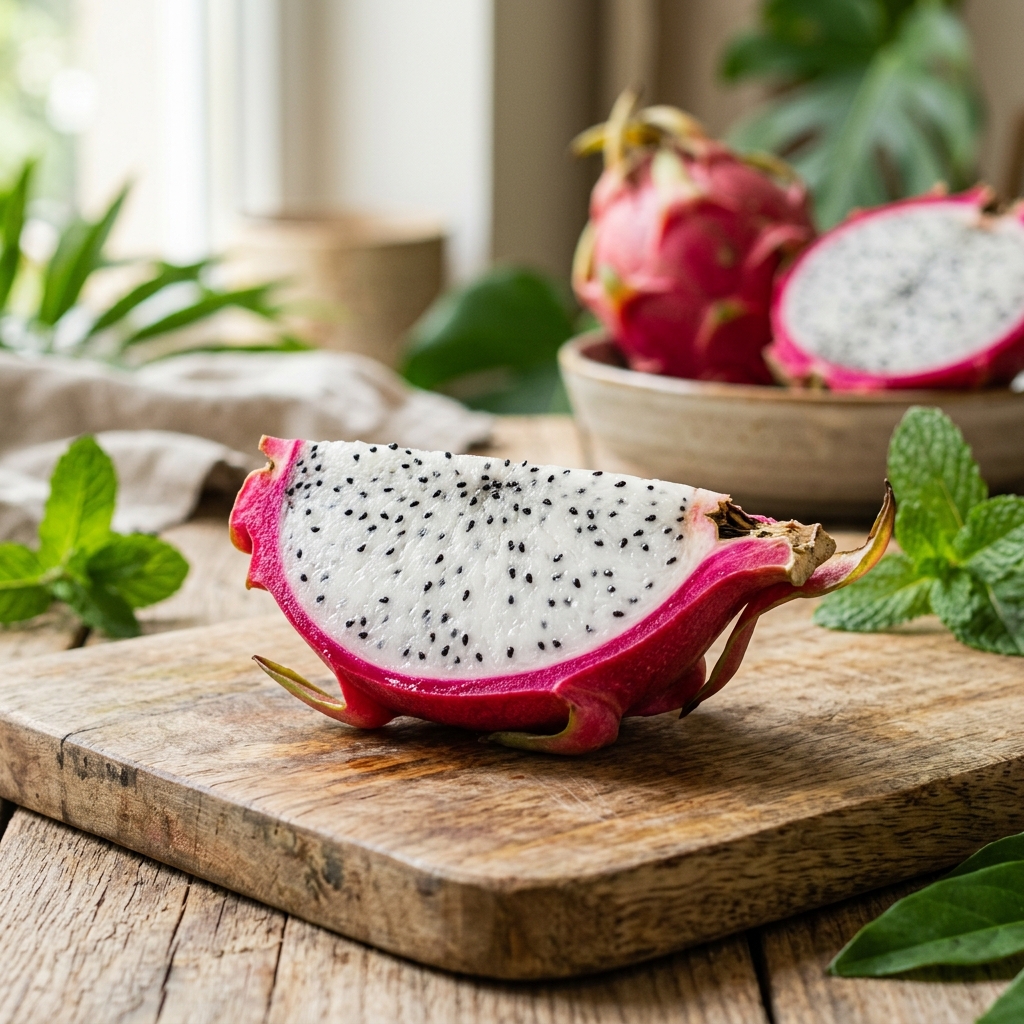
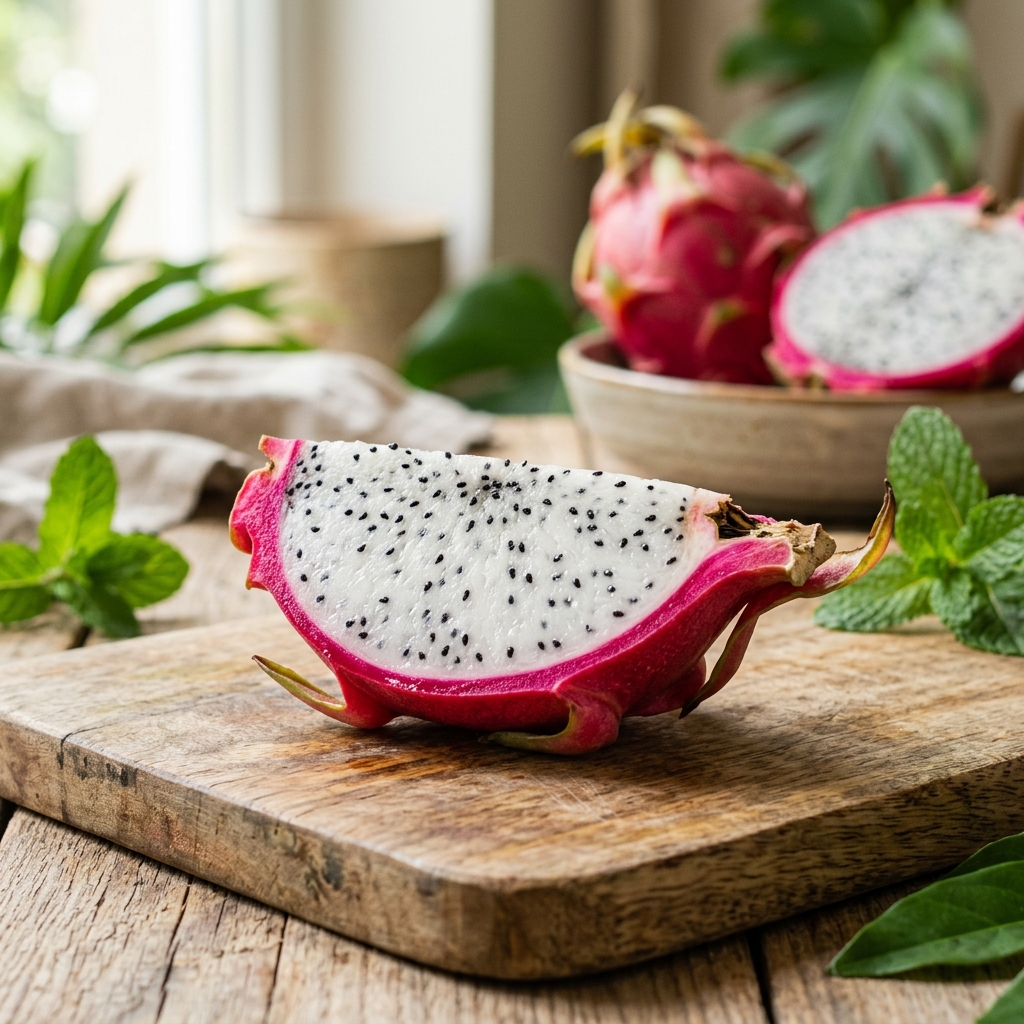
Slice the chilled fruit in half lengthwise and scoop out the succulent flesh with a spoon, or peel back the leathery skin and dice the pulp into refreshing cubes.
The thousands of tiny black seeds embedded in the pulp provide dietary fiber and polyunsaturated fatty acids; do not attempt to strain or remove them.
Pairing plant-based iron sources with vitamin C-rich foods can improve non-heme iron absorption. Toss dragon fruit with fresh kiwi, strawberries, or a squeeze of lime juice.
Dice ripe red or white dragon fruit and freeze the cubes on a parchment-lined tray. Blending frozen dragon fruit creates a vibrant, velvety smoothie bowl base with zero added sugar.
A standard 1-cup serving (150g) delivers about 19.4g of total carbohydrates. Adjust portion sizes to suit your individual appetite, energy requirements, and diabetes management targets.
Traditional preparations and global recipes celebrating wholesome ingredients, balanced textures, and rich culinary heritage.
Blended frozen red dragon fruit cubes, banana, and almond milk topped with chia seeds, toasted coconut flakes, and fresh blueberries for an energizing breakfast.
Diced white and red dragon fruit tossed with fresh kiwi, sweet mango chunks, chopped fresh mint, and a light dressing of fresh lime juice.
Finely diced dragon fruit mixed with red onion, minced jalapeño, fresh cilantro, sea salt, and lime juice, served over grilled fish, tofu, or black bean tacos.
Muddled fresh red dragon fruit shaken with cold coconut water, a splash of lime juice, fresh mint, and crushed ice for a refreshing, high-water whole-fruit beverage.
Dragon fruit is a nutrient-dense whole fruit high in water that provides dietary fiber, magnesium, iron, and antioxidant plant compounds with modest calories (about 60 kcal per 100g, or 90 kcal per 1-cup serving). Red- and magenta-fleshed varieties contain betalain pigments, while the flesh and edible black seeds contribute dietary fiber and polyunsaturated fatty acids that support everyday digestion and heart-healthy eating patterns.
Research on dragon fruit and glucose control is promising but not conclusive. A 2017 systematic review and meta-analysis of four randomized trials found a statistically significant reduction in fasting blood glucose among the small prediabetes subgroup studied, but observed no significant improvement in fasting or 2-hour post-meal glucose in participants with type 2 diabetes. Because dragon fruit contains natural carbohydrates, people managing diabetes should account for portion sizes rather than treating the fruit as a blood-sugar-lowering medicine.
Yes. The tiny black seeds are edible and normally eaten along with the flesh. They contribute to the fruit's fiber content and contain polyunsaturated fatty acids, with linoleic acid being a major component of pitaya seed oil.
White-fleshed dragon fruit (commonly Selenicereus undatus) has bright pink skin and mild, subtle sweet flesh. Red- or magenta-fleshed varieties (such as Selenicereus costaricensis) have deep pinkish-red flesh rich in betalain pigments, giving them higher measured antioxidant capacity in lab assays. Yellow dragon fruit (Selenicereus megalanthus) features yellow spiny skin and translucent white flesh that is typically sweeter and less acidic. A redder color does not automatically make a fruit healthier; nutrient and sugar concentrations vary naturally across species, cultivars, and ripeness.
Dragon fruit provides dietary fiber (about 2.9g per 100g, or 4.35g per cup) and about 85% water, which helps support normal bowel movement and stool consistency. In addition, its natural nondigestible oligosaccharides have shown prebiotic activity in laboratory models and clinical trials using concentrated extracts. While dragon fruit contributes gentle dietary fiber, it is not a standalone cure for clinical bowel disorders; persistent constipation requires overall hydration, varied fiber intake, and medical guidance.
According to USDA FoodData Central (entry FDC 537279), a 100g portion of raw dragon fruit cubes provides approximately 60 calories, 12.94g of total carbohydrates, 2.9g of dietary fiber, and 7.65g of natural sugars. A standard 1-cup serving (150g) delivers about 90 calories, 19.41g of carbohydrates, 4.35g of fiber, and 11.48g of natural sugars, with zero grams of total fat.
Dragon fruit peel is thick, leathery, and unpleasant in texture, so it is almost universally discarded before eating. The edible portion is the juicy flesh and its embedded seeds. While researchers study peel extracts and powders in food science labs for pigment recovery, the peel is usually discarded for fresh eating because it is thick, leathery, and unpleasant in texture.
Red or pink discoloration can occur after eating red-fleshed dragon fruit because of its betalain pigments. When the timing clearly follows consumption of red pitaya and no other symptoms are present, food pigments are a plausible explanation. However, persistent or unexplained red urine or stool should be medically evaluated because bleeding can look similar.
Dragon fruit can be included as a fruit in a varied pregnancy diet. As with other fresh produce, wash the exterior thoroughly before cutting and follow normal food-safety practices. It supplies dietary fiber, fluid, non-heme iron (about 1.11mg per cup), and magnesium, while portions should align with individual gestational carbohydrate goals.
If dragon fruit is already well colored but still firm, it can be stored briefly at room temperature, but dragon fruit generally does not continue ripening substantially after harvest like bananas or mangoes. For longer storage, refrigerate whole fruit. Mature fruit is best selected by cultivar-appropriate skin color, fresh green bracts, and firm-to-slightly-yielding flesh.
Yes. ASPCA lists pitaya as non-toxic to dogs. Small amounts of peeled flesh can be offered as an occasional treat. Avoid feeding the tough outer peel and keep portions small.
Look for dragon fruit with bright, even-colored skin (vibrant pink, red, or yellow, depending on the variety) and fresh, pliable green bracts or 'scales' that are not completely shriveled or brown. Press gently with your thumb: a ripe fruit should yield slightly, similar to a ripe kiwi or avocado. Avoid fruit with dark sunken soft spots, extensive mold, or leaking juices.
Fresh raw dragon fruit is the simplest way to consume the fruit and fully preserves its crisp-tender texture, heat-sensitive vitamin C, and delicate betalain pigments. Heat processing can alter or degrade certain pigments and antioxidants. While dragon fruit can be cooked into compotes, sauces, or jams, eating it fresh preserves its natural nutrient profile.
Have a moment? Share your feedback or suggestions via Google to help us produce even higher quality, evidence-based nutrition guides.
No saved articles yet.
Click the bookmark button inside any article to save it here for offline reading!
Hi! I am Mapple AI, your food science research companion. Ask me anything about biomolecules, organic diet patterns, or longevity recipes.