01
Pakistani Mango & Yogurt Lassi
Explore Recipe GuideRipe Chaunsa or Sindhri mango pulp blended with plain yogurt, ice and a pinch of cardamom—a classic South Asian summer drink.
 Mapple Health
 Mango (Mangifera indica) is one of the world’s most loved fruits, often called the “King of Fruits” for its rich sweetness, silky texture and vivid golden flesh. Beyond its flavor, mango is a nutrient-dense whole fruit that provides vitamin C, provitamin A carotenoids, folate, dietary fiber and plant polyphenols including the mango-associated compound mangiferin.
This guide focuses on what matters most to people searching for mango information: its real nutrition and calories, how sweet it actually is, what human research shows about blood sugar and digestion, how it fits into weight management and pregnancy, the famous Pakistani and global varieties, and how to choose, ripen, store and safely enjoy it.
A common point of confusion is calories. Raw mango provides about 60 calories per 100 grams, but a standard 1-cup serving (165g) of sliced fresh mango provides approximately 99 calories, along with 24.7g of carbohydrate, 22.5g of naturally occurring sugars and 2.6g of fiber. A whole medium mango is larger than one cup, so its totals scale up accordingly. The full breakdown is in the nutrition table on this page.
Much online content leans on laboratory and supplement studies. The more useful evidence comes from trials that fed people fresh whole mango:
| Topic | What human research found | Important limitation |
|---|---|---|
| Blood sugar / cardiometabolic | A 2022 crossover trial had 27 adults with overweight/obesity eat 100 kcal/day of fresh mango or low-fat cookies for 12 weeks. Mango was associated with lower blood glucose and CRP; weight, body fat, blood pressure, insulin and lipids did not significantly change. | Small study in a specific population. |
| Prediabetes | A 2025 randomized trial compared ~300g fresh mango daily with an isocaloric granola bar for 24 weeks. The mango group had lower fasting glucose and better insulin sensitivity at study end. | Only 23 participants completed; funded by the National Mango Board, with the authors reporting that the funder had no role in study design, analysis or interpretation. Replication is needed. |
| Gut microbiome | A 2023 crossover trial found fresh mango changed several microbiome measures compared with cookies. | Microbiota changes don’t automatically equal clinical benefit. |
| Post-meal glucose & satiety | A 2026 crossover study found that adding mango to breakfast produced a more favorable glucose-spike response than adding sucrose and increased reported satiety. | Only 18 healthy young adults. |
This is far stronger than extrapolating from concentrated extracts: laboratory and supplement studies can be informative, but they do not carry the same weight as human trials using the whole fruit.
Mango is naturally sweet, but sweetness alone does not determine whether a food can fit into a diabetes eating pattern.
One cup of fresh sliced mango provides approximately 24.7g carbohydrate, 22.5g naturally occurring sugars and 2.6g fiber. Published mango GI values vary considerably—older studies report values ranging from roughly 41 to 60, reflecting differences in cultivar, ripeness, serving preparation and study population. There is no single universal GI for every mango.
More importantly, emerging human research on whole fresh mango is encouraging. A small 2025 randomized trial in adults with prediabetes found that about 300g of mango daily for 24 weeks improved fasting glucose and insulin-sensitivity measures compared with an isocaloric granola-bar control. That does not mean people with diabetes should eat unlimited mango; the study was small and requires confirmation.
Practical takeaway: people managing diabetes can potentially include mango while accounting for the carbohydrate portion within their individual meal plan. Portion size, total meal composition, medications and individual glucose response matter more than labeling mango simply “good” or “bad.”
One cup of mango provides about 2.6g dietary fiber. Fiber contributes to normal bowel function and provides substrates that interact with the gut microbiome.
In a randomized crossover study of 27 adults with overweight or obesity, fresh mango altered several measures of gut microbial diversity compared with an isocaloric low-fat cookie. Researchers observed only a slight increase in bowel-movement amount, with no significant improvements in frequency, consistency, pain, straining or constipation.
Bottom line: mango is a useful fiber-containing whole fruit, but claims that mango “treats constipation,” “repairs the gut” or acts as a digestive-enzyme therapy go beyond current human evidence.
A cup of fresh mango provides about 99 calories. Weight change depends primarily on overall energy intake and dietary pattern—not on whether an individual fruit tastes sweet.
In the 12-week fresh-mango crossover trial, researchers found no significant change in body weight or body-fat percentage after mango consumption. Mango can therefore fit into either weight-maintenance or calorie-controlled diets. Its water, fiber, sweetness and volume can make it a satisfying alternative to more energy-dense desserts, but mango itself is not a fat-burning food.
One cup of mango supplies about 67% of the Daily Value for vitamin C and provides beta-carotene, a provitamin A carotenoid. Vitamin C contributes to the normal function of the immune system and to collagen formation, while vitamin A contributes to the maintenance of normal vision.
These are genuine nutrient contributions within a varied diet. They should not be overstated: eating mango is not a proven treatment or prevention for any specific eye or skin disease.
Mangiferin is a xanthone polyphenol associated with mango (concentrated especially in parts such as peel, bark and leaves). It has attracted research interest for antioxidant and vascular-related activity.
However, studies using standardized mangiferin or concentrated mango extracts cannot automatically be translated into what happens when someone eats a cup of fresh mango. Extract doses in trials are typically much higher than the mangiferin present in a culinary portion of fruit. Fresh mango provides mangiferin alongside fiber, water and vitamin C—a different context from an isolated supplement. Mangiferin is an interesting compound, but it is not the main reason to eat mango.
Pakistan contains substantial mango diversity. An FAO country report documents more than 150 varieties, including Sindhri, Chaunsa, Dusehri, Malda and Anwar Ratol, with maturity spanning roughly early June through late August or early September.
| Variety | General character | Typical use |
|---|---|---|
| Sindhri | Large, juicy, aromatic, relatively early season | Fresh slices, shakes |
| Chaunsa | Rich aroma, soft sweet flesh | Fresh eating, desserts, lassi |
| Anwar Ratol | Smaller fruit with intense aroma and sweetness | Fresh eating |
| Dusehri | Sweet, aromatic and commonly eaten fresh | Snacking, desserts |
| Langra | Distinct aroma and flavor profile | Fresh eating, juices |
Rather than claiming one variety is chemically “superior,” it is more accurate to note that a Pakistani cultivar study comparing eight varieties found real differences in total soluble solids, sugars, vitamin C, pulp proportion and acidity. Different mangoes simply suit different tastes and uses.
Mango is a global fruit, and sweetness, fiber, color, size and aroma differ between cultivars—so there is no single universal sugar, GI or phytochemical profile for every mango:
The form of mango changes its nutrition considerably:
Nutritional comparisons should always consider serving size and preparation, not simply the word “mango.”
Do not judge a mango only by its skin color, because color differs by variety and some ripe mangoes stay green or red. Instead:
To ripen: leave mature, firm mangoes at room temperature. UF/IFAS reports that harvested mangoes commonly ripen within about 3–8 days, with ripening temperatures around 21–24°C (70–75°F) recommended. A paper bag can concentrate ethylene and speed softening.
To store: refrigerate mangoes only after they are ripe. Putting immature fruit into cold storage too early can cause chilling injury, uneven ripening and off-flavors.
Ripe mango is generally an ordinary whole-fruit option during pregnancy. One cup provides approximately 60mg vitamin C, 71µg folate, fiber and carotenoids.
Folate contributes to maternal folate intake, but mango should not be presented as a replacement for prenatal folic-acid recommendations or prenatal supplements. Wash the outside of the fruit before cutting so that contaminants on the peel are not transferred to the flesh, and include mango as part of a varied prenatal diet.
Few fruits carry the cultural weight of mango. In South Asia it is woven into summer itself—the arrival of Chaunsa and Sindhri marks the season, and gifting crates of mangoes is a gesture of hospitality and goodwill. The mango tree holds symbolic meaning across the region, and its leaves and motifs appear in festivals, weddings and traditional art.
In the kitchen, mango spans the full range from savory to sweet. Unripe green mango becomes tangy chutneys, pickles (achar) and the dried spice amchur, while ripe fruit is blended into lassi and shakes, folded into desserts, or simply eaten fresh in slices. Across Mexico, mango is enjoyed with chili and lime; in Southeast Asia, ripe mango with sticky rice and coconut is a beloved dessert; and in the Caribbean and Africa, mango features in salsas, relishes and preserves.
This culinary breadth is also a practical nutrition point: the same fruit can be a plain fresh snack, a sugar-laden dessert, or a savory condiment—so how mango is prepared matters as much as the fruit itself.
Mango is a nutritious, globally loved whole fruit that provides vitamin C, provitamin A carotenoids, folate, fiber and plant polyphenols. The most compelling recent evidence comes from small human trials using fresh mango, which suggest promising effects on blood glucose and gut microbial diversity—while stopping well short of proving that mango treats or prevents any disease.
For everyday eating, the practical picture is simple: enjoy mango as a sweet, fiber-containing whole fruit, be aware of portion size if you are managing blood sugar or potassium intake, and choose whole fresh fruit over heavily sweetened juices or dried versions when you can. With that understanding—and the rich variety of Pakistani and global cultivars to explore—mango earns its place as one of the most enjoyable fruits in a healthy diet.
Official USDA FoodData Central values for 100 grams of raw mango, alongside approximate values for 1 cup of sliced fresh mango (165g). Values vary naturally with cultivar and ripeness:
| Nutrient | Amount (per 100g) | Amount (per 1 cup fresh sliced mango (165g)) | % Daily Value (%DV) | Why Your Body Needs It |
|---|---|---|---|---|
| Calories | 60 kcal | 99 kcal | — | Refreshing whole-food energy |
| Water Content | 83.5g | 137.8g | — | High water content for a hydrating, filling fruit |
| Total Carbohydrates | 15.0g | 24.7g | 9% | Natural fruit carbohydrates paired with dietary fiber |
| Total Sugars | 13.7g | 22.5g | — | Naturally occurring sucrose, glucose and fructose |
| Dietary Fiber | 1.6g | 2.6g | 9% | Contributes to normal bowel function |
| Protein | 0.82g | 1.35g | 3% | Small natural protein contribution |
| Total Fat | 0.38g | 0.63g | 1% | Virtually fat-free |
| Vitamin C | 36.4mg | 60.1mg | 67% | Antioxidant that supports normal immune function and collagen synthesis |
| Folate (Vitamin B9) | 43µg | 71µg | 18% | Contributes to normal red blood cell formation and tissue growth |
| Vitamin A (Beta-Carotene) | 54µg RAE | 89µg RAE | 10% | Provitamin A carotenoid for vision and immune function |
| Potassium | 168mg | 277mg | 6% | Supports fluid balance and normal vascular function |
*Nutrient composition varies naturally by cultivar, ripeness and growing region. Values are based on USDA FoodData Central reference data for raw mango. Daily Value percentages (%DV) are calculated using standard FDA reference daily intakes (Vitamin C 90mg; Folate 400µg DFE; Potassium 4,700mg).
The reference matrix below summarizes how mango consumption interacts with specific health conditions based on available evidence:
| Health Focus Area | Status | Practical Guidance | Scientific Evidence & Nuance |
|---|---|---|---|
| Diabetes / Blood Sugar | Portion Aware | Count carbohydrates within an individual meal plan | Promising research; carbohydrate still counts. One cup provides about 24.7g carbohydrate. Published GI values vary (roughly 41–60). A small 2025 prediabetes RCT (PMID: 40941087) found ~300g mango daily improved fasting glucose and insulin sensitivity versus a granola bar, but only 23 completed it. Portion and total meal composition matter more than labeling mango 'good' or 'bad.' |
| Digestive & Gut Health | Promising | Enjoy as a fiber-containing whole fruit | Fiber plus emerging microbiome data. One cup provides about 2.6g fiber. A crossover trial (PMID: 37051355) found fresh mango altered gut microbial diversity versus cookies, but showed no significant improvement in most bowel-movement measures. Claims that mango 'treats constipation' or acts as a digestive enzyme therapy go beyond current evidence. |
| Weight Management | Compatible | Fits calorie-aware diets; about 99 kcal per cup | No proven fat-burning effect. A 12-week fresh-mango crossover trial (PMID: 34953634) found no significant change in body weight or body fat. Mango's water, fiber and sweetness can make it a satisfying alternative to energy-dense desserts. |
| Immune Function | Nutritionally Relevant | Include as part of a varied diet | Vitamin C contribution. One cup supplies about 67% DV of vitamin C, which contributes to the normal function of the immune system. This is a nutrient contribution, not a cure for colds or infections. |
| Eye & Skin Nutrients | Nutritionally Relevant | Include fresh seasonal fruit in a varied diet | Carotenoids and vitamin C. Provides beta-carotene (provitamin A) and vitamin C, which contribute to normal vision and skin function. No evidence that eating mango prevents a specific eye or skin disease. |
| Pregnancy | Generally Safe | Wash before cutting; eat as part of a varied diet | Ordinary whole-fruit option. One cup provides about 60mg vitamin C, 71µg folate, fiber and carotenoids. Folate adds to maternal folate intake but does not replace prenatal folic-acid supplements. |
| Kidney Disease (CKD) | Individualized | Discuss portions with a renal dietitian if restricted | Higher-potassium fruit. One cup provides about 277mg potassium. The National Kidney Foundation classifies foods with 200mg or more per serving as higher-potassium and lists mango among its examples. Suitability depends on blood potassium, kidney function, medications and the prescribed renal diet. |
| Mango Allergy / Contact Dermatitis | Caution for Susceptible People | Susceptible individuals should avoid peel/sap contact | Rare but documented. A clinical review (PMID: 34833457) describes mango contact dermatitis as rare, with sensitizing compounds concentrated in peel and sap; some patients had prior poison ivy/oak exposure suggesting cross-sensitization. Oral allergy syndrome and, rarely, more severe reactions are also reported. |
| Pets (Dogs) | Occasional Treat | Ripe flesh only; remove peel and pit | Small portions only. Ripe mango flesh is not toxic to dogs in small amounts, but always remove the peel and the large pit, keep portions small, and consult a veterinarian about an individual pet's diet. |
A practical growing profile for this fruit. Conditions vary by variety, climate and location.
| Growing Factor | What to Know |
|---|---|
| Climate | Tropical to subtropical and warm frost-free climates; mango trees grow best where freezing temperatures are uncommon |
| Sunlight | Full sun is preferred for strong growth, flowering and fruit production |
| Soil | Adaptable to several soil types, including sandy and loamy soils, but good drainage is essential |
| Ideal soil pH | Adaptable across acidic to moderately alkaline soils depending on rootstock; drainage and micronutrient availability are especially important |
| Water needs | Young trees need regular moisture while establishing; mature trees are relatively drought tolerant and generally require irrigation mainly during prolonged dry periods |
| Planting | Warm frost-free periods are preferred; local planting time depends on rainfall, irrigation availability and regional climate |
| Pollination | Flowers are pollinated primarily by insects including flies, thrips and bees |
| Pruning | Train young trees to develop a strong, manageable framework and prune mature trees mainly after harvest to control height and remove damaged or crowded branches |
| Thinning | Fruit thinning is not always required, but managing very heavy crops and maintaining good canopy structure can improve fruit size and reduce branch stress |
| Main risks | Anthracnose, especially during humid flowering and fruiting weather, Powdery mildew on flowers and young fruit, Scale insects, thrips and mites, Mango malformation disease in some growing regions, Poor fruit set during cold or wet flowering conditions, Root decline where soils remain waterlogged |
Explore visual varieties and characteristics.
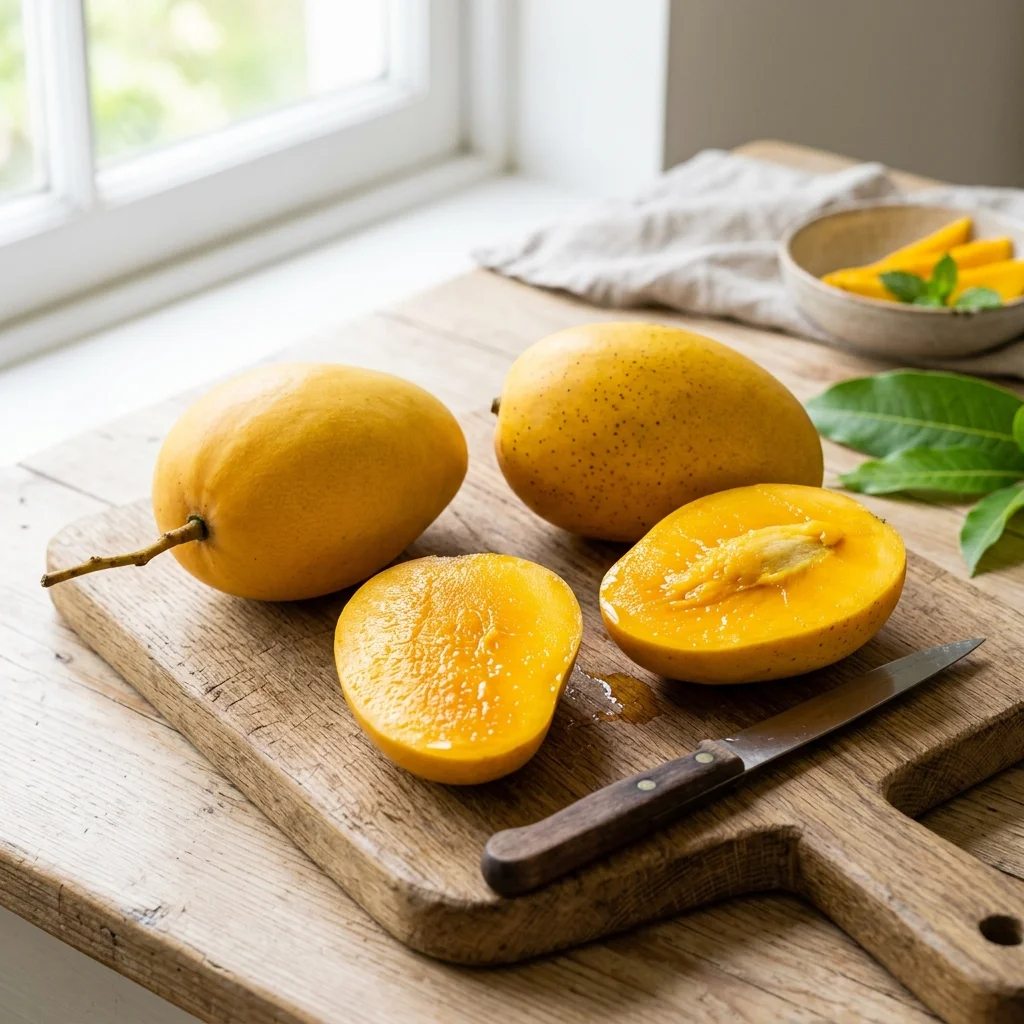
Judge ripeness by a gentle give to soft pressure and a sweet floral aroma near the stem rather than by skin color, which differs between varieties.
Combining mango with plain yogurt, nuts or seeds adds protein and fat to the snack and can help moderate the overall glucose response of a meal.
One cup of fresh mango is about 99 calories with 22.5g of natural sugars. Whole fresh mango retains more fiber and water than juice, shakes or sweetened dried mango.
Rinse the whole fruit under running water before slicing so that anything on the peel is not transferred to the flesh. People sensitive to mango peel or sap should let someone else peel the fruit.
Traditional preparations and global recipes celebrating wholesome ingredients, balanced textures, and rich culinary heritage.
Ripe Chaunsa or Sindhri mango pulp blended with plain yogurt, ice and a pinch of cardamom—a classic South Asian summer drink.
Diced fresh mango combined with avocado, red onion, cilantro and lime juice; the fat from avocado aids carotenoid absorption.
Layered chia seed pudding with fresh mango puree and toasted coconut flakes for a fiber-containing breakfast.
Frozen mango chunks blended with a squeeze of fresh lime juice into a naturally sweet dessert with no added sugar.
Mango is a nutrient-dense whole fruit that provides vitamin C, provitamin A carotenoids (beta-carotene), folate, dietary fiber and plant polyphenols including mangiferin. Emerging small human trials using fresh mango suggest possible benefits for blood glucose and gut microbial diversity, but mango is best understood as a healthy whole fruit rather than a treatment for any specific condition.
Raw mango contains about 60 calories per 100 grams. One cup of fresh sliced mango (165g) provides approximately 99 calories, 24.7g of carbohydrate, 22.5g of naturally occurring sugars and 2.6g of fiber. A whole medium mango is larger than one cup, so its calories scale accordingly.
Mango is sweet but can potentially fit into a diabetes eating pattern when the carbohydrate portion is counted within an individual meal plan. Published glycemic index values for mango vary (roughly 41–60) depending on variety, ripeness and preparation. A small 2025 randomized trial in adults with prediabetes found that about 300g of mango daily for 24 weeks improved fasting glucose and insulin sensitivity versus a granola-bar control, but the study was small and needs replication.
There is no single GI for all mango. The international GI table reports individual raw-mango results around 41, 51 and 60, with a mean near 51. The value differs by cultivar, ripeness, serving preparation and the population studied, so mango GI is best described as variable rather than a fixed number.
One cup of fresh mango provides about 99 calories. Weight change depends mainly on overall energy intake and dietary pattern, not on whether a single fruit tastes sweet. In a 12-week crossover trial, fresh mango did not significantly change body weight or body-fat percentage. Mango can fit into weight-maintenance or calorie-controlled diets but has no special fat-burning effect.
Ripe mango is generally an ordinary whole-fruit option during pregnancy, providing vitamin C, folate, fiber and carotenoids. Folate contributes to maternal folate intake but should not replace prenatal folic-acid supplements. Wash the outside of the fruit before cutting and include mango as part of a varied prenatal diet.
Mango provides vitamin C and carotenoids that contribute to normal skin function and antioxidant defenses. However, there is no strong clinical evidence that eating mango specifically treats or improves a particular skin condition.
Pakistan has substantial mango diversity, with an FAO country report documenting more than 150 varieties such as Sindhri, Chaunsa, Dusehri and Anwar Ratol, each with distinct aroma, sweetness and texture. Cultivar studies show measurable differences in soluble solids, sugars and vitamin C between varieties, which is a more accurate way to describe them than calling any one variety universally 'superior.'
Leave mature firm mangoes at room temperature. UF/IFAS reports that harvested mangoes commonly ripen within about 3–8 days at ripening temperatures around 21–24°C (70–75°F). Placing them in a paper bag can concentrate ethylene and speed softening. Refrigerate only after the fruit is ripe.
Small amounts of ripe mango flesh can be an occasional treat for many dogs. Always remove the peel and the large pit, keep the portion small, and ask a veterinarian about your pet's individual diet.
There is no universal medical limit. Because mango is carbohydrate-containing, a practical everyday portion is around one cup of fresh sliced fruit (about 99 calories and 22.5g of natural sugars). People managing blood sugar, calories or potassium should fit mango into their overall daily plan rather than following a fixed number.
Dried mango is more concentrated by weight because much of its water has been removed, so calories and sugars are higher per gram than fresh mango. Many commercial dried mangoes also contain added sugar. Fresh whole mango retains more water and is easier to eat in a moderate portion, while dried mango is best treated as a more concentrated snack—check the label for added sugar.
Mango contains mangiferin, a polyphenol concentrated especially in parts such as the peel, bark and leaves. However, most mangiferin research uses concentrated extracts at doses far higher than what a culinary portion of fruit provides, so those findings cannot be assumed to apply to eating fresh mango. Mango is a nutritious whole fruit, but the 'superfood' label overstates the evidence.
Have a moment? Share your feedback or suggestions via Google to help us produce even higher quality, evidence-based nutrition guides.
No saved articles yet.
Click the bookmark button inside any article to save it here for offline reading!
Hi! I am Mapple AI, your food science research companion. Ask me anything about biomolecules, organic diet patterns, or longevity recipes.