01
Grilled Peach & Rocket Salad
Grilled peach halves paired with peppery rocket (arugula), toasted walnuts, goat cheese, and a light balsamic vinaigrette.
 Mapple Health
 Peaches (Prunus persica) are juicy stone fruits with naturally sweet flesh, edible fuzzy skin, and a large central pit. They are relatively low in calories and provide water, vitamin C, dietary fiber, potassium, and several classes of plant compounds, including phenolic acids, flavonoids, and carotenoids.
The peach peel is particularly interesting from a food-science perspective. Studies comparing peach tissues have generally found higher concentrations of phenolic compounds and stronger antioxidant activity in the peel than in the flesh, although the exact difference varies by cultivar and stage of ripeness.
Peaches have also been investigated for their effects in cellular and laboratory models, including antioxidant and anti-glycation activity. These findings help explain why peach polyphenols attract scientific interest, but they should not be interpreted as proof that eating peaches treats diabetes, cardiovascular disease, or skin aging.
This guide explores peach nutrition, the scientific difference between flesh and peel, peach varieties, ripeness, blood-sugar considerations, practical storage, cultivation, seasonality, and the important safety guidelines surrounding the peach pit.
| Botanical & Cultural Fact | Detail |
|---|---|
| Scientific name | Prunus persica (L.) Batsch |
| Plant family | Rosaceae (Rose family) |
| Geographic origin | China (Lower Yangtze Valley) |
| Fruit type | Drupe (stone fruit) |
| Edible portion | Skin and flesh |
| Discarded part | Hard central pit (endocarp and seed) |
| Flavor profile | Sweet, aromatic, and pleasantly acidic depending on cultivar |
| Flesh colors | White, yellow, orange, or red |
| Skin texture | Naturally fuzzy (trichomes); smooth in nectarines |
| Typical harvest | Summer in temperate regions (June–August) |
| Common culinary uses | Eaten fresh, baking, grilling, preserves, desserts, and savory salads |
Native to China, peaches have been domesticated for millennia and have spread to temperate and subtropical growing zones across the globe. Today, China leads worldwide production, followed by Italy, Spain, and the United States.
Archaeological evidence from China shows peach use and early selection beginning roughly 8,000 years ago, with the lower Yangtze Valley emerging as one of the major archaeological centers of early peach domestication. Ancient peach stones recovered from archaeological sites document the gradual selection for larger, fleshier fruit over thousands of years.
Peaches spread westward along ancient Silk Road trade routes through Persia (giving rise to the botanical name Prunus persica) into the Mediterranean basin, Greece, and Rome. In Chinese culture and art, the peach has long held deep symbolic meaning, representing longevity, vitality, and springtime renewal.
The fine, velvet-like fuzz on a peach’s skin is a dense covering of microscopic plant hairs called trichomes. These structures serve natural protective functions for the developing fruit, helping deter certain insect pests, reduce surface moisture accumulation, and minimize sunburn damage from intense solar radiation.
Nectarines are not a separate fruit species or a man-made hybrid: they are simply the smooth-skinned form of Prunus persica. The smooth skin of a nectarine is caused by a naturally occurring recessive genetic mutation that prevents trichome formation on the fruit’s epidermis. Aside from this single gene difference, peaches and nectarines share virtually identical nutritional profiles and genetic architecture.
When enjoying a fresh peach, many people wonder whether to peel the fruit or eat it whole. Comparative food-science research examining the outer peel (exocarp) and inner pulp (mesocarp) reveals significant compositional differences:
| Component | Peach Skin (Peel) | Peach Flesh (Pulp) |
|---|---|---|
| Phenolic compounds | Generally higher concentration | Lower concentration |
| Antioxidant capacity (in vitro) | Consistently higher in extracts | Lower in extracts |
| Dietary fiber | Rich in insoluble & soluble fiber | Provides soluble pectin and water |
| Carotenoid pigments | Rich in peel pigments (varies by color) | Present in flesh (higher in yellow/red flesh) |
| Primary culinary role | Extra plant compounds and natural texture | Juicy sweetness, hydration, and volume |
Multiple peer-reviewed studies—including research on Mediterranean and Pakistani peach cultivars—demonstrate that peach peel contains substantially higher concentrations of total phenolics, flavonoids, and in vitro free-radical scavenging capacity compared to the inner flesh. While exact ratios vary across cultivars and maturity stages, washing peaches thoroughly and leaving the peel intact provides the fullest spectrum of whole-fruit plant compounds.
Peaches deliver a diverse profile of bioactive secondary plant metabolites that give the fruit its aroma, color, and antioxidant properties:
These hydroxycinnamic acid derivatives are consistently identified as the predominant phenolic compounds in peach flesh and peel. In laboratory assays, chlorogenic acid demonstrates potent free-radical scavenging activity.
Flavan-3-ols present in peach tissue contribute to the fruit’s subtle astringency and overall antioxidant pool.
Yellow- and orange-fleshed peaches derive their sunny color from carotenoids (including β-carotene, β-cryptoxanthin, and lutein). Red-fleshed cultivars and dark peach skins also contain anthocyanins (such as cyanidin-3-glucoside), which contribute vibrant reddish pigmentation.
A 2020 study in Food Chemistry (Liao et al., PMID: 32036176) evaluating phenolic extracts from Georgia peaches demonstrated antioxidant and anti-glycation capacities in cellular and protein model systems. While these laboratory findings are valuable for understanding botanical mechanisms, they do not prove that eating peaches prevents diabetic vascular complications or reverses cellular aging in humans.
Peaches offer straightforward whole-food nutritional benefits without needing exaggerated medicinal claims:
Separating established nutrition from laboratory research helps readers understand the scientific evidence clearly:
| Topic | What the Evidence Demonstrates | Evidence Level & Clarity |
|---|---|---|
| Nutritional composition | Peaches provide water, vitamin C, potassium, fiber, and diverse carotenoids/polyphenols. | Strong food-composition evidence (USDA) |
| Peel phenolics | The peel consistently contains higher concentrations of phenolic compounds and antioxidant capacity than flesh. | Strong compositional & comparative evidence |
| Chlorogenic acid | Identified as a prominent phenolic acid in peach tissue analyses. | Strong compositional evidence |
| Cellular antioxidant activity | Peach phenolic extracts show free-radical scavenging in cellular assays. | Experimental / laboratory evidence |
| Anti-glycation activity | Peach extracts inhibit advanced glycation end-product (AGE) formation in test-tube models. | Experimental evidence; not clinical proof |
| Blood sugar management | Whole peaches fit well into balanced diets; measured GI values vary across testing protocols. | Dietary evidence; no single universal GI value |
| Cardiovascular disease | Peach compounds have antioxidant properties, but direct clinical disease endpoint trials are lacking. | Insufficient for clinical treatment claims |
| Skin aging & UV defense | Vitamin C supports collagen synthesis, but peach-specific anti-aging claims remain unproven in humans. | Nutritional rationale; limited clinical evidence |
| Digestive health | Dietary fiber and fluid support normal gastrointestinal motility. | Strong nutritional rationale |
Yes, whole peaches can comfortably fit into many diabetes-friendly eating patterns.
A fresh peach provides dietary fiber, water, and naturally occurring fruit sugars (sucrose, glucose, and fructose). However, its exact glycemic impact depends on fruit ripeness, portion size, whether the skin is eaten, and what other macronutrients (such as protein or healthy fats) are consumed alongside it.
Published glycemic index measurements for peaches vary between studies: while some sources cite lower estimates, a human study in individuals with type 2 diabetes measured a mean peach GI around 80 ± 7.4 (Lunetta et al., PMID: 7587005), demonstrating how significantly testing protocols, fruit maturity, and individual metabolism influence glycemic results. For this reason, there is no single universal “GI 42” that applies to every peach.
Whole fresh peaches are far preferable to peach juices, canned fruit in heavy syrup, or sweetened fruit desserts because the intact whole fruit retains dietary fiber, requires chewing, and digests more slowly.
The peach family boasts hundreds of cultivars with distinct flavors, colors, and culinary traits:
| Variety Type | Distinctive Characteristics | Best Culinary Use |
|---|---|---|
| Yellow-Fleshed | Classic sweet-tart balance with noticeable acidity; flesh turns golden when ripe | Ideal for baking, pies, grilling, and canning |
| White-Fleshed | Low acidity with a sweet, floral, honey-like flavor profile | Best eaten fresh out of hand or sliced in fruit platters |
| Red-Fleshed (Blood Peaches) | Deep crimson to purplish flesh containing higher anthocyanin levels | Exceptional visual appeal in salads, preserves, and gourmet desserts |
| Flat / Donut Peaches (Saturn) | Flattened, saucer-like shape with low acidity and tender, easy-to-bite flesh | Perfect lunchbox fruit and snack for children |
| Nectarines | Smooth-skinned P. persica variant with intense aroma and slightly crisper bite | Fresh snacking, slicing, and fruit salads |
Peaches are also categorized by how easily the edible flesh separates from the inner pit:
| Characteristic | Peach | Nectarine |
|---|---|---|
| Botanical Species | Prunus persica | Prunus persica |
| Skin Texture | Velvet-like fuzzy skin (trichomes) | Completely smooth, glossy skin |
| Genetic Basis | Dominant allele for fuzz formation | Recessive mutation inhibiting trichomes |
| Flesh Colors | Yellow, white, or red | Yellow, white, or red |
| Nutritional Profile | Virtually identical calories, fiber, and vitamin C | Virtually identical calories, fiber, and vitamin C |
| Aroma & Flavor | Floral, sweet, delicate | Often slightly more intense aroma and acidity |
| Processing Form | Added Sugar Risk | Fiber Retention | Convenience | Best Culinary Application |
|---|---|---|---|---|
| Fresh Whole Peach | Zero added sugar | 100% intact | In season (summer) | Out-of-hand snacking, salads, fresh slicing |
| Plain Frozen Slices | Zero added sugar | Retained | Year-round access | Smoothies, baking, warm oatmeal toppings |
| Canned in Water / Juice | Minimal to none | Retained | Long shelf life | Everyday fruit cups, quick baking |
| Canned in Heavy Syrup | High added sugars | Retained (syrup adds calories) | Long shelf life | Occasional holiday desserts and cobblers |
Canned peaches are not inherently unhealthy; the crucial factor is the packing medium. Choosing peaches canned in 100% fruit juice or water preserves whole-fruit fiber while avoiding excess refined sugar.
Peach trees (Prunus persica) are temperate orchard trees with specific environmental requirements:
One of the most critical factors in growing peaches successfully is meeting the tree’s chilling requirement.
Deciduous fruit trees enter winter dormancy to survive freezing temperatures. To break dormancy normally and trigger spring flowering, peach buds must be exposed to cool temperatures (typically between 32°F and 45°F / 0°C and 7.2°C) for a cumulative number of hours:
If a peach tree does not receive sufficient winter chill, flower buds may open irregularly, bloom may be delayed, and fruit set will be severely reduced.
Selecting peaches at the right stage ensures maximum sweetness and juiciness:
Place firm peaches stem-side down in a single layer at room temperature. For faster ripening, place them inside a loose brown paper bag, which traps natural ethylene gas emitted by the fruit.
Never chew, crush, blend, or eat peach pits.
Like many members of the Rosaceae family (including apricots, bitter almonds, and cherries), the seed inside a hard peach pit contains amygdalin, a naturally occurring cyanogenic glycoside. When crushed or chewed, amygdalin breaks down into hydrogen cyanide upon contact with digestive enzymes.
The nutritional values below represent standardized food-composition data per 100 grams of raw edible peach, alongside a 150 g medium peach reference serving, sourced from USDA FoodData Central:
| Nutrient | Amount (per 100g) | Amount (per 100g raw peach) | % Daily Value (%DV) | Why Your Body Needs It |
|---|---|---|---|---|
| Calories | 39 kcal | 58 kcal | — | Relatively light, whole-fruit dietary energy |
| Water Content | 88.9g | 133.4g | — | High-water fruit with a juicy, refreshing texture |
| Total Carbs | 9.5g | 14.3g | 5% | Primary source of whole-fruit dietary energy |
| Dietary Fiber | 1.5g | 2.3g | 8% | Soluble and insoluble fiber supporting normal bowel function |
| Total Sugars | 8.4g | 12.6g | — | Naturally occurring fruit sugars (sucrose, glucose, fructose) |
| Protein | 0.91g | 1.36g | 2% | Small natural contribution of whole-food plant protein |
| Total Fat | 0.25g | 0.38g | <1% | Virtually fat-free whole fruit |
| Vitamin C | 6.6mg | 9.9mg | 11% | Essential antioxidant supporting normal collagen & immune function |
| Potassium | 190mg | 285mg | 6% | Essential electrolyte involved in normal nerve and muscle function |
| Calcium | 6mg | 9mg | 1% | Mineral involved in normal bone and cellular function |
| Magnesium | 9mg | 14mg | 2% | Mineral cofactor involved in cellular energy metabolism |
| Niacin (Vitamin B3) | 0.81mg | 1.22mg | 8% | Coenzyme supporting cellular energy metabolism |
| Vitamin A (Beta-Carotene) | 16µg RAE | 24µg RAE | 3% | Precursor carotenoids supporting vision and mucosal health |
*Note: Nutrient composition varies naturally by cultivar, ripeness, and growing conditions. Values are based on standard reference composition data (USDA FoodData Central). Daily Values (%DV) are calculated based on standard reference adult daily intakes.
The reference matrix below summarizes what current evidence and food composition show for peaches across common health considerations:
| Health Consideration | What We Know | Practical Dietary Takeaway |
|---|---|---|
| Blood Sugar & Diabetes | Peaches provide water, fiber (2.3g/medium fruit), and natural sugars; published GI values vary across testing protocols. | Mindful portioning. Fresh whole peaches can fit into a diabetes meal plan; avoid treating any single GI number as universal. |
| Heart & Vascular Health | Supplies potassium (285mg/medium peach) and phenolic compounds; clinical outcome trials for cardiovascular endpoints remain limited. | Nutrient-dense whole food. Beneficial as part of a varied fruit-rich diet; do not present it as a clinical blood pressure treatment. |
| Digestion & Bowel Function | Contains both soluble and insoluble dietary fiber along with high water content. | Supports regularity. Contributes dietary bulk to support normal bowel transit as part of a balanced diet. |
| Skin Health & Aging | Provides vitamin C (11% DV) and polyphenol antioxidants, especially concentrated in the peel. | Nutritional support. Supports general antioxidant nutrition; not clinically proven to prevent UV damage or reverse wrinkles. |
| Weight Management | Contains only 39 kcal per 100g (about 58 kcal per medium peach) and 89% water. | Light whole-fruit snack. A satisfying low-energy snack choice that fits calorie-conscious meal planning; no fruit directly burns fat. |
| Pregnancy | Provides hydration, dietary fiber, and vitamin C as part of a varied whole-food diet. | Wash thoroughly before eating. Safe when properly washed and prepared; prioritize individualized medical guidance for gestational diet planning. |
| Kidney Disease (CKD) | Contains a moderate amount of potassium (190mg per 100g). | Individualized potassium tracking. Suitable for many eating plans, but individuals on strict potassium restrictions should account for portion sizes. |
| Oral Allergy Syndrome (OAS) | Raw peach proteins can cross-react with birch pollen allergens in sensitive individuals. | Monitor personal symptoms. People with birch pollen allergies may experience temporary lip or throat itching from raw peach skin; cooking often reduces reactivity. |
| Canned vs. Fresh Sugar Management | Peaches canned in heavy syrup contain substantially higher added sugars than fresh or juice-packed fruit. | Check nutrition labels. Choose fresh peaches, frozen slices, or canned fruit packed in water/100% juice to limit unnecessary added sugars. |
| Peach Pit Safety | Peach seeds contain cyanogenic glycosides (amygdalin) that release cyanide when digested. | Never consume peach pits. Discard pits before eating or blending; keep away from children to avoid toxicity and choking hazards. |
A practical growing profile for this fruit. Conditions vary by variety, climate and location.
| Growing Factor | What to Know |
|---|---|
| Climate | Temperate to warm-temperate climates; cultivar selection must match local winter chilling and summer heat |
| Sunlight | Full sun; at least 6–8 hours of direct sunlight daily for productive growth |
| Soil | Deep, fertile, well-drained sandy loam; peaches perform poorly in persistently waterlogged ground |
| Ideal soil pH | About 6.0–6.5 is ideal for nutrient availability and root health |
| Water needs | Consistent moisture during establishment and fruit development, while avoiding saturated roots |
| Planting | Plant during the dormant season (late winter to early spring) where climate permits |
| Pollination | Peach flowers are generally self-compatible, so a second cross-pollinating cultivar is not strictly required |
| Main risks | Late spring frost damage to open blossoms, Peach leaf curl and other fungal diseases, Brown rot affecting ripening fruit, Borer insects and fruit moth damage, Poor fruiting when cultivar chilling requirements are not met |
Explore visual varieties and characteristics.
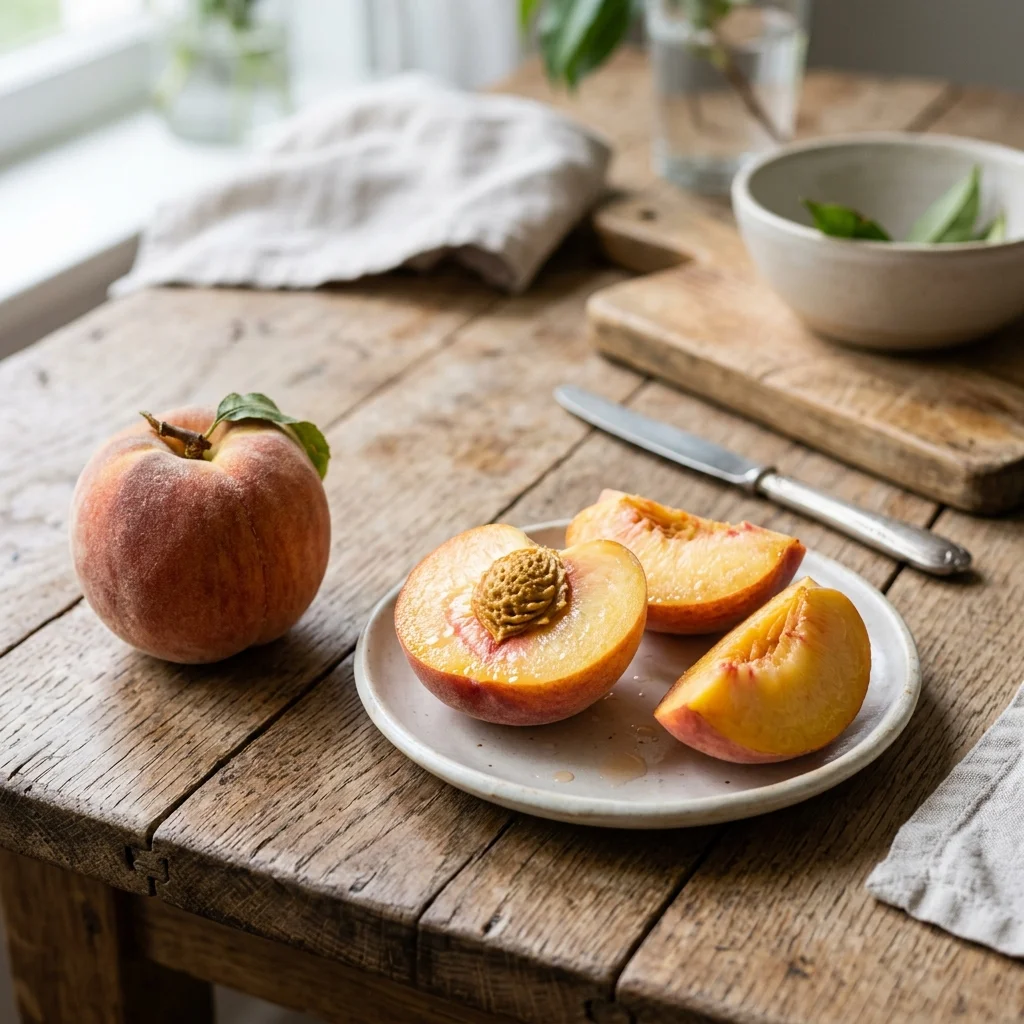
The peel is edible and contains concentrated phenolic compounds and fiber. Wash peaches thoroughly under cool running water before eating.
A ripe peach should be fragrant and give slightly to gentle pressure. The juicy flesh needs no preparation beyond washing and slicing around the pit.
Firmer peaches hold their shape better when grilled, baked, poached, or tossed into savory salads.
Allow firm peaches to ripen at room temperature first. Refrigeration after ripening slows softening and helps preserve eating quality.
When fresh peaches are out of season, choose canned peaches packed in water or 100% juice rather than heavy syrup to limit added sugars.
Traditional preparations and global recipes celebrating wholesome ingredients, balanced textures, and rich culinary heritage.
Grilled peach halves paired with peppery rocket (arugula), toasted walnuts, goat cheese, and a light balsamic vinaigrette.
A classic baked summer dessert featuring sliced peaches simmered with cinnamon beneath a tender, golden biscuit crust.
A classic dessert combining poached ripe peaches with fresh raspberry purée and vanilla ice cream.
Diced ripe peaches tossed with red onion, jalapeño, cilantro, and lime juice for a vibrant sweet-and-spicy topping.
Peach halves baked with a dusting of cinnamon and a touch of butter for a warm, comforting fruit dessert.
Peaches are a water-rich, relatively low-calorie fruit that provides vitamin C, fiber, potassium, and a range of plant compounds including phenolic acids, flavonoids, and carotenoids. They are a nutritious whole-fruit choice, but they should not be treated as a medical therapy.
Yes, peach skin is edible when thoroughly washed. Research comparing peach peel and flesh generally finds higher concentrations of phenolic compounds and antioxidant activity in the peel, although the exact difference varies among cultivars and ripeness stages.
Whole peaches can fit into many diabetes-friendly eating patterns because they provide water, fiber, and naturally occurring sugars. However, peach glycemic index values vary between studies, so a single GI number should not be treated as universal. Portion size and the overall meal matter.
Raw peach contains about 39 calories per 100 grams. A medium 150-gram peach provides roughly 58 calories, although actual calories vary with fruit size and edible weight.
Chlorogenic acid is one of several phenolic compounds found in peaches. It has been studied for antioxidant and other biological activities in laboratory and cell-based research, but these findings should not be interpreted as proof that eating peaches treats disease.
Peaches provide dietary fiber and a high water content (88.9%), both of which contribute to a healthy eating pattern and normal bowel function. Human evidence for peaches specifically treating digestive disorders is limited.
Peaches provide vitamin C and plant polyphenols that contribute to normal nutrition and antioxidant protection. Peach peel is particularly rich in phenolic compounds, but eating peaches should not be presented as a treatment for wrinkles, sun damage, or skin conditions.
Peaches and nectarines belong to the same species, Prunus persica. The primary difference is skin texture: peaches have fuzzy skin, while nectarines have smooth skin because of a naturally occurring recessive genetic variation affecting hair formation.
A ripe peach is juicy, sweet, and fragrant, with acidity that varies among cultivars. Yellow-fleshed peaches often have more pronounced acidity and robust flavor when cooked, while white-fleshed varieties tend to be sweeter and milder.
No. The hard peach pit should be discarded. Peach seeds contain amygdalin, a cyanogenic glycoside that can release cyanide when digested. The safest practice is never to chew, crush, or blend peach pits.
Fresh peaches can be included as part of a varied pregnancy diet when properly washed and prepared. They provide vitamin C, fiber, and hydration without needing exaggerated health claims; individual dietary advice should take priority when gestational conditions arise.
Small amounts of plain peach flesh may be given as an occasional treat for some dogs, but the pit must never be given because it presents a choking/intestinal obstruction hazard and contains amygdalin.
It depends on the packing medium. Peaches canned in water or 100% fruit juice avoid the high added sugar found in heavy syrup, though thermal processing can reduce heat-sensitive vitamin C. Compare nutrition labels to avoid excess added sugars.
Look for a fragrant fruit with background skin color appropriate to the cultivar and flesh that yields slightly to gentle thumb pressure. Avoid peaches with large bruises, mold, leaking juice, or green undertones.
Keep firm peaches at room temperature until they soften and develop a sweet aroma. Once fully ripe, refrigerate them to slow further softening and consume within a few days to preserve quality.
Peach harvest is primarily a summer event in temperate zones (peaking June through August in the Northern Hemisphere), with harvest dates varying by latitude, climate, and whether the cultivar is early, mid, or late-season.
Have a moment? Share your feedback or suggestions via Google to help us produce even higher quality, evidence-based nutrition guides.
No saved articles yet.
Click the bookmark button inside any article to save it here for offline reading!
Hi! I am Mapple AI, your food science research companion. Ask me anything about biomolecules, organic diet patterns, or longevity recipes.