01
Persian Fesenjan
Explore Recipe GuideA rich Persian stew traditionally made with ground walnuts and pomegranate molasses, often served with poultry and rice.
 Mapple Health
 Pomegranate, known as anar in Urdu and Hindi, is a sweet-tart fruit with a tough outer rind and hundreds of jewel-like edible arils. Its botanical name is Punica granatum, and it has been cultivated for centuries across western Asia, the Mediterranean and South Asia.
Pomegranate is celebrated for its color, flavor and plant compounds, particularly ellagitannins such as punicalagins. It also offers meaningful everyday nutrition.
Half a cup (87g) of fresh pomegranate arils contains approximately 72 calories, 16.3g carbohydrate, 11.9g naturally occurring sugars and 3.5g fiber. It also supplies vitamin C, vitamin K, folate, potassium and copper.
But do those nutrients mean pomegranate can lower blood pressure, clear blocked arteries, improve diabetes or slow aging?
The answer depends on the evidence. Some human studies are encouraging, particularly for blood pressure and glucose-related measures. Other popular claims rely on small trials, laboratory experiments or studies of concentrated extracts.
This guide separates those findings and explains how to enjoy pomegranate safely, whether you prefer fresh arils, juice or traditional foods.
A pomegranate has a thick leathery rind, pale internal membranes and many edible arils. Each aril consists of juicy tissue surrounding a small seed.
The outer rind and bitter white membranes are not usually eaten as part of the fresh fruit.
A common source of confusion is the difference between 100 grams, half a cup of arils, one whole fruit and a glass of juice.
These are different serving sizes and cannot share the same nutrition numbers.
| Nutrient | Per 100g fresh arils | Half cup (87g) |
|---|---|---|
| Calories | 83 kcal | 72 kcal |
| Total carbohydrates | 18.7g | 16.3g |
| Natural sugars | 13.7g | 11.9g |
| Dietary fiber | 4.0g | 3.5g |
| Protein | 1.67g | 1.45g |
| Vitamin C | 10.2mg | 8.9mg |
| Vitamin K | 16.4µg | 14.3µg |
| Folate | 38µg | 33µg |
| Potassium | 236mg | 205mg |
| Copper | 0.158mg | 0.137mg |
Source: USDA FoodData Central reference values for raw pomegranate. Fruit composition varies naturally by variety and maturity.
Pomegranate contains naturally occurring sugars, mainly contributing to its sweet-tart flavor.
A half-cup of arils provides around 11.9g sugar and 16.3g total carbohydrates.
Because fresh arils contain fiber, their nutritional composition differs from filtered juice.
However, fiber does not make sugar disappear. People managing diabetes still need to consider the total carbohydrate portion.
The most useful comparison is between eating the edible arils and drinking filtered juice.
| Feature | Fresh arils | 100% pomegranate juice |
|---|---|---|
| Fiber | About 3.5g per half cup | Usually little in filtered juice |
| Sugar | Naturally occurring | Naturally occurring; more easily consumed quickly |
| Eating experience | Requires chewing | Easy to drink |
| Polyphenols | Present; profile varies | Present; content strongly affected by processing |
| Portion control | Easier to visualize as a bowl | Depends on glass and label |
| Best everyday advantage | Whole-fruit structure and fiber | Convenience and flavor |
Not necessarily in a simple, universal sense.
Pomegranate peel contains high concentrations of ellagitannins, including punicalagins. Some commercial juicing methods allow compounds from the rind and membranes to enter the juice.
This means certain juices may have high measured polyphenol content. But the concentration varies by manufacturing process and does not make juice clinically superior to fresh arils.
Also, laboratory antioxidant measurements do not directly establish reduced heart attacks, longer life or improved health outcomes in people.
Practical verdict: For routine fruit consumption, fresh arils are a useful choice because they retain their fiber. Unsweetened juice can also fit into a diet, but should be enjoyed as juice rather than treated as medicine.
The distinction between what researchers tested and what people usually eat is essential.
A study of juice, a highly concentrated extract and purified urolithin A cannot automatically be interpreted as one study of ordinary fresh pomegranate.
| Research focus | Human evidence | Important limitation |
|---|---|---|
| Blood pressure | A 2024 meta-analysis of 22 RCTs found average reductions of 7.87mmHg systolic and 3.23mmHg diastolic pressure with pomegranate interventions. | High statistical heterogeneity between studies; more rigorous trials are needed |
| Pomegranate juice and blood pressure | A 2023 meta-analysis of 14 trials involving 573 people found an average systolic reduction of approximately 5.02mmHg. | Trials used specific juice interventions and differed in duration, dose and population |
| Diabetes-related measures | A 2025 meta-analysis of 34 RCTs involving 1,500 participants found modest average improvements in fasting glucose and several insulin-related measures. | High heterogeneity; no significant overall HbA1c effect |
| Carotid artery measurements | A 2004 study with 10 treated patients reported favorable carotid artery measurements after pomegranate juice intake. | Extremely small study; cannot prove blocked arteries were cleared |
| Hemodialysis | A 2012 trial involving 101 patients found improvements in several oxidative-stress and inflammatory biomarkers with a controlled juice intervention. | Specific dialysis population and research setting; not general kidney-diet advice |
| Gut-derived urolithins | A 2015 human extract study identified substantial differences in who produced urolithin metabolites. | Studied an extract and biomarkers, not improved lifespan or disease outcomes |
An important scientific point: systematic reviews and randomized trials are valuable, but they are not all equally conclusive. Researchers still need to consider sample size, study quality, statistical variation, the tested product and real clinical outcomes.
This is among the better-studied potential health effects of pomegranate.
A 2024 systematic review included 22 randomized clinical trials evaluating pomegranate consumption and blood pressure.
The combined results suggested reductions in both systolic and diastolic pressure.
However, the results varied considerably between studies, with statistical heterogeneity around 90% for systolic and 92% for diastolic measurements.
That means the average result should not be interpreted as a predictable blood-pressure reduction for every individual.
A separate 2023 meta-analysis focusing on pomegranate juice included 14 trials and 573 participants. It found an average systolic reduction of approximately 5mmHg.
Researchers have proposed several mechanisms involving endothelial function, oxidative stress, nitric-oxide pathways and the renin-angiotensin system.
These mechanisms are biologically interesting, but pomegranate should not be described as a natural equivalent to a prescription ACE inhibitor.
Bottom line: pomegranate juice may modestly improve blood pressure in some contexts. It is not a demonstrated replacement for antihypertensive treatment, and the clinical benefit from one ordinary serving of fresh arils remains less certain.
The claim that pomegranate can clear clogged arteries or dissolve existing plaque is one of the most misleading claims surrounding the fruit.
It largely comes from a small study published in Clinical Nutrition in 2004.
The study included 10 treated patients with carotid artery stenosis, with five continuing the juice intervention for up to three years.
Researchers reported that the treated group had reductions in carotid intima-media thickness after one year, with changes in some oxidative-stress markers.
The figure often quoted online is a reduction of up to 30% in carotid intima-media thickness.
But that finding has important limitations:
The study is worth discussing as early research, but not as clinical proof of arterial plaque reversal.
Pomegranate can belong in a heart-conscious diet. Anyone with diagnosed coronary or carotid disease should continue evidence-based treatment.
Pomegranate arils can fit into many diabetes eating plans, with attention to portion size.
Half a cup provides approximately 16.3g carbohydrates, including 11.9g naturally occurring sugars and 3.5g fiber.
A 2024 meta-analysis of 32 randomized trials reported small improvements across several measures of glucose regulation.
A subsequent 2025 GRADE-assessed meta-analysis included 34 randomized trials with approximately 1,500 participants.
Its pooled findings suggested small improvements in fasting blood glucose, fasting insulin and insulin-resistance measurements.
However, the 2025 analysis did not find a statistically significant overall improvement in HbA1c, a marker reflecting longer-term blood glucose.
The studies also showed substantial heterogeneity.
The two reviews differ on HbA1c. The 2024 analysis of 32 trials reported a small statistically significant reduction (about 0.22 percentage points, with a confidence interval that only just excluded zero), while the larger 2025 analysis found no significant change. That disagreement is a good illustration of why the evidence should be considered promising but inconclusive, rather than proof that pomegranate provides reliable long-term glucose control.
These findings suggest that pomegranate products are worth researching, but do not mean that pomegranate cures diabetes or eliminates the need for medications.
Whole arils retain fiber, while filtered juice generally has little.
For someone counting carbohydrates, this is a practical reason to consider whole arils rather than regularly consuming large glasses of juice.
Juice is not inherently forbidden, but it needs to be accounted for in the overall eating plan.
There is no defensible single GI figure for every pomegranate cultivar, juice preparation or serving size.
A commonly repeated fixed number should not be used without identifying the exact tested food and measurement conditions.
Total carbohydrates, portion size and individual glucose response remain important regardless of GI.
Pomegranate contains ellagitannins, anthocyanins and related plant compounds that have been investigated for oxidative and inflammatory processes.
Some laboratory and human studies have reported changes in lipid-related markers.
However, clinical trials vary, and results are not consistent enough to establish pomegranate as a reliable treatment for elevated LDL cholesterol or other lipid disorders.
The US National Center for Complementary and Integrative Health notes that cholesterol research has not demonstrated clear overall effects.
Practical takeaway: Enjoy pomegranate as part of a varied dietary pattern, but do not replace prescribed cholesterol treatment with pomegranate juice or extracts.
Pomegranate is well known for its polyphenol composition.
Three groups are especially interesting.
Punicalagins are large ellagitannin compounds associated particularly with pomegranate peel.
They contribute to measured antioxidant activity and have been studied for effects on oxidative-stress and inflammatory pathways.
Their presence in juice varies with processing.
Anthocyanins are pigments responsible for many of the red and purple shades observed in pomegranate arils and juice.
Their content varies by cultivar, maturity and storage.
Ellagitannins can be transformed into ellagic acid and subsequently into metabolites through interactions with intestinal microorganisms.
These compounds are biologically interesting, but it is important not to confuse a laboratory mechanism with a proven health outcome.
A high antioxidant measurement does not directly demonstrate that a food prevents cancer, reverses atherosclerosis or extends human lifespan.
Urolithin A is a metabolite that some people’s intestinal microorganisms produce from ellagitannin- and ellagic-acid-containing foods.
Pomegranate is one dietary source of these precursor compounds.
In a small 2015 human study involving 20 participants, researchers observed several patterns of urolithin production following pomegranate-extract consumption.
Some people already produced urolithin A, others began producing it during the intervention, and some did not produce detectable amounts.
A separate 2021 study also demonstrated substantial variability following pomegranate-juice intake.
The 2021 study was sponsored by a company developing urolithin A products, an important disclosure when interpreting its findings.
Mitophagy refers to a cellular process involved in removing or recycling damaged mitochondria.
Concentrated urolithin A has been studied in relation to mitochondrial function, muscle-related measurements and aging biology.
However, clinical studies of purified urolithin A supplements should not be used to claim that eating pomegranate causes mitochondrial rejuvenation or reverses biological aging.
The scientifically accurate conclusion: pomegranate supplies precursors that some gut microbiomes can metabolize into urolithins. The clinical consequences of ordinary dietary intake are still being investigated.
Fresh pomegranate arils contain around 4g fiber per 100g.
A half-cup serving provides approximately 3.5g, a meaningful contribution toward daily fiber intake.
Fiber supports normal bowel function and can be part of a balanced dietary pattern.
There is also emerging research on interactions between pomegranate polyphenols, gut microorganisms and their metabolites.
However, these findings do not establish that eating pomegranate cures IBS, repairs the intestinal lining or acts as a clinically validated digestive treatment.
For digestive health, the overall dietary pattern, adequate fluid intake and individual gastrointestinal tolerance matter more than any single food.
Pomegranate can fit into a calorie-aware eating pattern.
A half-cup of arils provides 72 calories and 3.5g fiber.
The juicy, crunchy texture can make it a satisfying snack or topping for plain yogurt, salads and oatmeal.
Choosing fresh arils instead of a more calorie-dense dessert may help reduce total energy intake in some situations.
But pomegranate does not directly burn fat, melt belly fat or stimulate a proven special weight-loss mechanism.
Pomegranate compounds have been studied in cell cultures, animal models and human clinical research.
One major focus has been prostate cancer.
Early studies generated interest by measuring changes in prostate-specific antigen (PSA) doubling time.
However, the US National Cancer Institute reports that a placebo-controlled study in men with recurrent prostate cancer did not find a significant difference in the rate of PSA increase between pomegranate-treatment groups and placebo.
Therefore:
Pomegranate may be enjoyed as food within a balanced diet, but specific anticancer claims require stronger clinical evidence.
Fresh pomegranate arils can generally be part of a varied pregnancy diet when prepared hygienically.
They contribute fiber, vitamin C, folate and other nutrients.
A half-cup contains around 33µg folate, but that does not replace recommended prenatal folic-acid supplementation.
Wash the whole pomegranate under running water before cutting to avoid transferring contamination from the rind.
If drinking juice during pregnancy, follow appropriate food-safety guidance, including choosing pasteurized commercial juice rather than unpasteurized products of uncertain handling.
Because knowledge about concentrated pomegranate peel, root and bark preparations is limited, these should not be assumed safe during pregnancy.
For gestational diabetes, account for the carbohydrate content of arils or juice.
Pomegranate supplies potassium.
Potassium is an essential mineral, but some people with reduced kidney function need individualized intake limits.
The National Kidney Foundation lists the following approximate values:
| Portion | Potassium |
|---|---|
| Half cup fresh pomegranate arils | 205mg |
| Half of a pomegranate | About 333mg |
| 8oz pomegranate juice | About 533mg |
These values explain why one recommendation cannot fit every patient.
A 2012 randomized trial included 101 hemodialysis patients. The intervention group received approximately 100mL pomegranate juice during dialysis, three times per week, for one year.
Researchers reported changes in selected inflammation, oxidative-stress and clinical measures.
This is important research, but it was performed in a specific supervised dialysis setting.
It does not establish that all kidney patients should drink pomegranate juice.
The National Kidney Foundation also warns that pomegranate may interfere with some transplant medications.
Anyone with a kidney transplant should ask their transplant team before regularly consuming pomegranate products or supplements.
Bottom line: Kidney-diet suitability depends on individual blood potassium, kidney function, dialysis type and medications.
Pomegranate arils may fit into some low-FODMAP eating plans in measured portions.
Monash University lists 45g (approximately one-quarter cup) of raw peeled pomegranate arils as a low-FODMAP serving in its published guidance.
This does not mean that every larger portion will have the same tolerance.
Fruit juices can also differ from whole fruit.
For people managing IBS, portion size, personal symptoms and current Monash serving guidance are more useful than describing pomegranate as universally prohibited or universally safe.
Pomegranate is generally consumed safely as a food, but concentrated products and regular juice intake warrant additional attention in some circumstances.
Memorial Sloan Kettering reports a possible interaction between pomegranate juice and warfarin based on a case report.
Other proposed interactions involve medication-metabolizing enzymes, but several human studies have not confirmed clinically important effects suggested by earlier animal experiments.
Therefore, broad claims that pomegranate behaves exactly like grapefruit with all medicines are not justified.
People taking warfarin, transplant medications, or complex prescription regimens should seek individualized advice.
Some people experience gastrointestinal discomfort, including diarrhea, after consuming pomegranate products.
Allergic reactions are uncommon but have been reported.
If a person develops swelling, breathing difficulty or other symptoms suggesting a serious allergic reaction, urgent medical attention is needed.
Do not assume that the leathery rind is safe to consume in large quantities simply because it contains many polyphenols.
The NIH NCCIH warns that pomegranate root, stem and peel may contain substances that are harmful at high intakes.
Standard food use of the edible arils is different from consuming concentrated peel powders or homemade medicinal extracts.
Yes.
A pomegranate aril contains sweet-tart juicy tissue surrounding a small seed.
Most people eat the whole aril, including its crunchy seed.
You can also press the arils for juice if you prefer not to chew the seeds.
The white membranes separating the clusters are edible in a botanical sense but bitter and typically discarded.
For young children or people with swallowing difficulties, choose a form appropriate to their chewing and swallowing ability.
There is no clinically established daily dose that guarantees a special health benefit from pomegranate.
A convenient portion is half a cup (87g) of fresh arils, containing about 72 calories, 11.9g sugars and 3.5g fiber.
Some people may eat larger portions as part of their usual fruit intake.
People tracking carbohydrates or potassium should adjust the portion to their prescribed dietary plan.
There is also no proven need to eat pomegranate on an empty stomach or at a particular hour.
Choosing a good pomegranate is not simply about finding the darkest red fruit.
The fruit’s external color varies substantially with cultivar.
Look for:
Slightly angular or flattened sides can occur as internal arils develop.
Unlike bananas or mangoes, pomegranates do not continue becoming substantially sweeter after harvesting.
A bowl of clean water can help separate the edible arils from the bitter membrane.
This method makes pomegranate preparation more convenient without requiring special equipment.
Whole fruit stores well under suitable cool conditions.
UC Davis reports a commercial storage recommendation around 5°C (41°F) for up to two months, with a somewhat warmer temperature preferred for longer commercial storage to reduce chilling injury.
These are controlled postharvest conditions, not a guarantee that every home-refrigerated pomegranate will remain fresh for two months.
Freshly removed arils should be placed in a clean covered container and refrigerated promptly.
Use them while fresh, and discard arils with mold, sour or fermented odors, or obvious deterioration.
Yes. Fresh arils can be frozen for later use in smoothies, yogurt or cooking.
For convenience, spread them in a single layer to freeze before transferring them to a freezer-safe container.
Pomegranates differ in sweetness, tartness, aril color, seed hardness, rind thickness and harvest timing.
A widely grown commercial variety associated particularly with California production. It is known for strongly colored juice and a balanced sweet-tart flavor.
An important Indian commercial cultivar recognized for attractive fruit appearance and sweet arils.
A South Asian pomegranate name associated with traditional markets and regional cultivars. Characteristics can vary with the actual selection and growing region.
A Spanish pomegranate cultivar especially appreciated for its relatively soft seeds and mild flavor.
A commercially important cultivar associated with Turkish production, generally valued for colored arils and a characteristic sweet-tart taste.
Important: Color, sweetness and seed texture vary among cultivars. There is no evidence that every dark-red variety is automatically more beneficial for human health than every pale or pink variety.
Pomegranate grows as a shrub or small tree and is widely cultivated in warm, relatively dry growing regions.
Pomegranates generally perform well in climates with warm to hot summers and sufficient sunshine.
Full sun supports flowering and fruit development.
Cold tolerance differs between cultivars, and severe freezes can damage branches or young trees.
UF/IFAS identifies a soil pH range of approximately 5.5–7.0 for suitable growth and emphasizes good drainage.
Newly planted trees need consistent moisture during establishment.
Established plants can tolerate some drought, but water stress and abrupt irrigation changes may affect fruit quality and increase splitting.
Pomegranates generally have self-compatible flowers.
Insect visits, particularly from bees, can contribute to pollination and fruit set.
A second cultivar is not universally required for fruit production.
Train young trees to develop a manageable structure.
Remove dead, crossing or damaged branches and manage unwanted suckers.
Heavy pruning can reduce fruit production, while selective thinning or branch support may be useful when crops are especially heavy.
Pomegranate harvest varies with climate and variety but commonly occurs during autumn in many Northern Hemisphere regions.
Harvest when the fruit has developed suitable size, appearance and flavor. Fruit left on the tree too long may split or become vulnerable to pests and decay.
Few fruits are as deeply connected to the food traditions of western Asia and the Indian subcontinent as pomegranate.
In Pakistan and India, anar is enjoyed fresh, pressed for juice or added to fruit chaat and salads.
Dried sour pomegranate arils, known as anardana, are used in regional chutneys, spice mixtures and savory dishes.
In Persian cuisine, pomegranate molasses contributes tartness and depth to dishes such as fesenjan, a stew prepared with walnuts.
Across the Mediterranean and Middle East, fresh arils decorate salads, grain dishes and desserts.
In Turkish and other regional kitchens, pomegranate sauces and reductions are used to add sourness to savory foods.
One nutritional distinction is important: fresh arils, concentrated molasses, sweetened syrup and bottled juice are not interchangeable.
Their sugar concentration and serving sizes differ considerably.
Nutrition values were drawn from USDA FoodData Central reference data.
Clinical claims were assessed using published randomized trials, systematic reviews and information from the US National Institutes of Health and National Cancer Institute.
The article distinguishes ordinary fresh arils from juice, concentrated extracts, peel products and isolated urolithin A.
Medical guidance on kidney disease and interactions comes from the National Kidney Foundation and Memorial Sloan Kettering Cancer Center. Botanical and horticultural information draws on Royal Botanic Gardens Kew, UF/IFAS and UC Davis.
This article is written by Engr. Khurram Farman and has not been independently reviewed by a registered dietitian or physician. It provides general educational information, not individualized medical advice.
Yes. Pomegranate is a nutritious whole fruit providing dietary fiber, vitamin C, vitamin K, folate, potassium and plant polyphenols.
Research on pomegranate products is promising in areas such as blood pressure and certain glucose-related measurements, but the findings do not prove that ordinary fresh pomegranate clears clogged arteries, cures diabetes, prevents cancer or reverses aging.
For everyday eating, fresh arils offer the advantage of intact fiber. Juice can also be enjoyed, with attention to serving size and carbohydrate content.
If you have kidney disease, take medications that may interact with pomegranate, or require a specialized dietary plan, ask your healthcare professional about suitable amounts.
The best reason to eat pomegranate is straightforward: it is a flavorful, versatile whole fruit that can contribute to a nutritious and varied diet without needing exaggerated medical claims.
USDA FoodData Central reference values for 100g raw pomegranate edible arils, compared with a half-cup serving (87g). Values vary by cultivar and maturity.
| Nutrient | Amount (per 100g) | Amount (per 1/2 cup fresh pomegranate arils (87g)) | % Daily Value (%DV) | Why Your Body Needs It |
|---|---|---|---|---|
| Calories | 83 kcal | 72 kcal | — | Naturally occurring fruit energy |
| Water Content | 77.9g | 67.8g | — | Contributes water to the diet |
| Total Carbohydrates | 18.7g | 16.3g | 6% | Naturally occurring carbohydrate; count portions when medically relevant |
| Total Sugars | 13.7g | 11.9g | — | Naturally occurring fruit sugars |
| Dietary Fiber | 4.0g | 3.5g | 12% | Contributes to normal bowel function |
| Protein | 1.67g | 1.45g | 3% | Small plant protein contribution |
| Total Fat | 1.17g | 1.02g | 1% | A small amount of naturally occurring fat |
| Vitamin C | 10.2mg | 8.9mg | 10% | Supports normal collagen formation and immune function |
| Vitamin K | 16.4µg | 14.3µg | 12% | Contributes to normal blood clotting and bone-related proteins |
| Folate (Vitamin B9) | 38µg | 33µg | 8% | Important for normal cell division |
| Potassium | 236mg | 205mg | 4% | Electrolyte relevant to individual kidney-diet requirements |
| Copper | 0.158mg | 0.137mg | 15% | Contributes to normal enzyme and connective-tissue functions |
The second column represents 87g of fresh arils, not a whole pomegranate or a glass of juice. Daily Value percentages refer to that 87g serving and use FDA adult reference values: carbohydrate 275g, fiber 28g, vitamin C 90mg, vitamin K 120µg, folate 400µg DFE, potassium 4700mg and copper 0.9mg. Percentages are rounded.
Scientific findings from clinical trials are distinguished from ordinary whole-fruit nutrition, mechanistic research and unproven disease-treatment claims.
| Health Focus Area | Evidence Status | Practical Guidance | Scientific Evidence and Limitations |
|---|---|---|---|
| Blood Pressure | Promising | Consider within an overall heart-healthy diet | Meta-analyses suggest modest reductions. A 2024 review of 22 RCTs found average reductions in systolic and diastolic blood pressure. Study results were highly heterogeneous, and pomegranate is not an established hypertension treatment. |
| Carotid Plaque and Atherosclerosis | Unproven Treatment | Do not replace prescribed vascular treatment | Important limitation. The often-quoted 30% carotid intima-media thickness reduction came from a very small 2004 study with 10 treated patients. This does not prove that pomegranate clears blocked arteries. |
| Diabetes and Blood Sugar | Portion Aware | Count carbohydrate in arils and juice | Small average metabolic effects. A 2025 meta-analysis of 34 RCTs found modest improvements in fasting glucose and insulin-related measures, but no statistically significant overall HbA1c change. It does not establish pomegranate as diabetes therapy. |
| High Cholesterol | Mixed Evidence | Use as food, not LDL-lowering medicine | Inconsistent clinical findings. Polyphenols have interesting mechanistic effects, but major health authorities do not consider pomegranate a proven cholesterol-lowering treatment. |
| Weight Management | Compatible | Prefer arils for fiber and portion awareness | No special fat-burning effect. Half a cup of arils has about 72 calories and 3.5g fiber. Weight management still depends on total dietary intake and other lifestyle factors. |
| Gut Health and Urolithin A | Emerging | Enjoy as whole fruit; avoid anti-aging claims | Microbiome-dependent metabolism. Some intestinal bacteria convert ellagitannins into urolithins, but not everyone produces urolithin A. Supplement studies cannot prove that whole pomegranate reverses aging. |
| Pregnancy | Generally Safe | Wash whole fruit before cutting; eat as food | Everyday fruit choice. Arils contribute fiber, folate and vitamin C. They do not replace prenatal supplements; high-dose peel or root preparations should not be assumed safe. |
| Kidney Disease and Dialysis | Individualized | Discuss portions with a renal dietitian | Potassium matters. Half a cup of arils supplies about 205mg potassium, while an 8oz glass of juice supplies about 533mg. A small dialysis trial does not prove universal renal protection. |
| Kidney Transplant and Medication | Medical Review | Check with the transplant team | Potential interaction risk. The National Kidney Foundation notes that pomegranate may interfere with some transplant medicines; people receiving transplants should seek individualized guidance. |
| Cancer Prevention and Treatment | Unproven | Do not use in place of cancer care | Laboratory results are not clinical outcomes. A placebo-controlled prostate-cancer study did not establish an improvement in PSA progression. No pomegranate product is an approved cancer treatment. |
| IBS and FODMAP Sensitivity | Portion Dependent | Use current Monash serving guidance | Serving size matters. Monash lists 45g raw arils as a low-FODMAP serving. Larger amounts and juice preparations may differ in tolerance. |
| Oral and Dental Health | Practical Caution | Avoid prolonged sipping of acidic juice | Fruit juice is acidic. Although polyphenols have shown laboratory antimicrobial activity, that does not establish that drinking pomegranate juice prevents cavities or treats gum disease. |
| Medication Interactions | Check Medicines | Discuss regular concentrated juice or supplements | Clinical evidence varies. A warfarin interaction has been described in a case report, while some proposed enzyme interactions were not confirmed in human studies. Medication-specific advice is needed. |
A practical growing profile for this fruit. Conditions vary by variety, climate and location.
| Growing Factor | What to Know |
|---|---|
| Climate | Mediterranean-type and warm subtropical climates with hot summers favor production; established plants tolerate some drought, while cold hardiness varies by cultivar |
| Sunlight | Full sun is preferred for flowering, fruit development and good fruit color |
| Soil | Well-drained loam or sandy-loam soils are suitable; prolonged waterlogging and very heavy soils can cause problems |
| Ideal soil pH | UF/IFAS reports an optimal soil pH range of approximately 5.5–7.0, with good drainage especially important |
| Water needs | Water young plants consistently during establishment. Established trees need adequate moisture during fruit growth; sudden irrigation changes near maturity can contribute to fruit splitting |
| Planting | Late winter to early spring is commonly suitable for dormant plants in temperate regions; choose local frost-safe periods for planting |
| Pollination | Pomegranate flowers are generally self-compatible, but insect activity and cross-pollination can influence fruit set in some circumstances |
| Pruning | Train young plants into a sturdy framework; remove dead, damaged and crossing branches, and manage suckers to maintain the desired tree or shrub form |
| Thinning | Heavy fruit loads can stress branches; selective thinning and support may be useful in some cultivars and growing systems |
| Main risks | Fruit splitting after irregular irrigation or rainfall, Anthracnose and other fungal fruit or leaf diseases, Aphids, scale insects and mealybugs, Fruit rot where developing fruit remains wet, Sunburn and heat injury on exposed fruit, Bird and wildlife damage near harvest |
Explore visual varieties and characteristics.
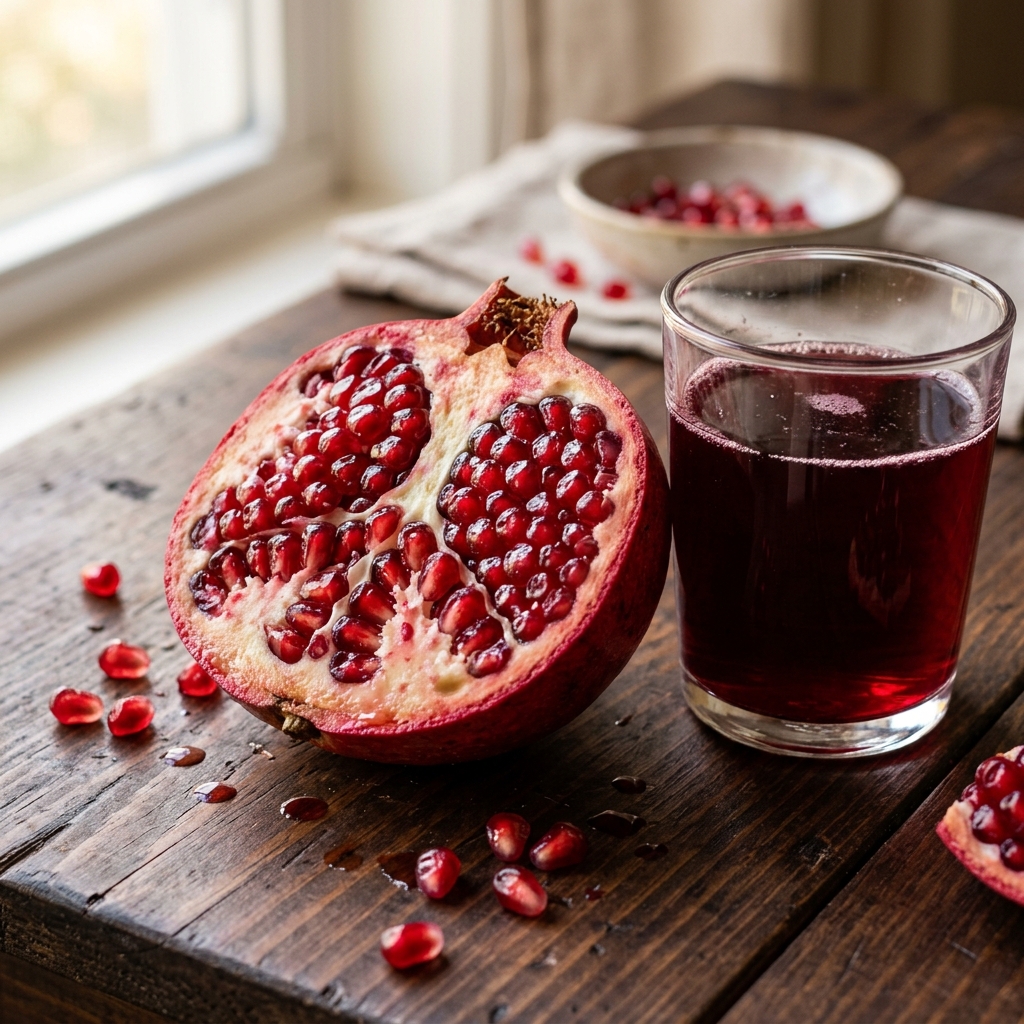
Enjoy the edible juicy arils, including their small seeds if comfortable to chew. A half-cup provides about 3.5g fiber, unlike most filtered pomegranate juices.
Wash the whole fruit, score the rind, and gently separate sections in clean water. Arils tend to sink while pieces of white membrane float, making separation easier.
If drinking juice, choose 100% juice without added sugar and check the serving size. Juice is not carbohydrate-free and should not be treated as a medical supplement.
Choose intact, heavy fruit, wash the exterior before cutting, refrigerate removed arils promptly, and discard any with signs of spoilage.
Traditional preparations and global recipes celebrating wholesome ingredients, balanced textures, and rich culinary heritage.
A rich Persian stew traditionally made with ground walnuts and pomegranate molasses, often served with poultry and rice.
A tangy South Asian chutney using dried sour pomegranate arils alongside herbs, spices and other ingredients.
Fresh arils combined with parsley, mint, cucumber and leafy greens, finished with a light citrus dressing.
Fresh pomegranate arils over plain yogurt with toasted nuts or seeds for added protein and texture.
Fresh pomegranate arils provide fiber, vitamin C, vitamin K, folate, potassium and plant polyphenols. Human research on pomegranate products suggests modest improvements in some blood-pressure and glucose-related measurements, but pomegranate is not proven to reverse blocked arteries, cure diabetes or prevent cancer. Its most reliable benefit is as a nutritious whole-fruit option.
USDA reference data provide approximately 83 calories per 100g of raw pomegranate arils. A half-cup serving weighing 87g contains about 72 calories, 16.3g carbohydrate, 11.9g naturally occurring sugars and 3.5g fiber. A whole fruit contains more edible arils, so its calories depend on the edible portion.
Fresh pomegranate arils contain around 13.7g naturally occurring sugars per 100g, or approximately 11.9g per 87g half-cup. These are natural fruit sugars, not added sugar, but they still count toward total carbohydrate intake.
Yes. The juicy edible portions are called arils, and each contains a small seed. Most people can chew and swallow both the juicy flesh and the crunchy seed. People with swallowing or chewing difficulties should choose an age- and ability-appropriate preparation.
Whole arils retain dietary fiber, while most filtered pomegranate juice provides little fiber. Juice can contain polyphenols, but its composition depends on processing. Arils are often the more practical everyday choice for someone seeking fiber and a satisfying whole-fruit portion.
Several randomized-trial meta-analyses suggest pomegranate juice or other pomegranate products may modestly lower blood pressure on average. A 2024 analysis of 22 trials reported reductions in both systolic and diastolic pressure, but results varied greatly between studies. Juice should not replace prescribed blood-pressure treatment.
There is no convincing clinical evidence that ordinary pomegranate consumption clears blocked arteries. A much-publicized 2004 study involving 10 treated patients with carotid artery stenosis reported improved arterial measurements, but it was far too small to prove plaque reversal or establish a treatment.
Yes, many people with diabetes can include pomegranate arils in an individualized meal plan. A half-cup contains about 16.3g total carbohydrate, including 11.9g sugars and 3.5g fiber. Research on pomegranate products suggests small average changes in some glycemic measures, but portions and individual glucose response remain important.
A single GI value should not be assigned to all fresh pomegranate varieties and juices. Measurements can vary with product, ripeness, processing and study method. Total carbohydrate, portion size and personal glucose response are also important, particularly for diabetes management.
Research findings on pomegranate and cholesterol are mixed, with differences between juice, extracts, study populations and trial durations. Pomegranate should not be described as a proven LDL-lowering treatment or a replacement for cholesterol medication.
Punicalagins are ellagitannin polyphenols associated with pomegranate, especially its peel. Some juice-processing methods transfer peel-associated compounds into the juice. They are important research compounds, but laboratory antioxidant activity does not prove that eating pomegranate prevents cardiovascular disease.
Some gut bacteria convert pomegranate-related ellagitannin and ellagic-acid compounds into metabolites including urolithin A. Not everyone produces the same amount. Research on concentrated urolithin A supplements cannot establish that eating pomegranate rejuvenates mitochondria, reverses aging or prolongs life.
Half a cup of fresh arils provides approximately 72 calories and 3.5g fiber. Arils can fit into a calorie-aware diet and may be a satisfying alternative to some desserts. There is no persuasive evidence that pomegranate directly burns belly fat or causes weight loss.
Fresh, properly washed pomegranate arils can generally be part of a varied pregnancy diet. They provide fiber, folate and vitamin C, but do not replace prenatal supplements. Choose safely handled juice if drinking juice, and avoid unverified medicinal use of concentrated peel, bark or root preparations.
Pomegranate contains potassium. A half-cup of arils provides about 205mg potassium, while an 8oz glass of juice can provide about 533mg. The National Kidney Foundation advises individualized portions depending on kidney function, blood potassium, dialysis and transplant medications.
Portions matter. Monash University lists 45g, about one-quarter cup, of raw peeled pomegranate arils as a low-FODMAP serving in its published food guidance. Larger portions and juice may differ, so people following a structured low-FODMAP diet should consult current serving-specific guidance.
Pomegranate compounds have been studied in laboratories, animals and humans. The US National Cancer Institute reports that a placebo-controlled study in men with recurrent prostate cancer did not establish a benefit for PSA progression. Pomegranate is not an approved cancer treatment.
Potential interactions have been reported, including a case report involving warfarin and concerns involving certain transplant medications. Human evidence is limited for many proposed interactions. Anyone taking warfarin, transplant medicines or multiple prescribed drugs should discuss substantial changes in juice or supplement intake with their healthcare professional.
There is no scientifically established daily amount required to obtain special pomegranate benefits. Half a cup of fresh arils (87g) is a convenient serving reference. Portions should fit your overall fruit intake, appetite, carbohydrate needs and any medical potassium restrictions.
Rinse the intact fruit, remove the crown, score the rind along the natural sections, and gently pull it apart. Work over a bowl or under clean water to separate the arils from the bitter white membranes. Discard the rind and membranes.
Choose a fruit that feels heavy for its size and has firm, intact skin without mold or major soft spots. Mature pomegranates can be red, pink or yellowish depending on cultivar, so color alone is not a universal ripeness test. They do not continue to become substantially sweeter after harvesting.
Whole pomegranates keep best under cool conditions; storage life depends on cultivar, fruit condition and temperature. Refrigerate extracted arils promptly in a clean covered container and use them soon, or freeze them for longer storage. Discard fruit or arils with visible mold, sour odors or spoilage.
Pomegranate is called anar in Urdu and Hindi. Its botanical name is Punica granatum. It is widely enjoyed in South Asia as fresh fruit, juice, a garnish and dried sour arils called anardana.
Have a moment? Share your feedback or suggestions via Google to help us produce even higher quality, evidence-based nutrition guides.
No saved articles yet.
Click the bookmark button inside any article to save it here for offline reading!
Hi! I am Mapple AI, your food science research companion. Ask me anything about biomolecules, organic diet patterns, or longevity recipes.